

This post may contain affiliate links, view our disclosure.
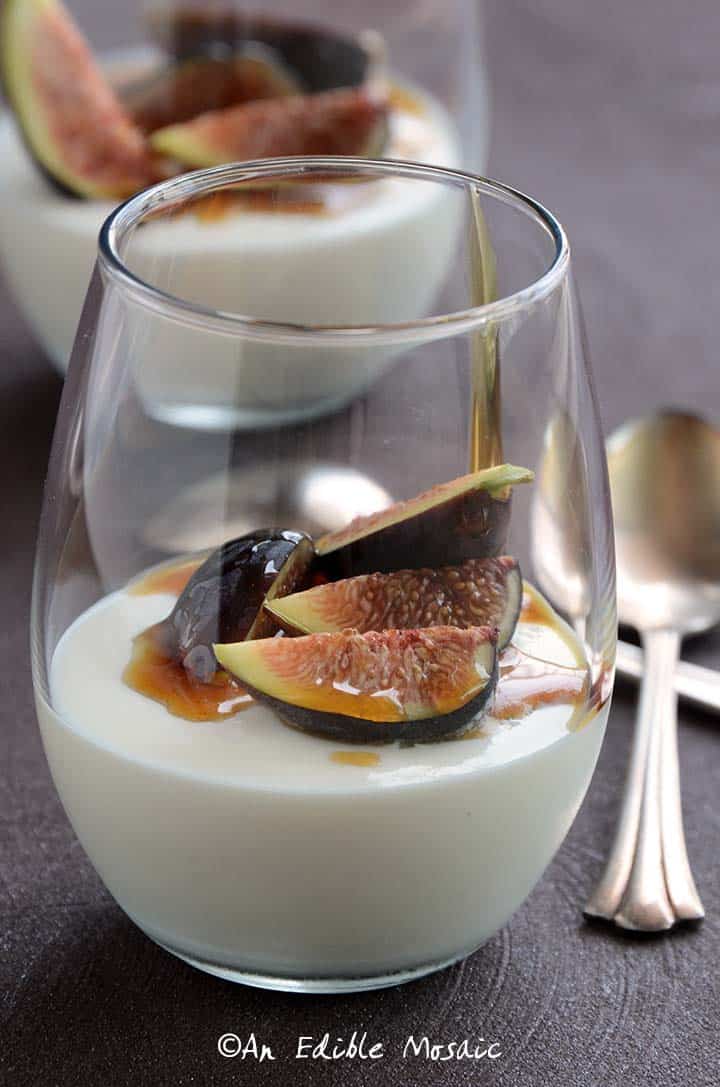
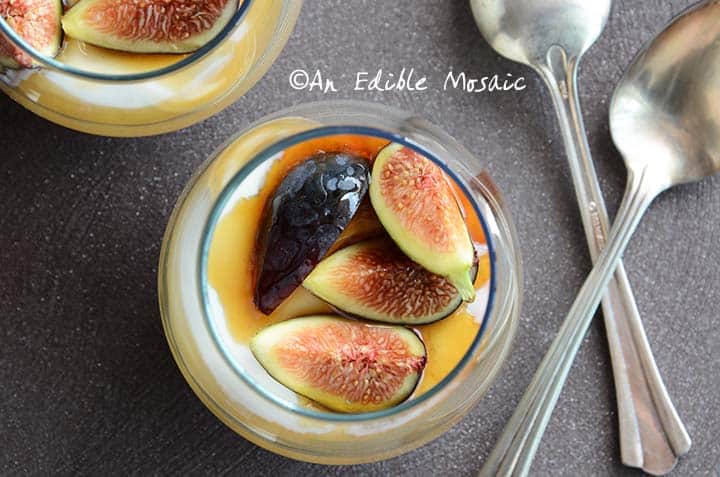
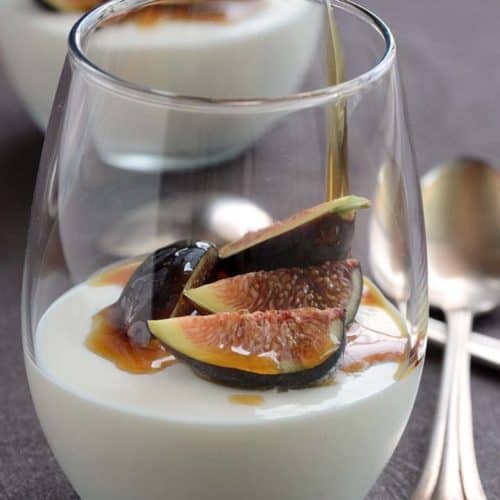
This Yogurt Mousse with Honey and Fresh Figs recipe balances a sweet and slightly tangy, airy mousse with fresh sweet figs.
A while ago, a sweet friend me a copy of a book he thought I’d enjoy, called Mourad: New Moroccan by Mourad Lahlou. My friend knows me well because I swooned over this book the instant I opened it.
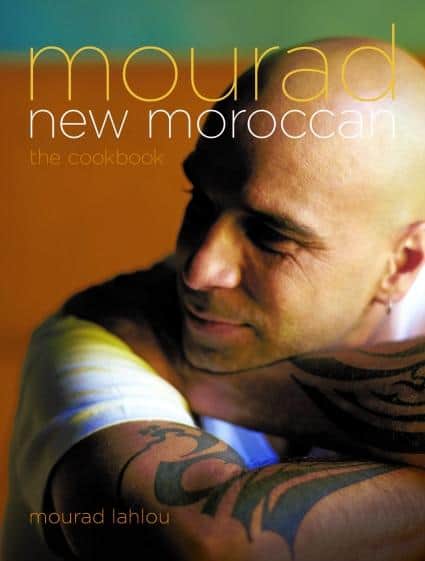
Mourad: New Moroccan by Mourad Lahlou
Mourad: New Moroccan by Mourad Lahlou
The Recipes
Mourad’s voice is very real. You can tell he’s one of those people who cook from the heart, without over-thinking or over-complicating things. His book includes a good amount of classic Moroccan favorites (like Basteeya, Merguez, and Couscous), but even his take on classic dishes is somehow reinvented, making everything feel fresh and relevant to the way people want to eat today. And I was so impressed by his trend-setting new recipes inspired by Moroccan cuisine, like Date Leather and Fig Leaf Ice Cream.
The Writing
Just as much as the recipes, I loved the writing in this book. Explanations are spot-on, recipes are easy to follow, and the stories and anecdotes about life and travel had me not wanting to put this book down. In particular, Mourad’s introduction to the chapter “Rite of Spring”, his chapter on meats, captivated me. It hit a personal note with me.
Mourad describes the first time he slaughtered a lamb, in the most eloquent of detail. In Morocco (and other Islamic societies), an animal must be slaughtered in the most humane way possible. He talks about how the day started like any other holiday – sun shining and big family breakfast. The whole family (about 30 people) gathered in the courtyard to witness the ritual, and as it came time, the air became thick and still and Mourad’s grandfather said a prayer of thanks for the animal and the sacrifice it was about to make.
Mourad goes on to say that this ritual might seem barbaric; he says “But I’m telling you that it’s the opposite, not simply because the slaughter is done in a humane way, but because the act of witnessing it is a reminder that we can never take a life for granted. When you’ve seen an animal give its life for you, you don’t take it lightly. You cook it with care. You eat it with respect. And perhaps the greater barbarism is never coming face to face with that, and pretending that meat comes from a market, not an animal.”
A couple months ago, my husband Mike (who is a great lover of lamb) took me to a halal butcher to watch a lamb being slaughtered. I really didn’t want to go at first, but I think it’s important to understand where our food comes from.
Honestly, I think this is something everyone who eats meat should see at least once. Even so, it isn’t something that is easy to watch. I couldn’t help but silently weep, tears streaming down my face. It is incredibly humbling to watch an animal give its life so you can sustain yours. Anyway, Mourad’s story was just one of the many reasons I fell in love with this book.
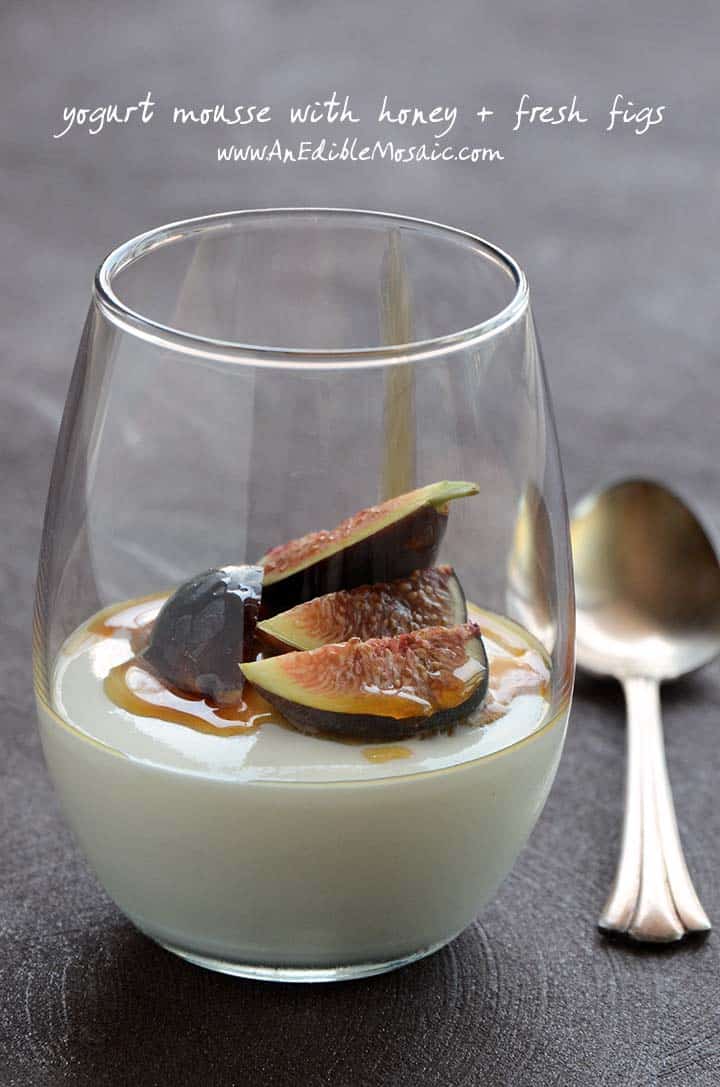
Yogurt Mousse Recipe From Mourad: New Moroccan
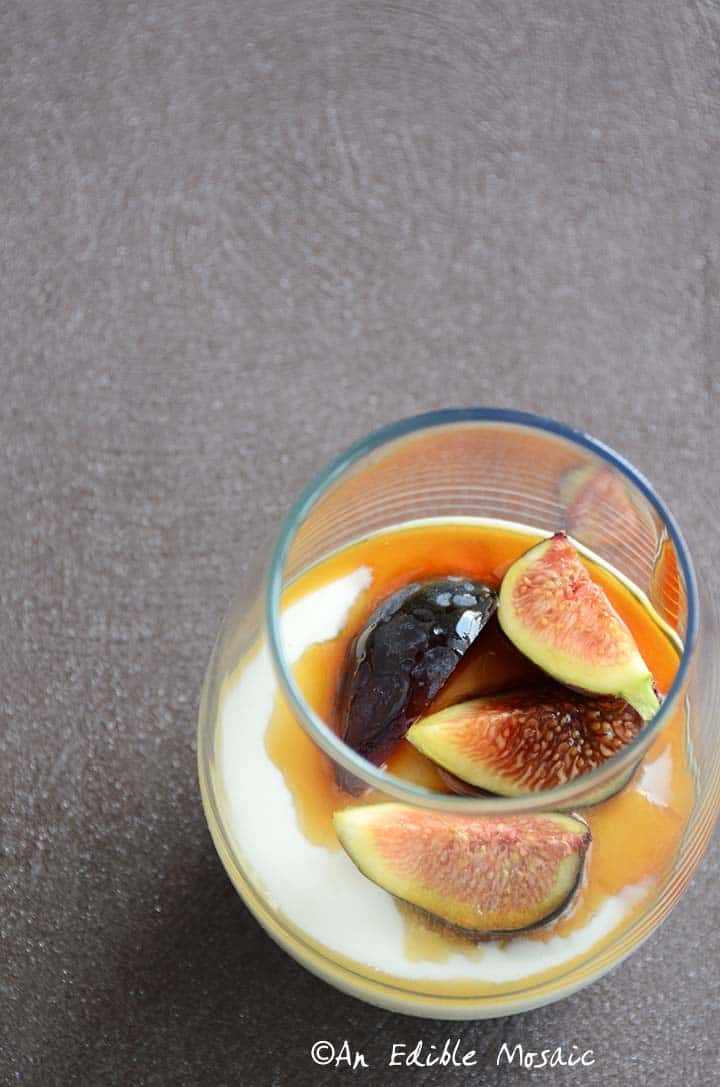
The first recipe from the book I tried was Yogurt Mousse, which was lovely. It was similar to Panna Cotta, but a bit lighter and more airy. Additionally, it a more complex flavor because of the yogurt. I topped it with fresh figs and raw, local honey. It’s a really lovely treat, especially when fresh figs are in season.
What Other Type of Fruit Could I Use?
If figs aren’t in season or if they’re not your thing, this recipe would also be great with the following fruit or fruit spreads:
- Ripe, fresh peaches or plums
- Blueberry Jam with Ginger and Lemon
- Sugar Free Strawberry Jam
- Roasted Balsamic Black Pepper Cherries
- Vanilla Mango Preserves
More Yogurt Desserts:
- Tangy Whipped Yogurt with Honey-Muddled Red Raspberries and Sumac
- Easy No-Churn Mango Lassi Frozen Yogurt
- Vanilla Yogurt with Grape and Blueberry Compote with Honey and Fresh Rosemary
- Healthy 3-Ingredient Strawberry Yogurt Popsicles
- Dark Chocolate Olive Oil Cake with Blueberries and Ginger
Did you make this recipe? Please rate it and leave a comment below because I love hearing from you! You can also tag @anediblemosaic on social media. To stay up-to-date FOLLOW ME on Instagram, Twitter, and Facebook. Xoxo, Faith
Yogurt Mousse with Honey and Fresh Figs
Email This Recipe
Get this recipe link emailed straight to your inbox!
Ingredients
- 3 1/2 tablespoons cold water divided
- 1/2 teaspoon powdered gelatin
- 3 tablespoons heavy cream
- 1/2 cup Greek yogurt
- 2 tablespoons powdered sugar
- 1/2 teaspoon pure vanilla extract
- 2 fresh ripe figs quartered
- 1 tablespoon honey preferably raw local honey
Instructions
- Put 1/2 tablespoon of water in a small bowl and sprinkle the gelatin on top; gently swirl the bowl to help the gelatin dissolve. Once solid, remove the gelatin and break it into 2 pieces; put them in a small bowl. Bring the remaining 3 tablespoons of water to a simmer in a small saucepan over medium-high heat. Pour the hot water onto the gelatin and gently whisk with a fork to dissolve. Cool for 5 minutes.
- While the gelatin mixture cools, put the heavy cream in a medium bowl. Use a handheld electric mixer to beat it until it’s thickened but doesn’t yet hold a shape. Transfer to the fridge.
- Use a handheld electric mixer to beat together the yogurt, powdered sugar, vanilla, and gelatin mixture in a small bowl until the mixture is very thick, and you can see a trail of the whisk as it whips.
- Gently fold the yogurt mixture into the whipped cream, adding half at a time. Pour into 2 individual serving bowls and refrigerate until set, about 2 to 4 hours (or overnight).
- Serve topped with figs and honey.
Notes
- Adapted slightly from Mourad Lahlou’s recipe for Yogurt Mousse in Mourad: New Moroccan; Artisan, 2011.
- Add a small handful of granola and enjoy this for breakfast!
Nutrition
Nutritional information is automatically calculated and should be used as an approximate.
Share it with me on Instagram and leave a comment to let me know your thoughts!
Disclosure: This post contains Amazon affiliate links to products I believe in, which means that even though it doesn’t cost you anything extra, I will receive a small amount of money from the sale of these items. Thank you for helping to support An Edible Mosaic!


I’m the writer, recipe developer, photographer, and food stylist behind this blog. I love finding the human connection through something we all do every day: eat! Food is a common ground that we can all relate to, and our tables tell a story. It’s my goal to inspire you to get in the kitchen, try something new, and find a favorite you didn’t know you had.
Free Bonus

















Oh. My. God. This is gorgeous. And looks incredible. Wow.
I am very late in commenting here, but I just want to tell you how beautiful this post is. Like others have said, it was very brave of you to witness the slaughter of the lamb, and oh so powerful. You will never forget that experience. And, no matter how thoughtful one is – in the broadest sense of the word – it can only make you a better person. The Yogurt Mousse – and the cookbook and your friend – sound amazing. Must look out the book on amazon. I hope veg gelatin is okay.
This dish looks gorgeous, and with such a simple and stylish presentation! I just stumbled upon your blog, and I’m so happy I did!
This looks so delicious! I love recipes like this that honor the fresh ingredients they are comprised of!
This recipe looks sweet, creamy and tasty! It would definitely satisfy my sweet tooth and I would enjoy having such a pretty dessert in front of me. Your figs are gorgeous and I’m definitely going to get ahold of mourad’s cookbook at your recommendation! :)
Really interesting book and author. Wow you went to a slaughter. What an experience, even if hard. I prefer concentrating on this mousse and figs.
This looks amazing! Those fresh figs are CALLING my name!
ohhh yup this looks lovely :) it’s kind of healthy too with the use of Greek yoghurt instead of cream hehe ~ i’m a newbie to figs but love their sweetness ~
A wonderful dessert for Eid Faith! And I can imagine it would have been so confronting to see the lamb being killed although I think you’re right, you need to know that this happens in order to get food to people.
Faith,
Just got back from a holiday and your post kept the big smile on my face going. You are truly one of the sweetest and sincere people I have met through blogging.
So glad we are friends. Thank you for the kind words. Gorgeous post. Happy you enjoyed the book.
Be well
That cookbook is actually on my WANT list! (BUt I WANNNNTTT yours more). This mousse sounds divine!!
The simplicity of this dish is absolutely stunning… You’ve really elevated a few simple ingredients into something truly memorable. Your photos of course are what sell it. The clarity you captured in the fine details is out of this world!
I don’t think I’m brave enough to watch an animal sacrifice its life. What a pretty dessert! Love the combination of creamy mousse and juicy figs.
He..he…indeed, great minds do think alike..love your Mousse version…pinned it!
What lovely photographs! So lush and incredible appetizing! Definitively, I should try this dessert! xoxo
Wow Faith, what an intense experience. I bet if more of us where witness to this great sacrifice, we would be much more rigorous when selecting where our animal proteins come from. Off to check out Lazaro Cooks. Thanks!
Wow I am captivated by the photos! Looks so delicious. Yogurt, raw honey and fresh figs… I just feel like eating it now but it’s not easy to get fresh figs from my area. Waiting (fingers-tapping)…
I was just reading excerpts from this book today. It looks wonderful with unique recipes. This one looks simple, elegant and delicious.
That was very sweet of Laz! I checked that one out from the library a while back and remember I really wanted to try that meat pie that had the sugar on top. It’s so intriguing! Alas, I never got around to it. Have you ever made anything like that? I love your yogurt mousse and I’m having fresh fig envy. Never had a fresh fig! Some day.
I love fresh figs and love your pictures. Watching an animal get killed and then put on the table is rough. I witnessed a chicken get killed when I was little and when it was time to eat dinner every bite was so hard to do. You are right about respecting the food we eat.
oh my gosh…I couldn’t watch an animal be killed. I totally understand your thoughts…I just don’t think I could do it! What a fantastic recipe. Sounds just delicious. Laz is totally creative
Oh Faith, I do understand your grief at witnessing the butchering. It was so hard for me the first time I butchered chickens and goats here on our farm, but now I feel exactly like this inspiring man. Grateful. Aware. Respectful. Your mousse dish is so beautiful. :-)
A delicious dessert! So fresh and refined.
Cheers,
Rosa