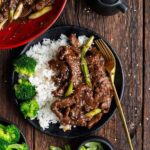
Copycat PF Chang's Mongolian Beef Recipe (And How to Make Velveted Beef)
This Mongolian beef is a PF Chang copycat recipe with stir-fried meat in a rich sweet and savory sauce. Budget-friendly flank steak becomes incredibly tender using an easy cooking technique called velveting, and it only takes 15 minutes!
Servings 6 servings
Calories 278kcal
Equipment
- Wok or a large, deep skillet
Ingredients
Velveted Beef:
- 1 1/2 pounds flank steak
- 3/4 cup water
- 1/4 cup low-sodium soy sauce or tamari sauce or coconut aminos
- 1 tablespoon baking soda
Mongolian Beef Sauce:
- 1/4 cup low-sodium soy sauce or tamari sauce or coconut aminos
- 1/4 cup light brown sugar lightly packed
- 6 large cloves garlic crushed
- 1 tablespoon freshly-grated ginger
- 2 tablespoons rice vinegar
- 1 tablespoon toasted sesame oil
- 2 teaspoons cornstarch
- 1/2 teaspoon white pepper
- 1/8 teaspoon salt optional
Other:
- 2 tablespoons vegetable oil or avocado oil
- 6 scallions ends trimmed and sliced into 2-inch pieces
- 1 teaspoon sesame seeds
Serving Suggestions:
- Steamed broccoli
- Steamed jasmine rice
Instructions
For the Velveted Beef:
- Slice the flank steak across the grain into 1/4-inch thick slices.
- Whisk together the water, soy sauce, and baking soda in a large bowl. Add the sliced steak and stir to coat. Let it sit at room temperature for 15 minutes.
- Drain the meat and rinse it well under cool running water.
For the Mongolian Beef Sauce:
- Add all ingredients to a medium bowl and whisk until smooth. Set aside for now.
To Cook:
- Heat a wok (or a large, deep skillet) over high heat. Once hot, add the oil, and then add the beef in a single layer. Cook for 5 minutes, letting it sear for 2 minutes before stirring.
- Stir in the sauce and cook until thickened, about 1 to 2 minutes, stirring constantly.
- Stir in the scallion and cook 30 seconds. Remove from the heat and sprinkle on the sesame seeds.
- Serve along with broccoli and rice.
Notes
- Storage: You can store leftovers in the fridge for up to 4 days or in the freezer for up to 3 months. I like to make what I call PF Chang's Mongolian beef bowls. To do so, I portion a serving of beef stir fry, steamed jasmine rice, and steamed broccoli or green beans into glass meal prep containers and pop them in the fridge or freezer depending on when I want to eat them.
- Reheating: If you're reheating meal prepped bowls with beef stir fry, rice, and a steamed vegetable, you can reheat it in the microwave or in the oven. For the microwave method, make sure the food is in a microwave-safe dish. Remove the dish's cover, and place a damp paper towel directly on top of the food (this will help prevent it from drying out). Heat it for 2 minutes and 30 seconds at 80% power, then stir the food and heat it in additional 45-second increments at 100% power until it's warm throughout. For the oven method, put the food in an oven-safe dish and cover it with foil. Heat it in a preheated 250F oven until warm, about 20 to 25 minutes, stirring once halfway through. And if you're reheating just the meat, you can reheat it in either the microwave or oven using the same methods described above, or heat it in a skillet on the stovetop over medium-high heat for about 3 to 5 minutes, stirring frequently.
- Velveting Time: When you're velveting the beef, don't let it soak for more than 15 minutes. Additionally, make sure to rinse it well until cool running water after it's done soaking. If you let it go for longer than that or don't rinse off all the baking soda, this tenderizing technique works so well that your meat can become mushy.
- To Add Spicy Heat: If you like stir fry with a spicy kick, it's easy to add heat here. You can add hot chili peppers or crushed red pepper flakes to taste. Start with less because you can always add more!
- Flavor Variation: For deeper, more complex flavor, you can add up to 1/2 teaspoon of Chinese five spice. This spice mix refers to the fact that it contains five traditional elements of Chinese cuisine: sweet, sour, salty, bitter, and spicy. The spices and ratios vary, but this blend frequently includes star anise, cinnamon, Sichuan peppercorns, fennel seeds, cloves, ginger, white pepper, and cardamom.
- Gluten Free Version: Instead of soy sauce, use tamari sauce or coconut aminos.
- Paleo Version: In place of of soy sauce, use coconut aminos or liquid aminos. Substitute coconut sugar for the brown sugar. Skip the cornstarch and use 2 teaspoons arrowroot starch or 4 teaspoons tapioca starch.
- Low Carb and Keto Friendly Version: Use liquid aminos instead of soy sauce, and keto brown sugar instead of regular brown sugar. If you don't mind a thinner sauce you can just omit the cornstarch, or you can use 1 teaspoon beef gelatin or 1/4 teaspoon xanthan gum instead.
- To Reduce the Sodium: If you tend to steer clear of a lot of Chinese foods because of their high sodium content, here are a few tips to lower the sodium in this recipe:
- Use low-sodium soy sauce.
- Skip the soy sauce in the velveting mixture.
- Omit the added salt in the Mongolian beef sauce.
- And if you really want to cut the sodium, make a half-batch of the sauce. It will still have enough sauce to coat all the meat, it just won't be extra saucy.
Nutrition
Calories: 278kcal | Carbohydrates: 13g | Protein: 27g | Fat: 13g | Saturated Fat: 3g | Polyunsaturated Fat: 4g | Monounsaturated Fat: 4g | Trans Fat: 0.03g | Cholesterol: 68mg | Sodium: 1428mg | Potassium: 525mg | Fiber: 1g | Sugar: 9g | Vitamin A: 120IU | Vitamin C: 3mg | Calcium: 57mg | Iron: 2mg