
This post may contain affiliate links, view our disclosure.
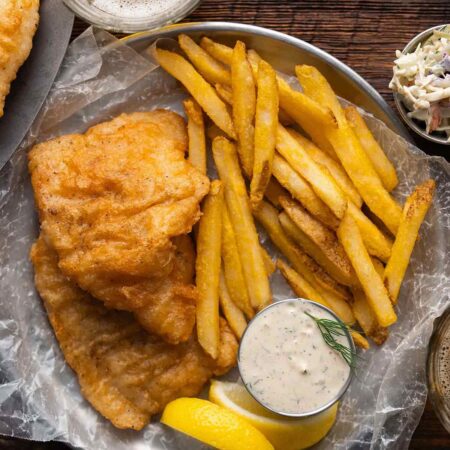
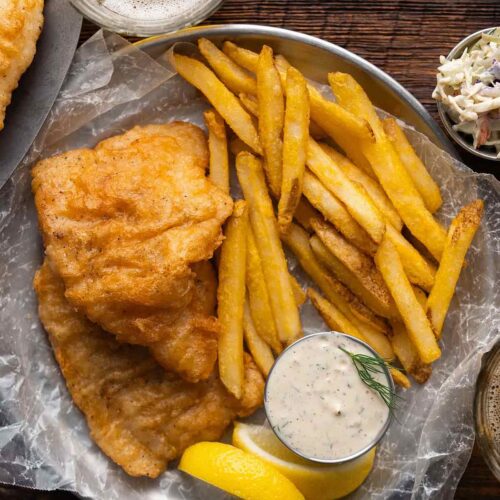
Learn the secret for the best beer battered fish fry; just like fish and chips at your local pub, this recipe results in a crispy, golden coating and flaky, tender fish. Step-by-step photos and a recipe video guide you through the whole process to ensure it comes out perfect every time!
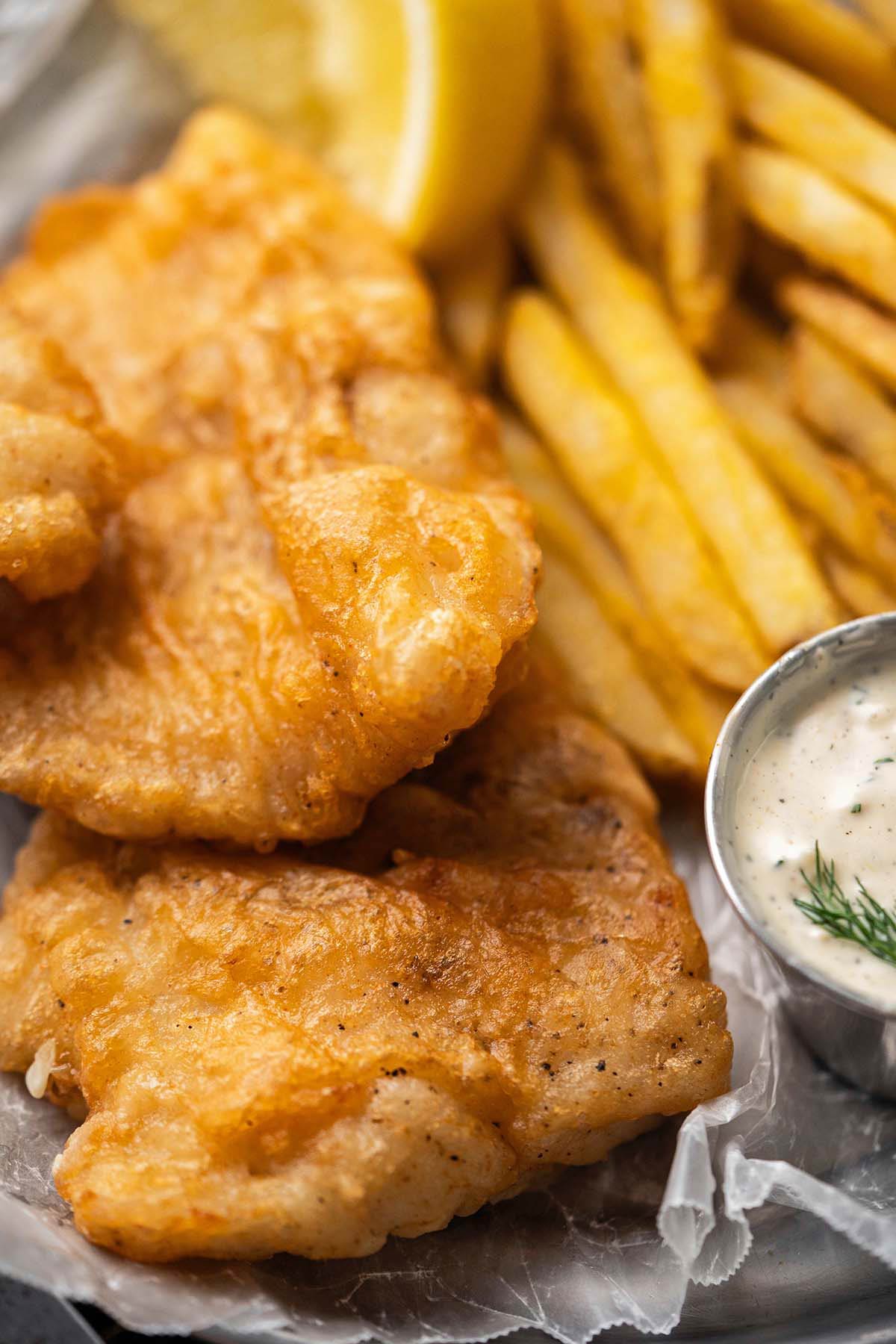
In Buffalo, Friday night fish fry is a thing, so I grew up with really good fish fries (a classic fish fry dinner with the fixings was one of my dad’s favorites!). There’s a large Catholic population in the area so this dish particularly popular during Lent, but it’s surprisingly common year-round. Beer battered and fried haddock served with a side of coleslaw, fries and/or potato salad, tartar sauce, and a lemon wedge to squeeze on top – it doesn’t get much better if you’re a seafood fan!
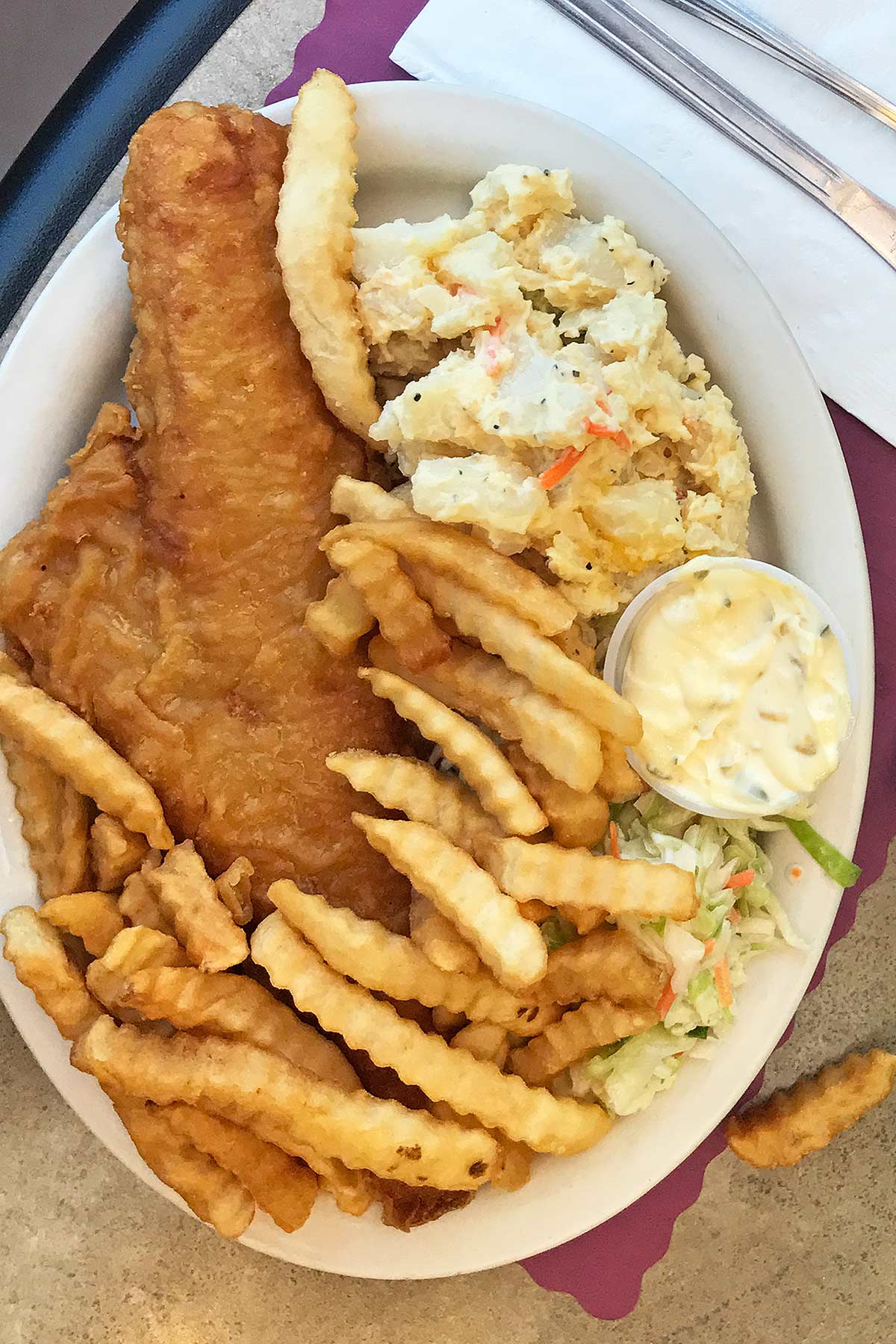
I’ve also had fish and chips in London, and it’s very similar to what I grew up with, except a bit brighter yellow color because of turmeric added to the batter. When I had it, the fish used was cod (but I was told haddock is also common); it had a lovely crunchy beer batter coating and the fish was tender and flaky. Served English style with (of course) piping hot chips (aka thick-cut fried potatoes) and mushy peas if you like (which I know are not for everyone, but are surprisingly so much better than they sound!).
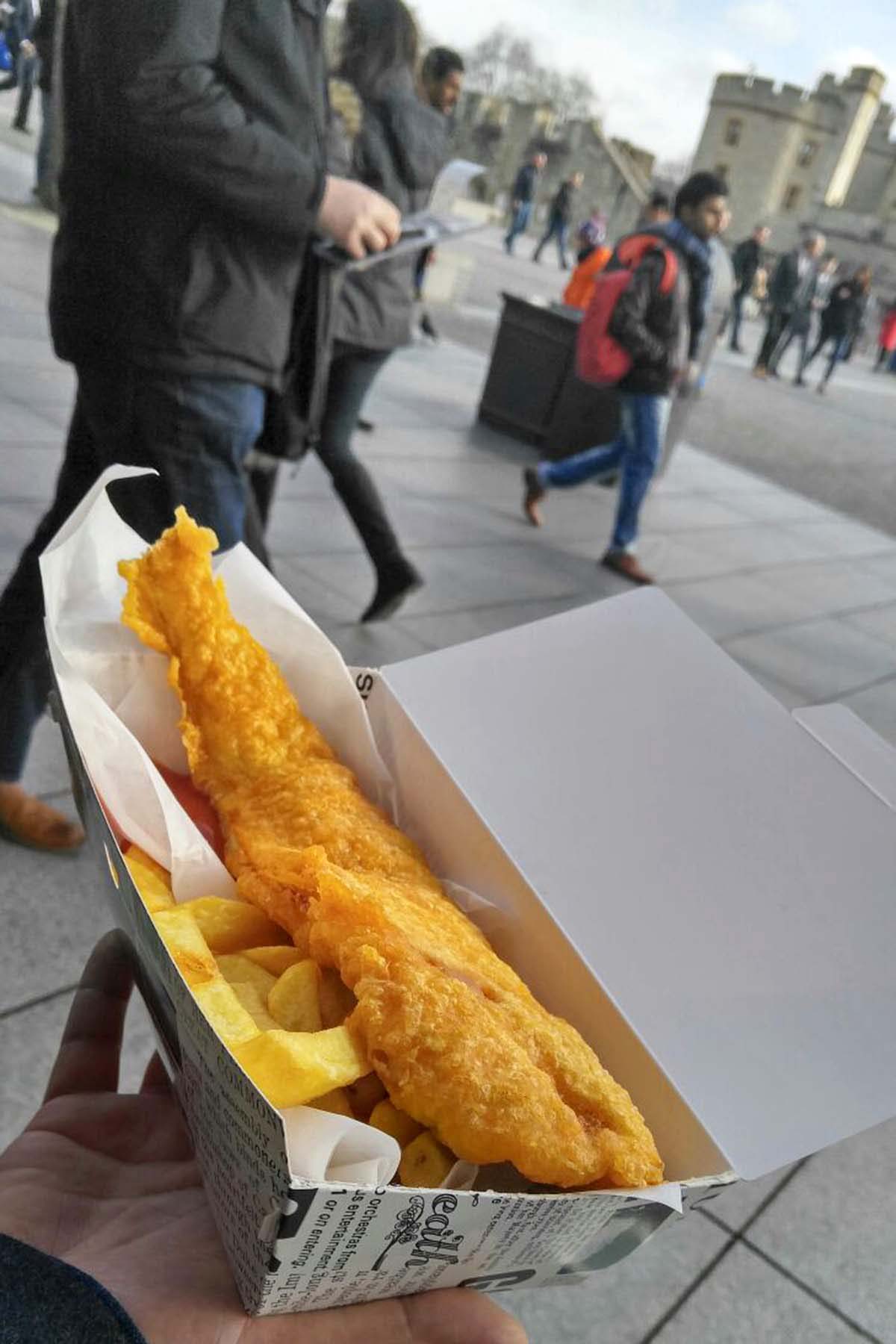
When a recent craving hit, I tried English style fish and chips from a local pub here in Florida. Not only did it deliver fish fry perfection, but it got me thinking that I should try my hand at making it. If you’re like me and very rarely make deep fried food, I have to say, this recipe is worth it. If a random once-a-decade craving hits, this is a much more affordable way to satisfy it! And you can freeze fried fish for up to a month, so go ahead and make a double batch to stock your freezer.
This recipe is straightforward and beginner-friendly. And I’m sharing my best tips (including the secret tricks to great fish and chips), so you can make this classic dish at home and have it taste like it came from your local pub!
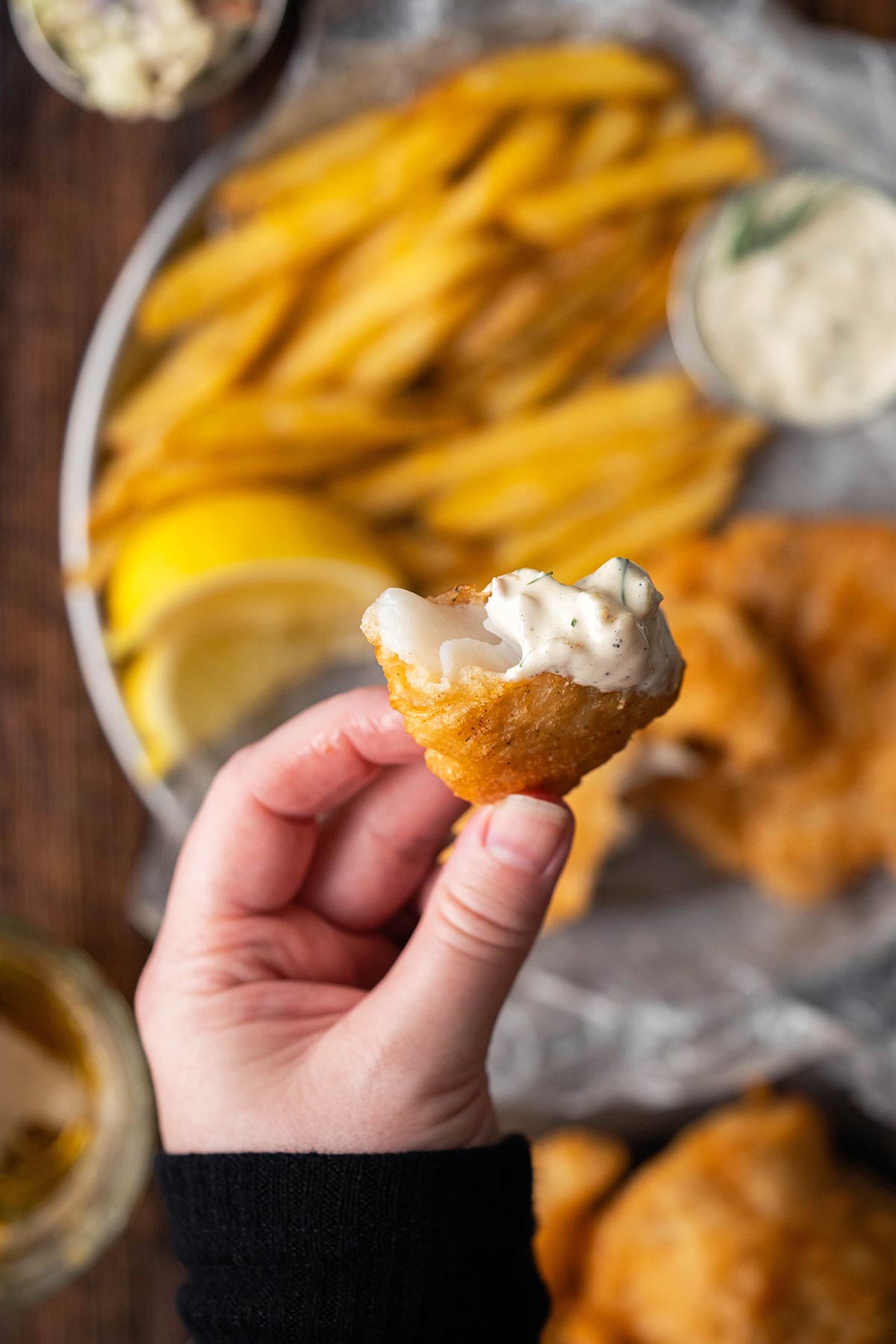
What Makes This Recipe a Winner
- The light, crispy beer batter coating. It adds delicious flavor and crunch to offset flaky, tender fish.
- If you like ordering fried fish when eating out, you’ll save a ton of money by making it at home. And bonus, you get to use whatever kind of fish you like!
- Once you learn this easy method for making beer batter, you’ll think of a ton of different ways to use it. You can make beer battered zucchini, mushrooms, onions, chicken, tofu, mozzarella sticks, and more!
- You can meal prep this fish. This dish is freezer-friendly. The crunchy batter actually stays crispy and the fish reheats really well!
Ingredients
Breaking It Down
Ingredients Explained
In this section I explain the ingredients and give substitution ideas where applicable. For the full recipe (including the ingredient amounts), see the recipe card below.
Tartar Sauce Ingredients
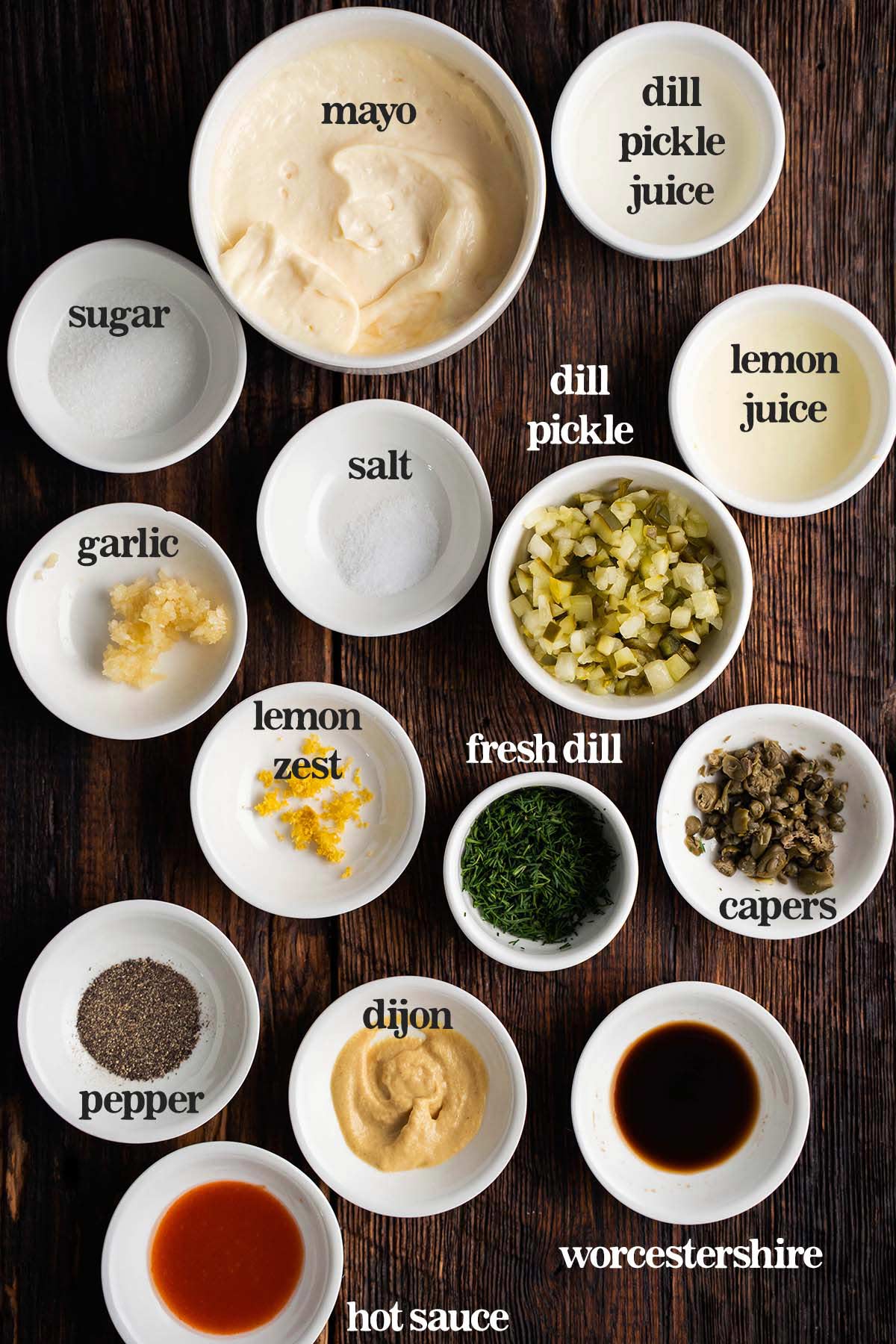
- Mayo – Mayo is the rich, creamy base for this sauce.
- Minced dill pickle – Instead of relish, I like to mince dill pickle, but relish (sweet or dill) will also work. If you use sweet relish, you can swap out the dill pickle juice for lemon juice.
- Dill pickle juice – Instead of adding vinegar, here we add brine from the jar of dill pickles. Combined with fresh lemon juice, it adds just the right amount of tanginess to this creamy sauce. Instead of dill pickle juice, you can use more fresh lemon juice or half white vinegar + half water.
- Fresh lemon juice and zest – In this recipe we use both fresh lemon juice and zest for tangy, citrusy flavor notes.
- Fresh dill – Dill is a classic ingredient and a lovely addition to tartar sauce, adding a fresh, bright flavor. To me, it’s one of the key ingredients that creates the signature flavor profile! However, if dill isn’t your thing, you can substitute with fresh parsley instead. And if you don’t have fresh dill on hand, you can use 1 teaspoon of dried dill weed.
- Capers – Capers add little bursts of salty, tangy flavor. Don’t worry if you don’t have them on hand, they’re optional here.
- Garlic – Using fresh garlic instead of garlic powder makes all the difference here.
- Worcestershire sauce – This savory fermented condiment packs a punch of umami into this creamy sauce.
- Dijon mustard – For a sharp background note that cuts through the mayo’s richness.
- Hot sauce – This is optional; the amount that this recipe calls for won’t make this spicy-hot, it just adds depth. And of course, feel free to add more or less to taste.
- Sugar – Just a little bit of sugar helps create a balanced flavor profile.
- Salt and black pepper – These pantry-staple spices make sure this isn’t bland.
Beer Batter Ingredients For Fish Fry

- Fish filets – Firm-fleshed, mild-flavored white fish works well here, such as haddock or cod. Cut the filets into 8 4-ounce pieces.
- Salt – We season the beer batter and the fish filets with a little salt. This way, we don’t have to add salt once they’re done frying.
- Black pepper – To season the fish.
- Cornstarch – The cornstarch serves double duty in this recipe. We dust the dried fish fillets with cornstarch, which absorbs the excess moisture and also helps the batter stick. Additionally, we add cornstarch to the beer batter, which helps make the batter light, resulting in ultra crispy fried fish!
- All-purpose flour – Use regular all-purpose flour or your favorite gluten free 1:1 all-purpose flour blend.
- Garlic powder and onion powder – For savory depth of flavor.
- Sweet paprika – I like to use paprika instead of turmeric for deep golden color because I also like the flavor that paprika lends here. My preference is smoked sweet paprika in this recipe, but you can also use regular sweet paprika, smoked hot paprika, or regular hot paprika, depending on what you like.
- Baking powder – Baking powder leavens the batter, and helps create a lighter, crispier coating by introducing small air bubbles as it reacts with the liquid ingredients. This results in a crunchier texture and prevents the batter from becoming too dense or heavy.
- Beer – You can use any type of light-colored beer you like for this recipe. Or for fish and chips without beer, you can use alcohol-free beer or club soda instead.
- Vegetable oil – For deep frying. Instead of vegetable oil, beef tallow is another good option.
Step-by-Step Instructions
Here are step-by-step instructions to walk you through making this recipe. For the recipe video, please see the recipe card below.
1: How to Make Tartar Sauce (The Perfect Dipping Sauce For Fish and Chips!)
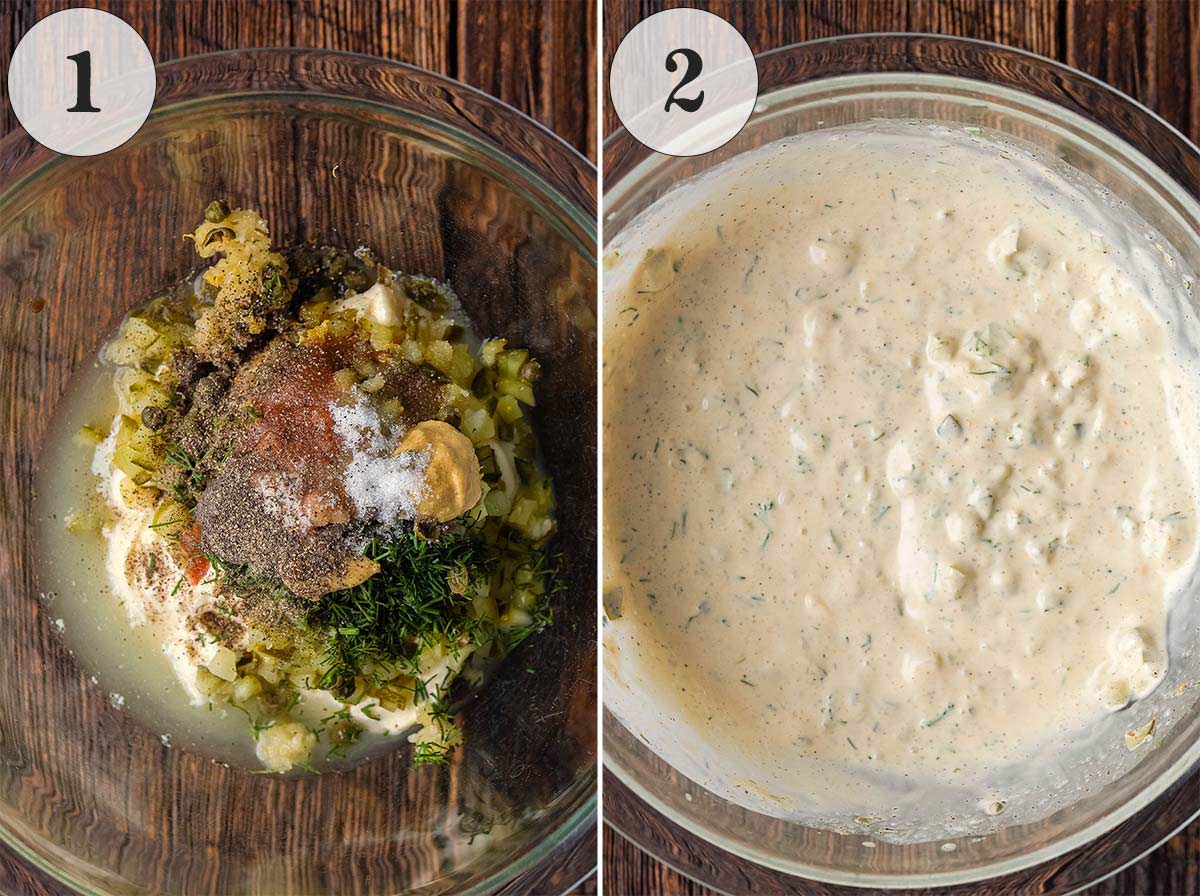
- Add all ingredients to a medium bowl.
- Stir well; taste and adjust seasonings if desired. Cover and refrigerate until serving.
2: Prep the Fish For Battering
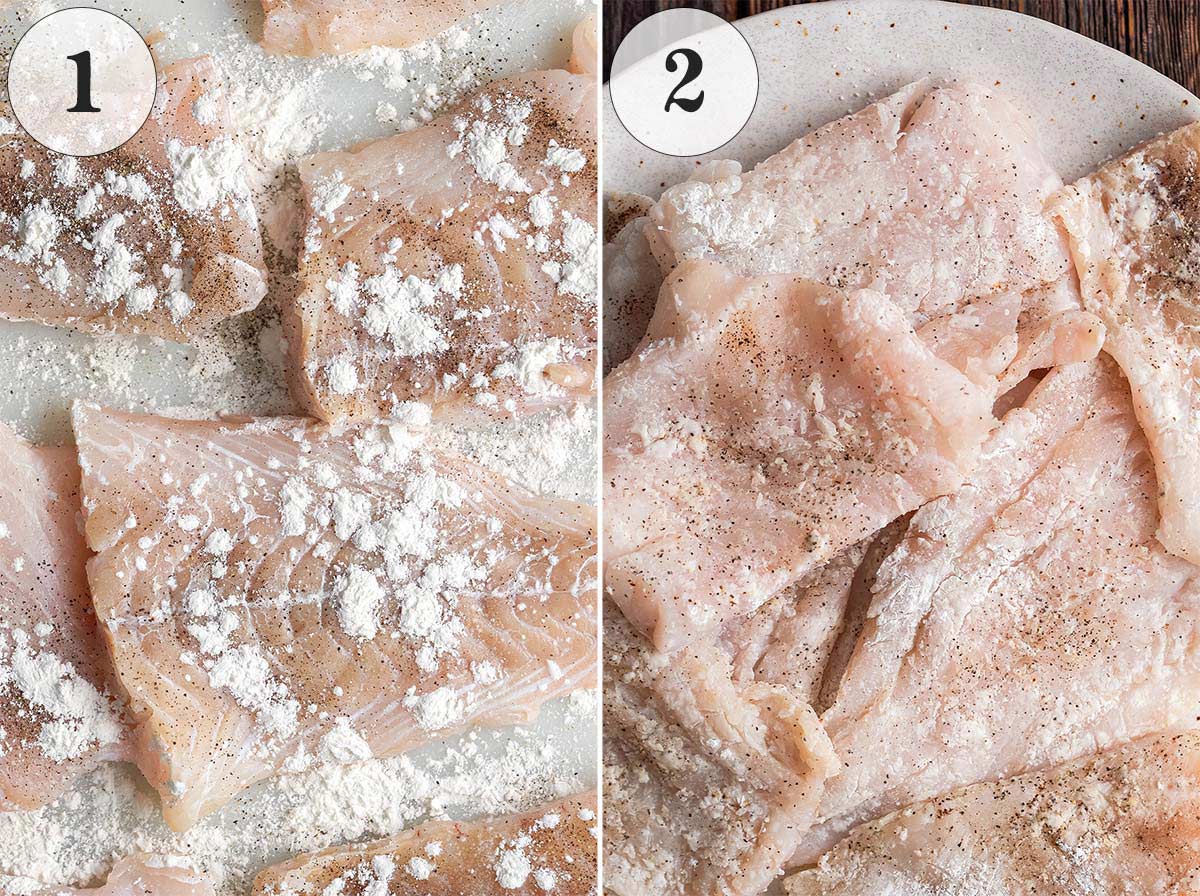
- Lay out the fish on a cutting board, and pat it dry. Sprinkle 1/2 teaspoon salt, 1/2 teaspoon black pepper, and 3 tablespoons cornstarch on both sides.
- Rub the cornstarch around to evenly coat, and then gently shake off the excess.
3: How to Make Fish Fry Batter

- Add the flour, remaining 2 tablespoons cornstarch, remaining 3/4 teaspoon salt, garlic powder, onion powder, smoked paprika, and baking powder to a large bowl, and whisk to combine.
- Add the beer and whisk together.
- The batter will be lumpy, and should be like a thin pancake batter. Let the batter rest for about 15 minutes (about the time it takes to heat up the oil), or up to 45 minutes.
PRO TIP: Now is a good time to heat up the oil. To do so, add it to a heavy-bottomed 5-quart pot, and heat it to about 365F, adjusting the heat up or down as necessary to keep it as close to this temperature as possible.
4: How to Batter and Deep Fry Fish

- Dip a piece of fish in the batter, let the excess batter drip off, and carefully slide it into the hot oil.
- Repeat until you have a couple pieces of battered fish to cook at a time, being careful not to over-crowd the pot. Cook the fish until golden on both sides, flipping once (about 3 to 5 minutes).
- Use a slotted spoon to transfer the cooked fish to a baking tray lined with a wire rack; pop it into a 200F oven to stay warm while you fry the rest of the fish. Cook the remaining fish the same way.
How to Cook Potatoes, Fish and Chips Style
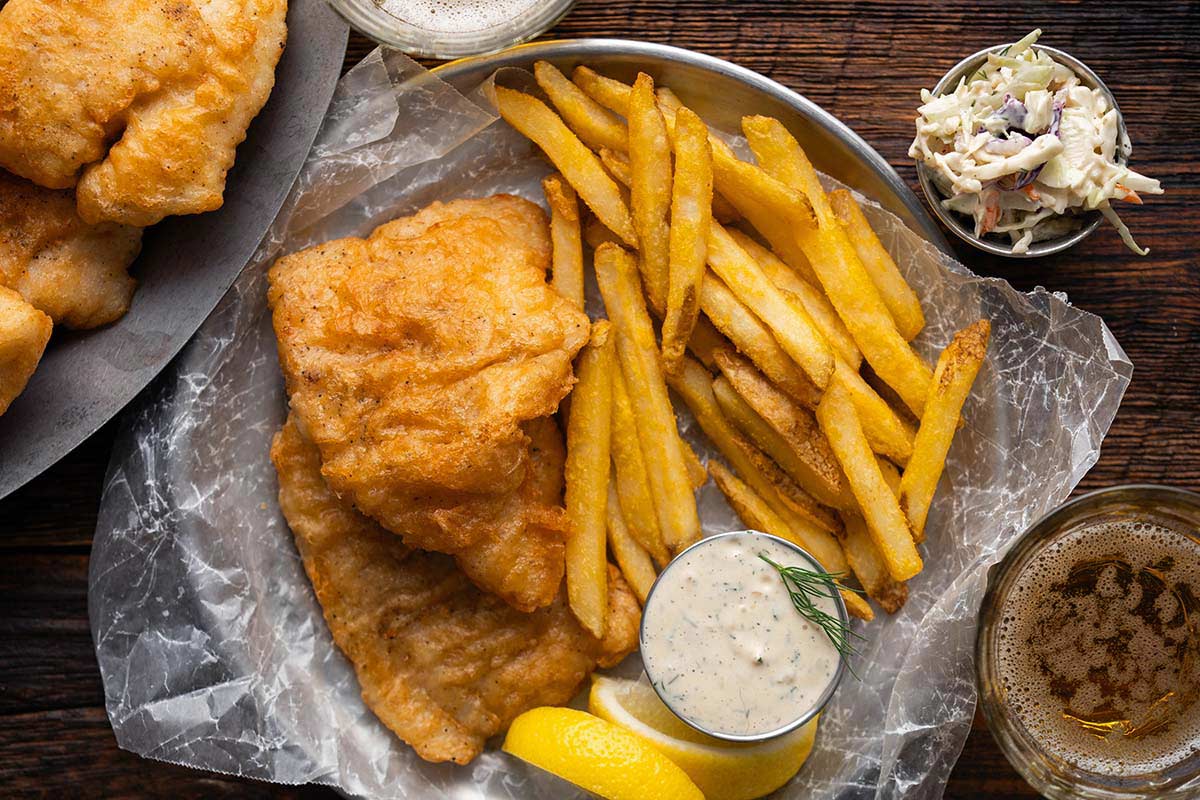
If you’re making classic British pub style fish and chips, of course you need potatoes! You can always pick up a bag of French fries in the freezer section of the grocery store, but if you’re feeling adventurous, you can easily make the real deal at home.
Here’s how to get perfect crispy outside, fluffy inside chips:
- Use starchy potatoes (such as Russet).
- Cut them thick (about 1/2-inch wide).
- Soak them (in cold water for 30 minutes to 2 hours), and then pat them dry.
- Double-fry them (first fry 5 minutes at 325F, drain and cool completely, and then second fry 5 minutes at 375F).
- Season with salt while they’re piping hot!
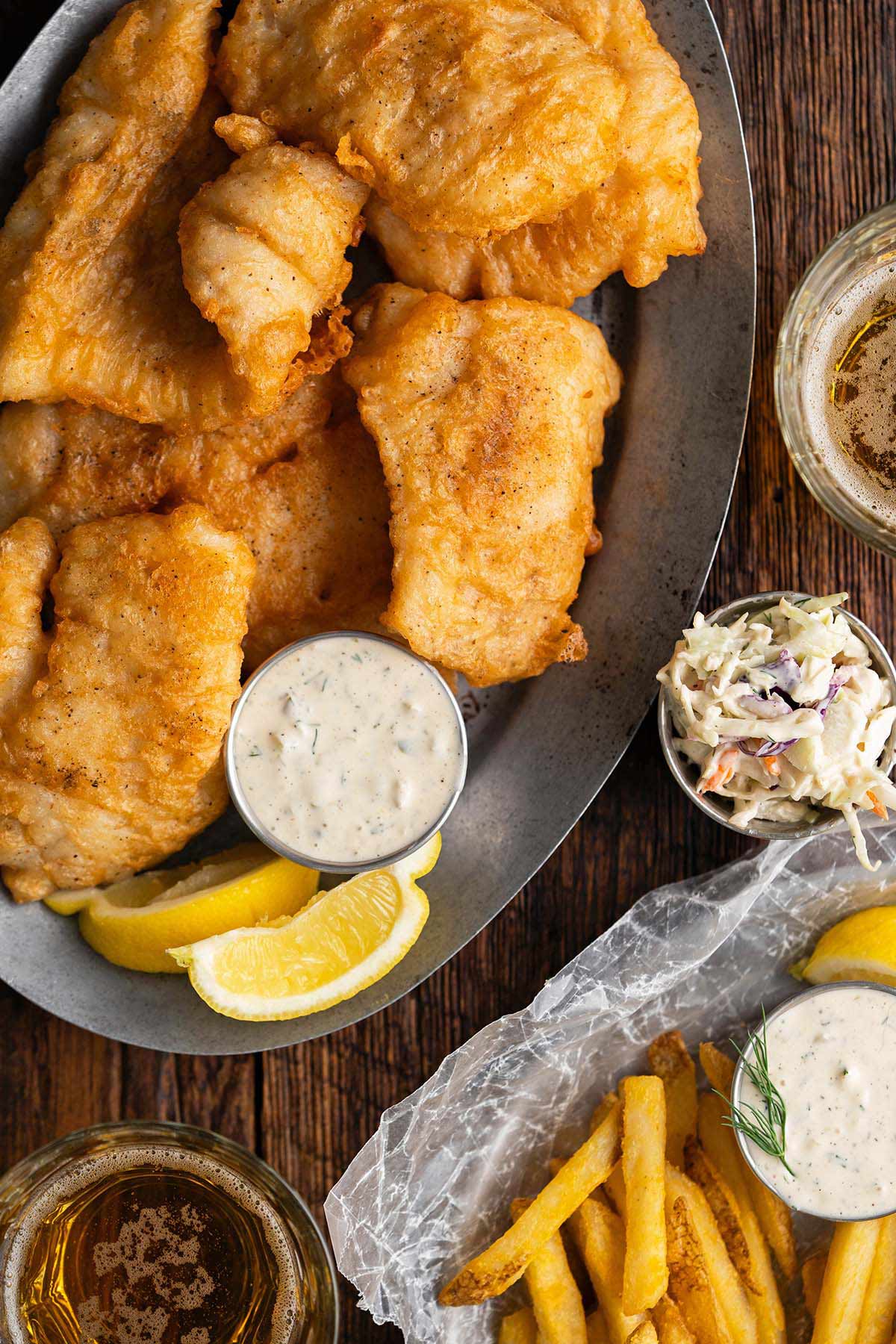
Storage
Store the tartar sauce in an airtight container in the fridge for up to 1 week.
Cool the fried fish to room temperature, and then store it layered between pieces of parchment paper in an airtight container in the fridge for up to 3 days or in the freezer for up to 1 month.
How to Reheat Fried Fish
To keep the coating crispy, avoid the microwave (unless it’s your only option), and reheat your fish fry in an air fryer, oven, or a skillet on the stovetop.
- Air fryer – Preheat to 320F. Add the fish directly to the air fryer basket and air fry for 6 to 8 minutes, flipping once halfway through.
- Oven – Preheat to 350F. Put the fish on a baking tray (lined with a wire rack if you have one, or lined with foil for easy cleanup), and bake for about 15 minutes.
- Stovetop – Preheat a skillet over medium to medium-low heat (you shouldn’t need to add oil since the fish was deep fried). Add the fish and cook until the it’s crispy outside and hot in the center, about 2 to 3 minutes per side, flipping once halfway through. (If your fish is thicker than 1 inch, cover the skillet but leave the lid ajar so the steam can help heat up the center of the fish.)
Tips For the Best Fish Fry (So Good You’ll Think it Came From the Local Pub!)
- First and foremost, choose the right kind of fish. Growing up in Buffalo, I’m partial to a local fish fry favorite: haddock! But cod, tilapia, or any firm-fleshed, mild-flavored white fish you like or have access to will work well for homemade fish and chips.
- The fish needs to be dry before we batter it so that the batter sticks and evenly coats the fish. Pat the fish fillets dry with paper towels and then season it with salt and pepper. Dust it with cornstarch, rub it around evenly to coat the fish, and then rub off the excess. Now you’re ready to dip in the batter!
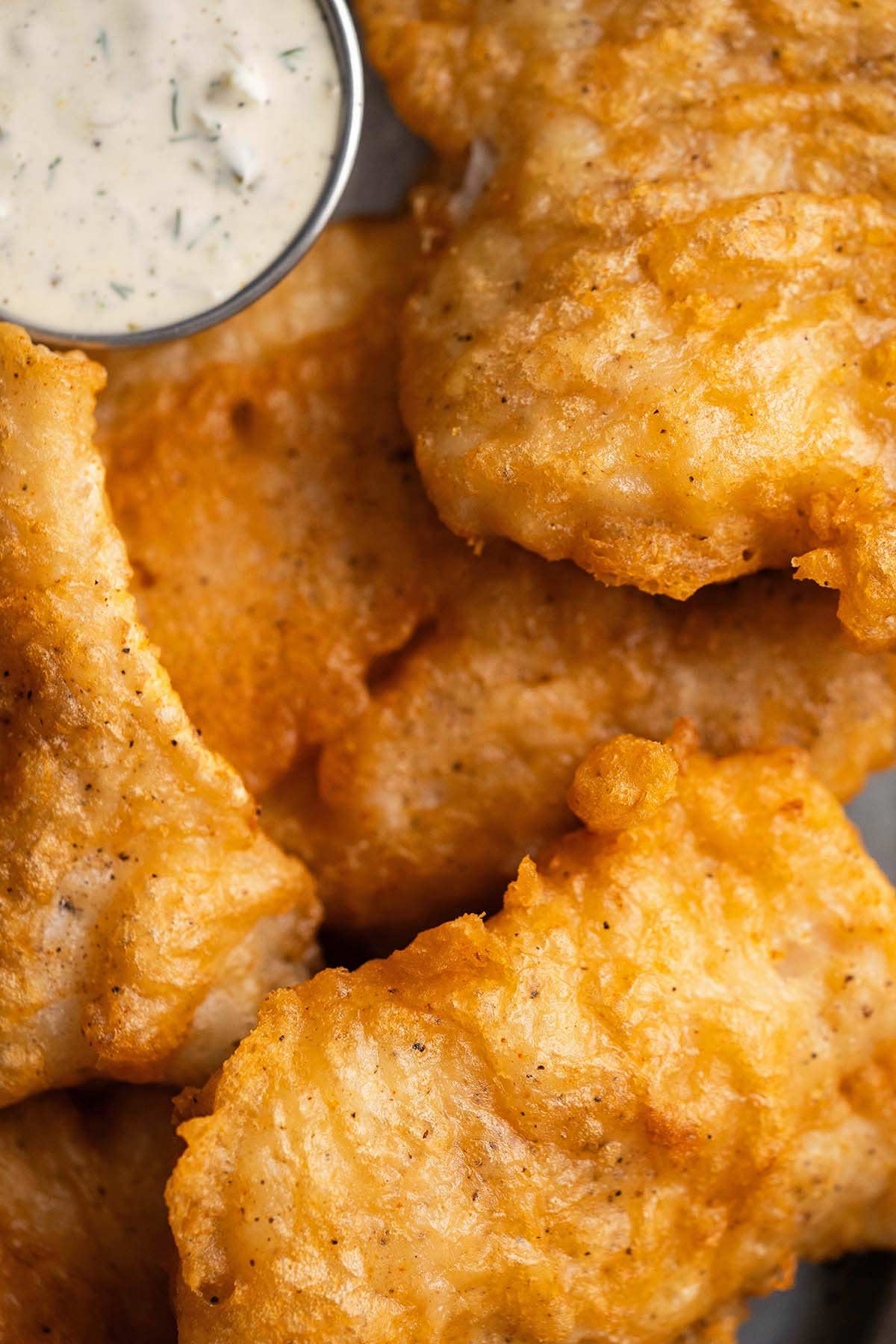
- Beer batter for fish (and onion rings) should be on the thin side (like thin pancake batter), so that it coats whatever you’re frying in an even layer all around and forms a crust to steam the fish inside. If the batter is as thick as regular pancake batter, it’s too thick; add more beer a little at a time to achieve the right consistency.
- Once you mix up the batter, let it rest for 15 minutes before coating the fish. This helps achieve the crispiest coating.
- Make sure to get the oil to the right temperature before frying. This will ensure a crispy (instead of oily) beer batter coating and help prevent the fish from becoming greasy.
Frequently Asked Questions
You probably have the all spices you need to season your fish fry right now in your pantry. A basic combination of salt, black pepper, garlic powder, onion powder, and paprika (sweet, hot, and/or smoked) work well. Use what you have on hand!
If you like spice and seasoning mixes, Old Bay is another common seasoning for seafood, lemon pepper seasoning is a good choice for a citrusy twist, and if you like a bit of heat, try Cajun seasoning.
A light beer, such as a lager or pale ale, works best for beer batter. I used Coors Light (back home Labatt Blue was my go-to!), but you can use whatever brand you like. And if you prefer, feel free to use a non-alcoholic lager, such as Heineken 0.0, Budweiser Zero, Stella Artois 0.0, Corona Non Alcoholic Mexican Lager, etc.
Firm, mild-flavored white fish works best, such as haddock or cod. Tilapia is also a great fish fry option, and so is walleye, perch, halibut, flounder, hake, and plaice in the UK.
More Classic British Recipes to Try
- Steak and Ale Pie – Another English pub food classic, this recipe is made in a muffin pan for perfectly-portioned individual pies.
- 10-Minute Welsch Rarebit – So much more than cheese on toast!
- Mini Sausage Rolls – Flaky, buttery puff pastry meets savory spiced sausage.
Let’s Connect

Did you make this recipe? Please rate it and leave a comment below. You can also tag @anediblemosaic on social media.
To stay up-to-date, follow me on Facebook, Instagram, Pinterest, and Twitter!
Beer Batter Fish Fry Recipe (For Pub Style Fish and Chips at Home)
Email This Recipe
Get this recipe link emailed straight to your inbox!
Equipment
Ingredients
Tartar Sauce:
- 3/4 cup mayo
- 4 tablespoons minced dill pickle
- 1 tablespoon dill pickle juice
- 1/2 tablespoon fresh lemon juice
- 1/2 teaspoon fresh lemon zest
- 1 tablespoon chopped fresh dill
- 2 teaspoons capers drained and chopped
- 1 clove garlic peeled and crushed
- 3/4 teaspoon Worcestershire sauce
- 3/4 teaspoon Dijon mustard
- 3/4 teaspoon hot sauce optional; more or less to taste
- 3/4 teaspoon sugar
- 1/4 teaspoon salt
- 1/4 teaspoon black pepper
Beer Batter Fish:
- 2 pounds firm-fleshed mild-flavored white fish filets, such as haddock or cod, cut into 8 4-ounce pieces
- 1 1/4 teaspoon salt divided into 1/2 teaspoon + 3/4 teaspoon
- 1/2 teaspoon black pepper
- 5 tablespoons cornstarch divided into 3 tablespoons + 2 tablespoons
- 1 cup all-purpose flour
- 1 teaspoon garlic powder
- 1 teaspoon onion powder
- 1/2 teaspoon sweet paprika I like smoked sweet paprika here, but use what you like
- 3/4 teaspoon baking powder
- 1 1/4 cups beer see Notes
- 48 ounces vegetable oil for deep frying
Optional Serving Suggestions:
- Chips (fried potato) see Notes
- Fresh lemon wedges to squeeze on top
- Prepared coleslaw
Instructions
To Make the Tartar Sauce:
- Add all ingredients to a medium bowl and stir well; taste and adjust seasonings if desired. Cover and refrigerate until serving.
To Make the Beer Battered Fish:
- Prep the fish. Pat the fish dry. Lay out the fish on a cutting board, and pat it dry. Sprinkle 1/2 teaspoon salt, 1/2 teaspoon black pepper, and 3 tablespoons cornstarch on both sides. Rub the cornstarch around to evenly coat, and then gently shake off the excess.
- Make the batter and heat the oil. Add the flour, remaining 2 tablespoons cornstarch, remaining 3/4 teaspoon salt, garlic powder, onion powder, smoked paprika, and baking powder to a large bowl, and whisk to combine. Add the beer and whisk together. The batter will be lumpy, and should be like a thin pancake batter. Let the batter rest for about 15 minutes (about the time it takes to heat up the oil), or up to 45 minutes. Add the oil to a heavy-bottomed 5-quart pot. Heat it to about 365F.
- Fry the fish. Dip a piece of fish in the batter, let the excess batter drip off, and carefully slide it into the hot oil. Repeat until you have a couple pieces of battered fish to cook at a time, being careful not to over-crowd the pot. Cook the fish until golden on both sides, flipping once (about 3 to 5 minutes). Use a slotted spoon to transfer the cooked fish to a baking tray lined with a wire rack; pop it into a 200F oven to stay warm while you fry the rest of the fish. Cook the remaining fish the same way.
Video
Notes
- Beer and Non-Alcoholic Options: You can use any type of light-colored beer you like for this recipe. Or you can use non-alcoholic beer or club soda instead.
- Rest Time for the Batter: Let the batter rest for about 15 minutes after making it before you dip and fry the fish filets. This helps yield the crispiest coating!
- Fry Temperature: Use an instant-read thermometer to monitor the oil’s temperature to keep it as close to 365F as possible.
- Recipe Yield, Serving Size, and Nutritional Information: This recipe makes 8 (4-ounce) pieces of battered and fried fish and about 1 cup of tartar sauce. Each serving is 1 piece of fish and about 2 tablespoons of tartar sauce. The nutrition information given is for 1 piece of battered and fried fish (assuming 1 tablespoon of oil is absorbed per piece of fish), and it doesn’t include the tartar sauce or optional serving suggestions. Here is the nutritional information for the tartar sauce.
- The Potato Component: If you’re making classic British pub style fish and chips, of course you need potatoes! You can always pick up a bag of French fries in the freezer section of the grocery store, but if you’re feeling adventurous, you can easily make the real deal at home. Here’s how to get perfect crispy outside, fluffy inside chips:
- Use starchy potatoes (such as Russet).
- Cut them thick (about 1/2-inch wide).
- Soak them (in cold water for 30 minutes to 2 hours), and then pat them dry.
- Double-fry them (first fry 5 minutes at 325F, drain and cool completely, and then second fry 5 minutes at 375F).
- Season with salt while they’re piping hot!
- Storage: Store the tartar sauce in an airtight container in the fridge for up to 1 week. Cool the fried fish to room temperature, and then store it layered between pieces of parchment paper in an airtight container in the fridge for up to 3 days or in the freezer for up to 1 month.
- Reheating: To keep the coating crispy, avoid the microwave (unless it’s your only option), and reheat your fish fry in an air fryer, oven, or a skillet on the stovetop:
- Air Fryer: Preheat to 320F. Add the fish directly to the air fryer basket and air fry for 6 to 8 minutes, flipping once halfway through.
- Oven: Preheat to 350F. Put the fish on a baking tray (lined with a wire rack if you have one, or lined with foil for easy cleanup), and bake for about 15 minutes.
- Stovetop: Preheat a skillet over medium to medium-low heat (you shouldn’t need to add oil since the fish was deep fried). Add the fish and cook until the it’s crispy outside and hot in the center, about 2 to 3 minutes per side, flipping once halfway through. (If your fish is thicker than 1 inch, cover the skillet but leave the lid ajar so the steam can help heat up the center of the fish.)
Nutrition
Nutritional information is automatically calculated and should be used as an approximate.
Share it with me on Instagram and leave a comment to let me know your thoughts!



I’m the writer, recipe developer, photographer, and food stylist behind this blog. I love finding the human connection through something we all do every day: eat! Food is a common ground that we can all relate to, and our tables tell a story. It’s my goal to inspire you to get in the kitchen, try something new, and find a favorite you didn’t know you had.
Free Bonus