


This post may contain affiliate links, view our disclosure.
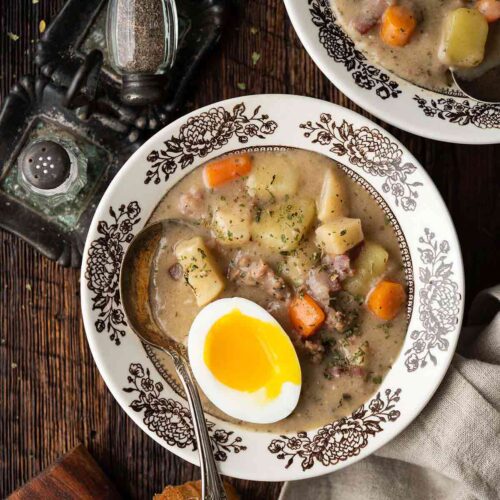
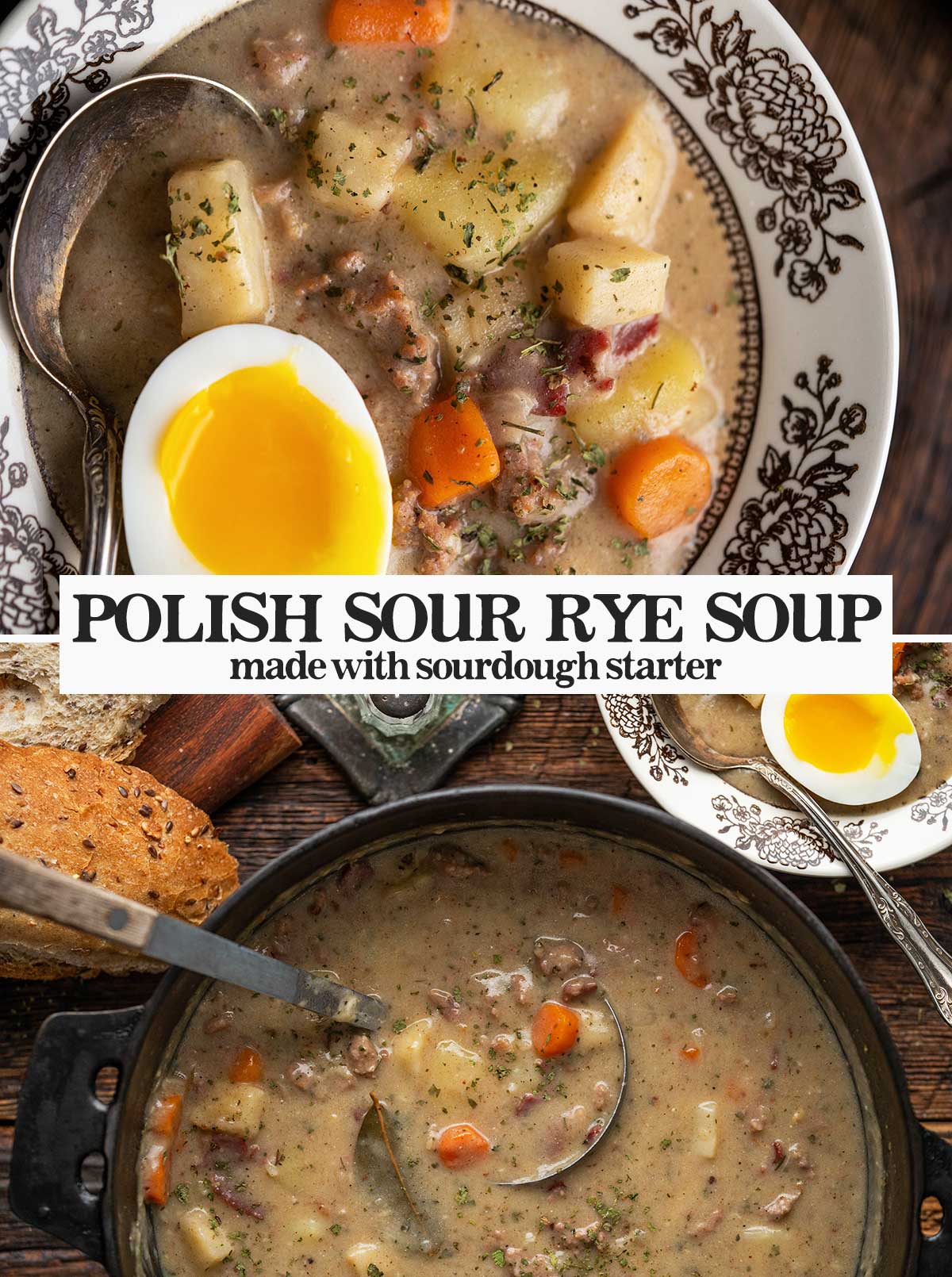
Żurek is a classic Polish sour rye soup recipe with a stew-like texture, tangy flavor, and a variety of vegetables and meat that’s frequently served with an egg on top. The sour component comes from fermented sourdough rye starter (called zakwas), which I give instructions on how to make (and other options if you don’t want to). This flavorful, nutritious comfort food is traditional around Easter, but enjoyed all year.
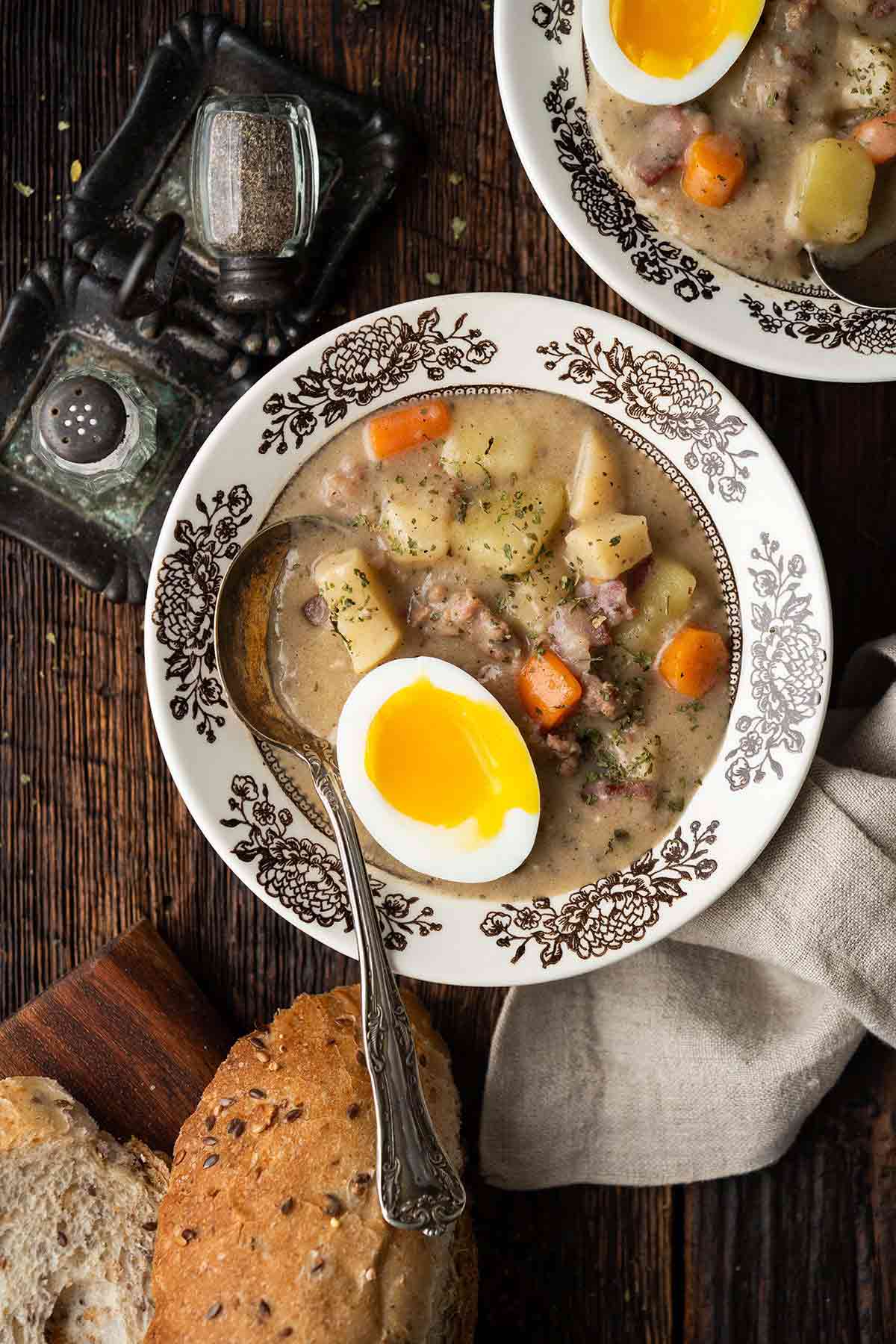
If you’re into nourishing, hearty meals with a history, you’re going to love Żurek. This traditional Polish soup is thick and satisfying with the consistency of stew. Its flavor is beautifully balanced with tangy sour rye starter and the subtle earthy sweetness of vegetables. It’s hearty with a variety of meat, and a few simple seasonings bring everything together. For those of you who like Eastern European cuisine and keep sourdough starter on hand, this one is a must-try.
If you’re a sourdough baker or have made a sourdough starter, the process of making rye starter (called zakwas) will be familiar. Essentially, you combine rye flour, water, and traditional spices and aromatics and let it sit (I give detailed instructions below). And if you already have a sourdough starter going, instead of starting from scratch, another option is to give your mature starter a few rye flour feedings, and add the classic zakwas seasonings directly to the soup.
What is Żurek?
Żurek is a classic Polish soup made with a fermented rye starter. This gives the soup its signature sour flavor, and also thickens it into a stew-like consistency. In addition to being popular in Poland, similar versions of this sour cereal soup are found in other Slavic countries, such as Žur in Belarus and Kyselo in Czech Republic.
Traditionally, this dish contains biała kiełbasa (white Polish sausage), smoked bacon, and root vegetables like carrot, parsley root, and/or celery root (celeriac). Sometimes potatoes are added to the soup, and sometimes boiled or mashed potatoes are served along with it. Boiled eggs are a popular topping, and although hard-boiled eggs are popular, I prefer soft-boiled eggs for their runny yolks. All in all, it’s a very nourishing, filling, and cozy meal.
For my take on this recipe, I wanted to keep the integrity of the dish, but I don’t eat pork. I made adjustments to the meats used, opting for turkey sausage and smoked beef bacon. Feel free to customize it to suit your preferences.

The History of Żurek
This soup dates back centuries in Poland. It originated as a peasant dish because of its simple, inexpensive ingredients. Over time, it evolved into a national favorite and started being served in restaurants as well as home kitchens. Today it’s still a staple in Polish cuisine, and is frequently served in a rustic bread bowl to make it even heartier.
How to Make Fermented Rye Starter (Zakwas)
To make your own rye starter from scratch, you’ll need:
- 1 cup rye flour
- 2 cups lukewarm non-chlorinated water
- 2 cloves garlic, peeled and crushed
- 3 to 4 whole allspice berries
- 2 bay leaves
- A slice of sourdough rye bread (optional, for better fermentation)
Time needed: 5 days
The process of making rye starter is similar to making any sourdough starter, but don’t worry because you don’t need any prior sourdough knowledge or experience to make it!
- Mix
In a glass jar or bowl, mix the rye flour with lukewarm water. Add the crushed garlic, allspice, bay leaves, and rye bread (if using).
- Ferment
Cover loosely with a cloth and let it ferment at room temperature for 3 to 5 days, stirring once daily. It should develop a tangy aroma.
Ingredients
Breaking It Down
Ingredients Explained
In this section I explain the ingredients and give substitution ideas where applicable. For the full recipe (including the ingredient amounts), see the recipe card below.
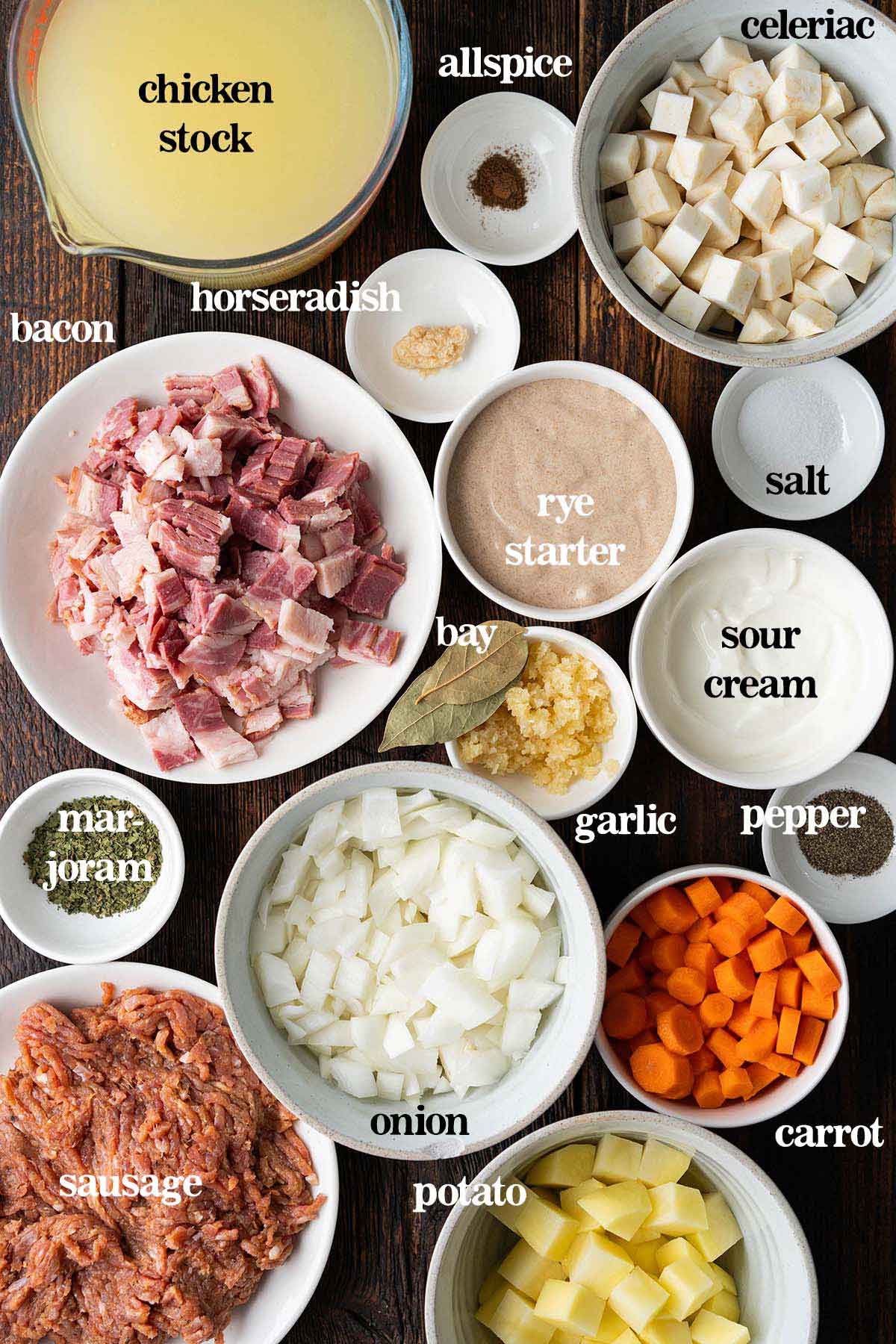
Polish Sour Rye Soup Ingredients
- Beef bacon – Or any kind of bacon you like; pork is traditional. If you go with turkey bacon, add a couple tablespoons of butter or oil.
- Ground turkey or turkey sausage – Or go with traditional biała kiełbasa (white Polish sausage), which is primarily made of pork, and flavored heavily with garlic and marjoram.
- Onion and garlic – For savory depth of flavor. We reserve 1/3 of the garlic to add closer to the end of the cooking process so it retains more of its sharp bite.
- Chicken stock – Use a good quality homemade or store-bought stock for rich flavor.
- Carrot – For a pop of color and subtle earthy sweetness.
- Celeriac – Celeriac is celery root; you can substitute with parsley root or regular celery here.
- Yellow potatoes – You can leave out the potatoes if you like, or serve them boiled or mashed on the side.
- Bay leaves – Bay leaves help create a flavorful, nuanced broth.
- Salt and black pepper – These pantry-staple seasonings add a ton of flavor.
- Allspice – In authentic Żurek, warming, subtly sweet allspice plays an important role by rounding out the soup’s tangy flavor.
- Sourdough rye starter (zakwas) – This is a traditional component in sour rye soup. It’s very easy to make your own, or if you have a mature sourdough starter, you can give it a few rye flour feedings. You can also look for it in Eastern European grocery stores in general, or Polish grocery stores specifically if you have one in your area.
- Sour cream – This soup is pleasantly tangy, and sour cream contributes to that. Sour cream also lends rich, creamy texture.
- Prepared horseradish – You can skip this if you like, but it really wakes up the flavor of the soup!
- Dried marjoram – Rub it between the palms of your hands to release its oils before adding it to the soup. If you have fresh marjoram, by all means use that instead!
Garnishes and Serving Suggestions
- Boiled eggs – If you like, serve the soup with hard or soft-boiled eggs on top.
- Fresh marjoram – If available, a little bit of fresh marjoram on top is a beautiful garnish.
- Rye bread – A piece of crusty sourdough rye bread is the perfect vessel for soaking up every drop.
How to Make Żurek: Step-by-Step Instructions
Here are step-by-step photos of the cooking process. For the recipe video, please see the recipe card below.
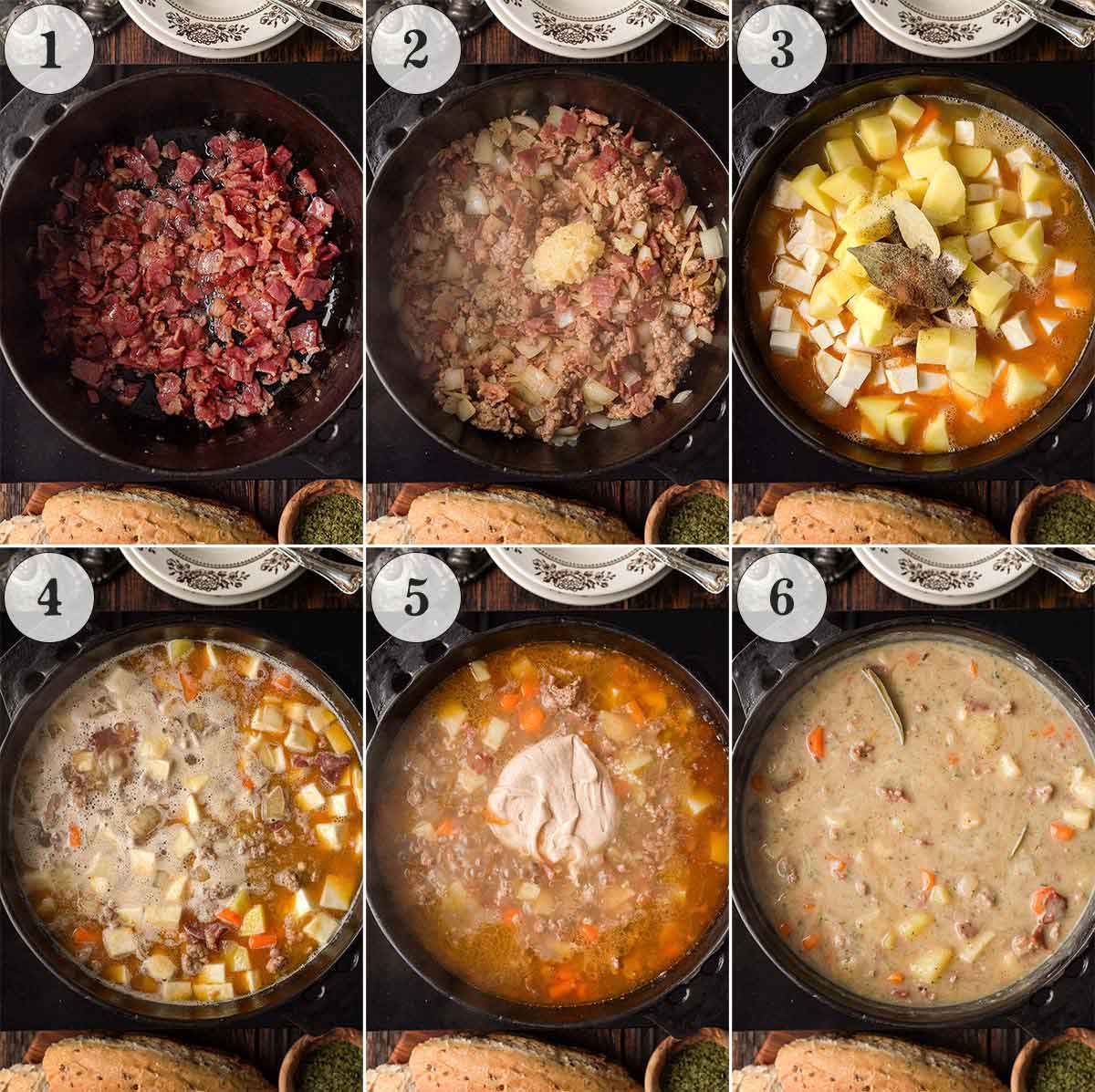
- Crisp the bacon. Add the bacon to a 5-quart Dutch oven or similar pot over medium to medium-low heat. Cook until the bacon’s fat has rendered and it is starting to crisp, about 6 to 8 minutes, stirring occasionally.
- Brown the turkey. Turn the heat up to medium and add the ground turkey and onion; cook until the turkey is browned and the onion is softened, about 5 to 7 minutes. While cooking, use a wooden spoon to break up the meat into crumbles. Add 2/3 of the garlic and cook 1 minute, stirring constantly.
- Add the liquid, veggies, and seasonings. Add the stock, carrot, celeriac, potato, bay leaves, salt, black pepper, and allspice.
- Cook. Turn up the heat and bring the soup to a boil, then turn down the heat to keep it at a gentle boil but prevent it from boiling over. Cook (covered) until the vegetables are tender but not mushy, about 15 minutes, stirring occasionally.
- Add the rye starter. With the heat on medium to medium-low, whisk in 1/2 cup of the sourdough rye starter and the remaining 1/3 of the garlic. While continuing to whisk, add more sourdough rye starter until it reaches your desired consistency (it will thicken). Simmer for 5 minutes, stirring constantly.
- Finishing touches. Remove from the heat and stir in the sour cream, prepared horseradish, and dried marjoram.

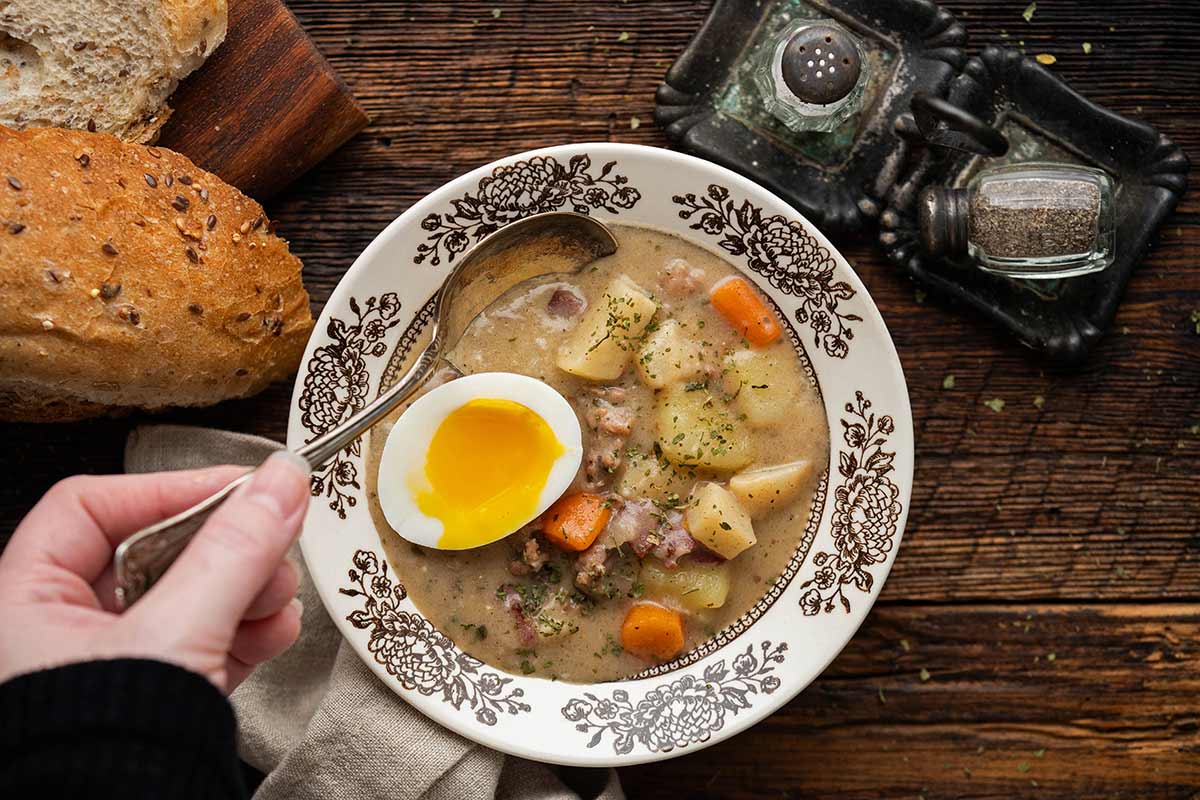
If desired, serve topped with a hard or soft-boiled egg and a sprinkling of marjoram, along with a slice of rye bread.
Storage and Reheating
Once cooled, store leftovers in an airtight container in the fridge for up to 3 days or in the freezer for up to 3 months. Reheat over low heat on the stovetop while stirring occasionally, or in 45-second increments in the microwave, stirring between each. Add fresh garnishes before serving.
Why is Allspice Popular in Polish Cuisine?
Allspice (called “ziele angielskie” in Polish) is a key ingredient in traditional Polish cuisine because of its warm, slightly peppery, and subtly sweet flavor that brings depth and complexity to hearty dishes. Its frequent use goes back to Poland’s historical spice trade and culinary traditions that emphasize slow-cooked, flavorful meals.
Here are a few reasons why allspice is popular:
Balances rich, hearty foods. Polish cuisine features a lot of rich, hearty dishes like soups, stews, and braised meats. Allspice adds warmth and complexity, helping balance the natural fattiness of ingredients like pork, kielbasa, and buttery sauces.
Complements sour and fermented foods. Polish food often incorporates fermented ingredients such as sauerkraut, pickles, and zakwas (fermented rye starter) into recipes, all of which have a naturally tangy or sour taste. Allspice provides a slightly sweet and spicy warmth for contrast that prevents these dishes from becoming overwhelmingly tart.
Historical influence of the spice trade. During the Polish-Lithuanian Commonwealth (16th to 18th century), Poland had access to a variety of imported spices, including allspice, black pepper, and nutmeg. Although allspice is native to the Caribbean, it became a favorite in Polish kitchens because its complex flavor could substitute for a mix of more expensive spices (many people describe allspice as tasting like a blend of cinnamon, nutmeg, and cloves).
And here are a few dishes where allspice is frequently used:
Soups and broths. Allspice is an important ingredient in Polish soups and broths, such as Żurek, Rosół (chicken broth), Ogórkowa (dill pickle soup), and Kapuśniak (sauerkraut soup). It’s typically used whole and allowed to simmer to infuse the broth with a deep, warming aroma.
Preserved and pickled foods. In addition to soups, allspice is a must-have in Polish pickling recipes, especially for cucumbers, mushrooms, and herring. It contributes to the signature taste of Polish kiszonki (fermented foods) by adding depth and mild spiciness.
Pro Tips for the Best Żurek Soup Recipe
- Homemade zakwas is key to the authentic sour taste, but you can find ready-made versions in Polish grocery stores.
- Adjust the thickness and tanginess to suit your preference by adding more or less zakwas.
- Let the flavors meld by making the soup a day ahead; it tastes even better the next day!
- Customize it. Swap out the meats for whatever you like. Add mushrooms if you have them on hand. Skip the sour cream, or go for heavy cream instead for less tanginess.

Frequently Asked Questions
Yes! Omit the bacon and sausage. Use 3 tablespoons of oil to sauté the onion, and if you’re a fan of mushrooms, add them along with the onion for umami flavor. Use vegetable stock instead of chicken stock.
Yes and no. You can use a regular sourdough starter (which is typically made with unbleached all-purpose wheat flour and water) as a base for rye sourdough starter. To do so, simply give your regular sourdough starter rye flour feedings for a few days before using it to make this soup.
However, with this method I don’t recommend adding the garlic, allspice, and bay leaves that are found in traditional zakwas. Adding these seasonings directly to a robust starter with a well-developed microbial culture could alter the fermentation process in unexpected ways. But don’t worry, those ingredients are already added to the soup itself. And if you prefer, you can make zakwas instead of using regular sourdough starter!
More Hearty, Unique Soup Recipes to Make
Let’s Connect

Did you make this recipe? Please rate it and leave a comment below. You can also tag @anediblemosaic on social media.
To stay up-to-date, follow me on Facebook, Instagram, Pinterest, and Twitter!
Żurek (Polish Sour Rye Soup Recipe)
Email This Recipe
Get this recipe link emailed straight to your inbox!
Ingredients
- 8 ounces beef bacon chopped
- 1 pound ground turkey or bulk turkey sausage
- 2 cups chopped yellow onion
- 6 large cloves garlic crushed (divided into 2/3 + 1/3)
- 5 cups chicken stock
- 1 cup diced carrots
- 2 cups peeled and diced celeriac 1/2-inch cubes (see Notes)
- 1/2 pound yellow potatoes peeled and chopped into 3/4-inch cubes (about 2 cups chopped)
- 2 bay leaves
- 1 teaspoon salt
- 1/2 teaspoon black pepper
- 1/8 teaspoon ground allspice
- 1 cup sourdough rye starter or up to 1 1/2 cups (see Notes)
- 1/2 cup sour cream
- 1 teaspoon prepared horseradish optional
- 1 tablespoon dried marjoram rubbed between the palms of your hands
Optional Garnishes and Serving Suggestions:
- 6 hard or soft-boiled eggs
- Fresh marjoram if available, otherwise a sprinkle of dried marjoram
- Sourdough rye bread
Instructions
- Crisp the bacon and brown the turkey. Add the bacon to a 5-quart Dutch oven or similar pot over medium to medium-low heat. Cook until the bacon’s fat has rendered and it is starting to crisp, about 6 to 8 minutes, stirring occasionally. Turn the heat up to medium and add the ground turkey and onion; cook until the turkey is browned and the onion is softened, about 5 to 7 minutes. While cooking, use a wooden spoon to break up the meat into crumbles. Add 2/3 of the garlic and cook 1 minute, stirring constantly.
- Cook. Add the stock, carrot, celeriac, potato, bay leaves, salt, black pepper, and allspice. Turn up the heat and bring the soup to a boil, then turn down the heat to keep it at a gentle boil but prevent it from boiling over. Cook (covered) until the vegetables are tender but not mushy, about 15 minutes, stirring occasionally.
- Add the rye starter. With the heat on medium to medium-low, whisk in 1/2 cup of the sourdough rye starter and the remaining 1/3 of the garlic. While continuing to whisk, add more sourdough rye starter until it reaches your desired consistency (it will thicken). Simmer for 5 minutes, stirring constantly.
- Finishing touches. Remove from the heat and stir in the sour cream, prepared horseradish, and dried marjoram.
- Serve. If desired, serve topped with a hard or soft-boiled egg and a sprinkling of marjoram, along with a slice of rye bread.
Video
Notes
- Celeriac: Celeriac is celery root; you can substitute with regular celery or parsley root here.
- Sourdough Rye Starter (Zakwas): I give instructions in the post above if you want to make your own zakwas (it’s very easy to do, and you don’t need any experience with sourdough). Or if you have a mature sourdough starter on hand, you can give it a few rye flour feedings and use it. You can also look for zakwas in Eastern European grocery stores in general, or Polish grocery stores specifically if you have one in your area.
- Storage and Reheating: Once cooled, store leftovers in an airtight container in the fridge for up to 3 days or in the freezer for up to 3 months. Reheat over low heat on the stovetop while stirring occasionally, or in 45-second increments in the microwave, stirring between each. Add fresh garnishes before serving.
- Nutrition Information: The nutritional information for this recipe was calculated without the optional garnishes and serving suggestions.
Nutrition
Nutritional information is automatically calculated and should be used as an approximate.
Share it with me on Instagram and leave a comment to let me know your thoughts!
This post was first published on An Edible Mosaic on February 26, 2025 and updated on February 20, 2026.


I’m the writer, recipe developer, photographer, and food stylist behind this blog. I love finding the human connection through something we all do every day: eat! Food is a common ground that we can all relate to, and our tables tell a story. It’s my goal to inspire you to get in the kitchen, try something new, and find a favorite you didn’t know you had.
Free Bonus