
This post may contain affiliate links, view our disclosure.
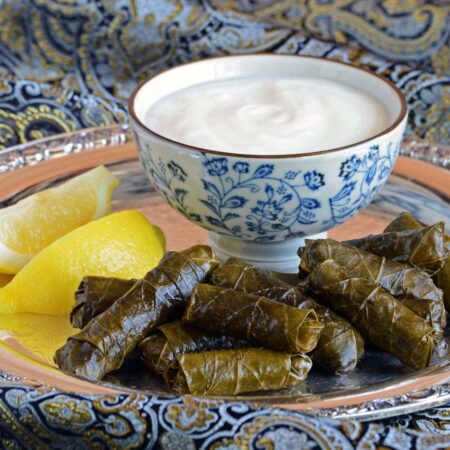
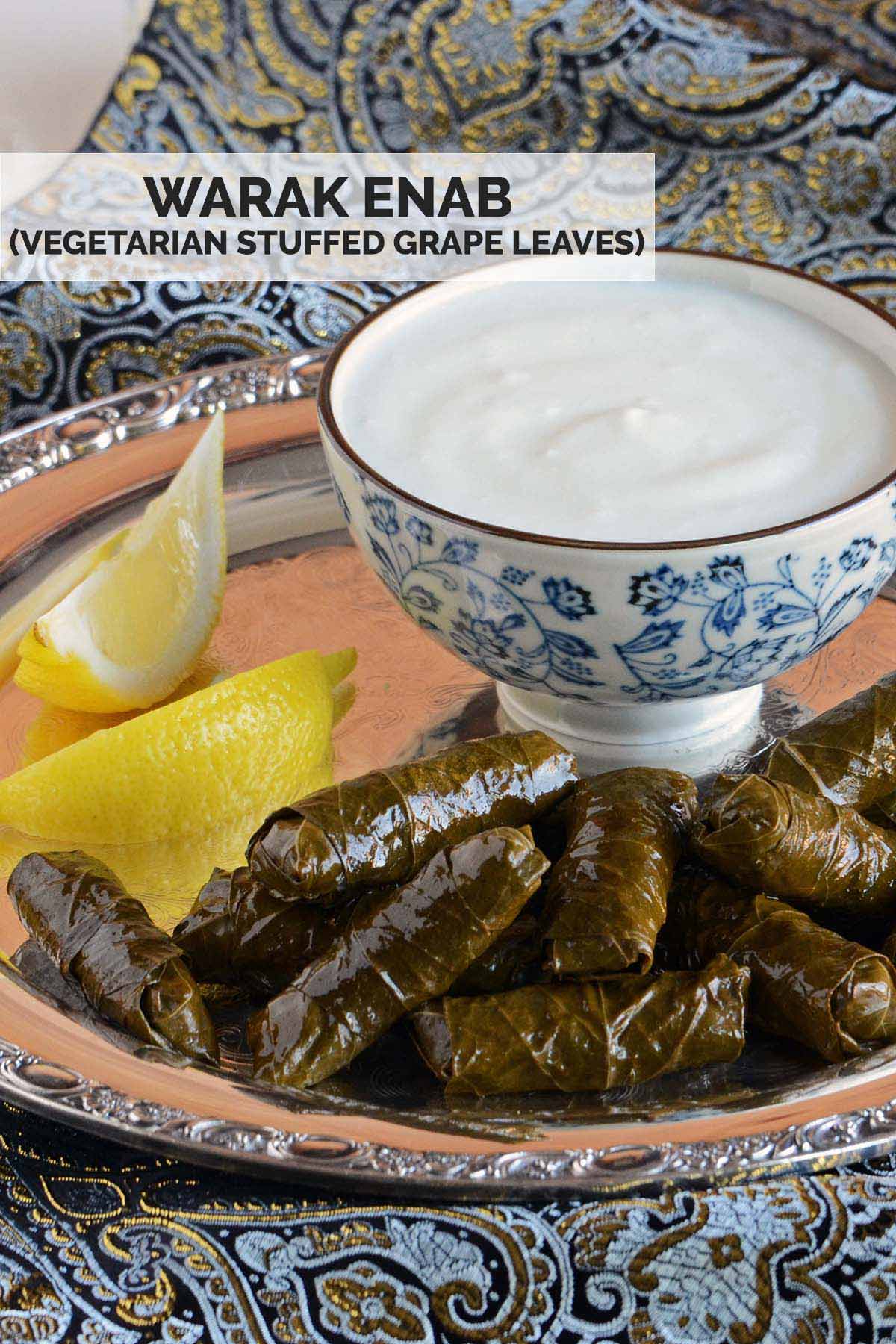
This warak enab recipe is a classic Levantine dish of vegetarian grape leaves stuffed with a fragrant mixture of savory rice and fresh herbs cooked in a lemony broth.
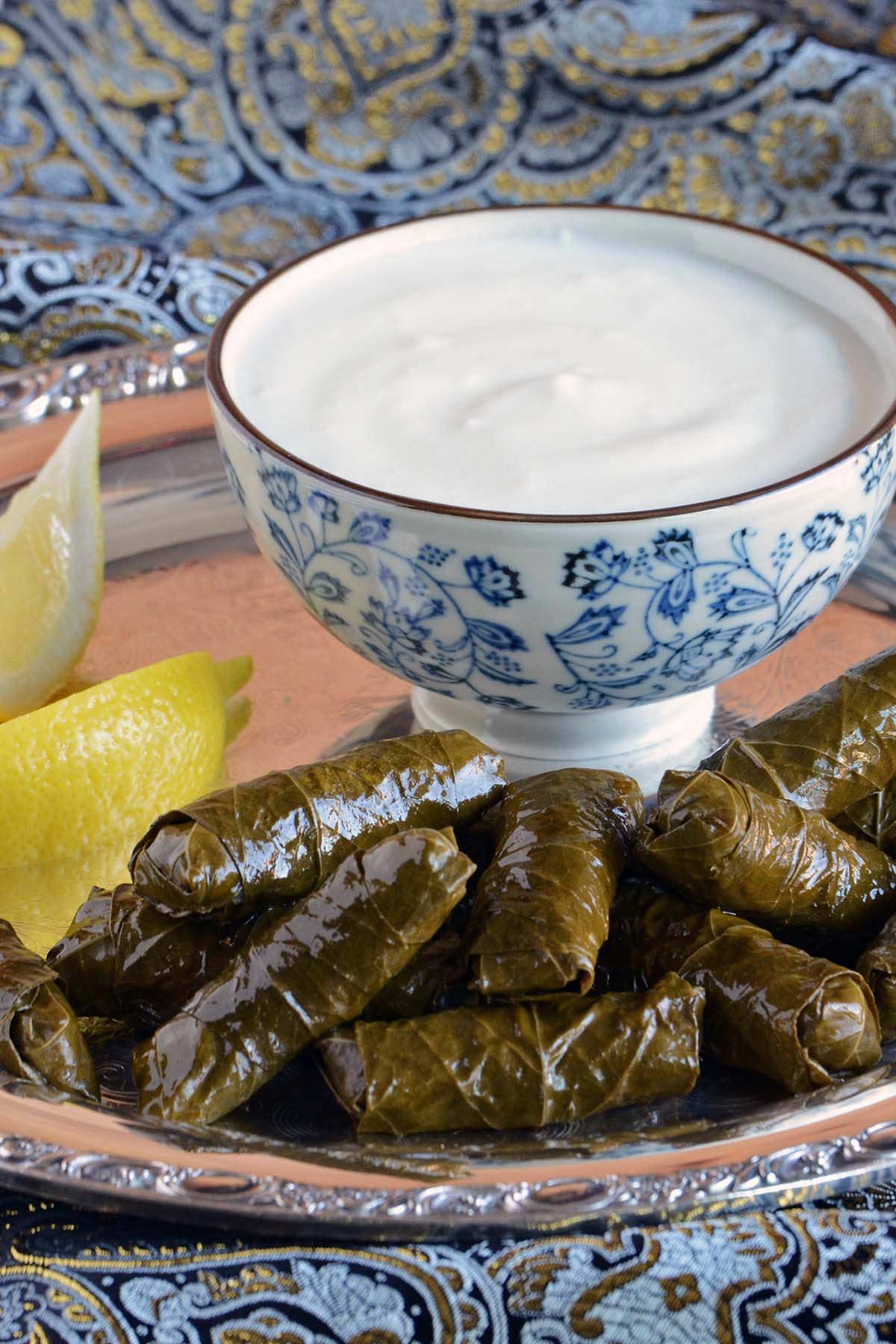
When my ex-husband and I lived in Syria with my in-laws, warak enab was one of the dishes that a group of ladies would make together. Family members, neighbors, and friends would come over and make a day of it. I remember cool, fruity beverages to sip, sweet and savory bites to nibble, and conversation and laughter flowing as they worked.
Experienced home cooks (many of whom had been cooking since they were young teenagers) seasoned the rice filling with herbs and spices. Nimble hands deftly rolled the filling in vine leaves and packed the little cigar-shaped cylinders tightly in massive pots for cooking. Slowly the giant piles of rice and grape leaves went down, and the pots filled up with arranged rows of shiny green tubes. The beautiful sense of community is one of my favorite things about Middle Eastern culture.
I’ll be honest with you, making stuffed grape leaves is a fairly labor-intensive process. It’s not hard, but it’s time-consuming. The rice soaks for a while, each dolma is hand-rolled, and the cook time is not short. That’s why making this recipe as a group is such a great idea; not only is any task a lot more fun if you’re doing it with friends (the time flies by!), but at the end of the day everyone takes home their share of grape leaves as dinner for their family. Win-win.
Recently I made this dish with a friend and it brought back a flood of lovely memories from my time spent in the Middle East. Adapted slightly from my cookbook, An Edible Mosaic: Middle Eastern Fare with Extraordinary Flair, I wanted to share this recipe on my blog as well.
What is Warak Enab?
Warak enab is Arabic for “grape leaves” (warak meaning leaves, and enab meaning grape). You’ll also find the word warak transliterated as waraq or wara2, and enab transliterated as einab, inaab, ainab, or 3enab. Additionally, this dish is called different things in various regions of the Levant. In Syria, another name for the vegetarian version of this dish is yalanji, derived from the Turkish word for “fake”, “false”, or “liar” because it doesn’t contain meat. Specifically in Palestine and Jordan, it’s common to also see this dish referred to as warak dawali, which means “vine leaves”.
There are two major versions of this dish: warak einab bi lahm (stuffed grape leaves with meat) and warak einab bi zeit (vegetarian stuffed grape leaves with oil) or yalanji. The recipe I’m sharing here is for the vegetarian version. It’s light and fresh with tomato, parsley, mint, lemon, and olive oil.
Vegetarian stuffed grape leaves have a savory, tangy flavor and tender, melt-in-your-mouth texture. Their aroma is irresistible with the umami richness of onion as a base note, zesty lemon, and earthy herbs. It’s pure comfort food.
Ingredients
Breaking It Down
Ingredients Explained
In this section I explain the ingredients and give substitution ideas where applicable. For the full recipe (including the ingredient amounts), see the recipe card below.
Warak Enab bi Zeit Ingredients
- Rice – Medium-grain white rice.
- Light olive oil – For sautéing the onion. Or you can use any mild or neutral-flavored oil you like, such as vegetable oil, avocado oil, or canola oil.
- Onion – Use yellow onion and finely dice it.
- Salt – So this dish isn’t bland.
- Tomatoes – Fresh tomatoes and parsley lend a ton of freshness to the filling. Make sure to add the tomato juices that run off when you chop the tomatoes.
- Fresh parsley – We use a whole bunch of fresh parsley in this recipe.
- Fresh lemon juice – Lemon contributes the classic tangy flavor to this dish.
- Olive oil – Adds rich, savory, peppery flavor.
- Mint – My Syrian mother-in-law always used dried mint in this filling, but if you have fresh mint on hand you can use about 6 tablespoons of finely chopped mint instead.
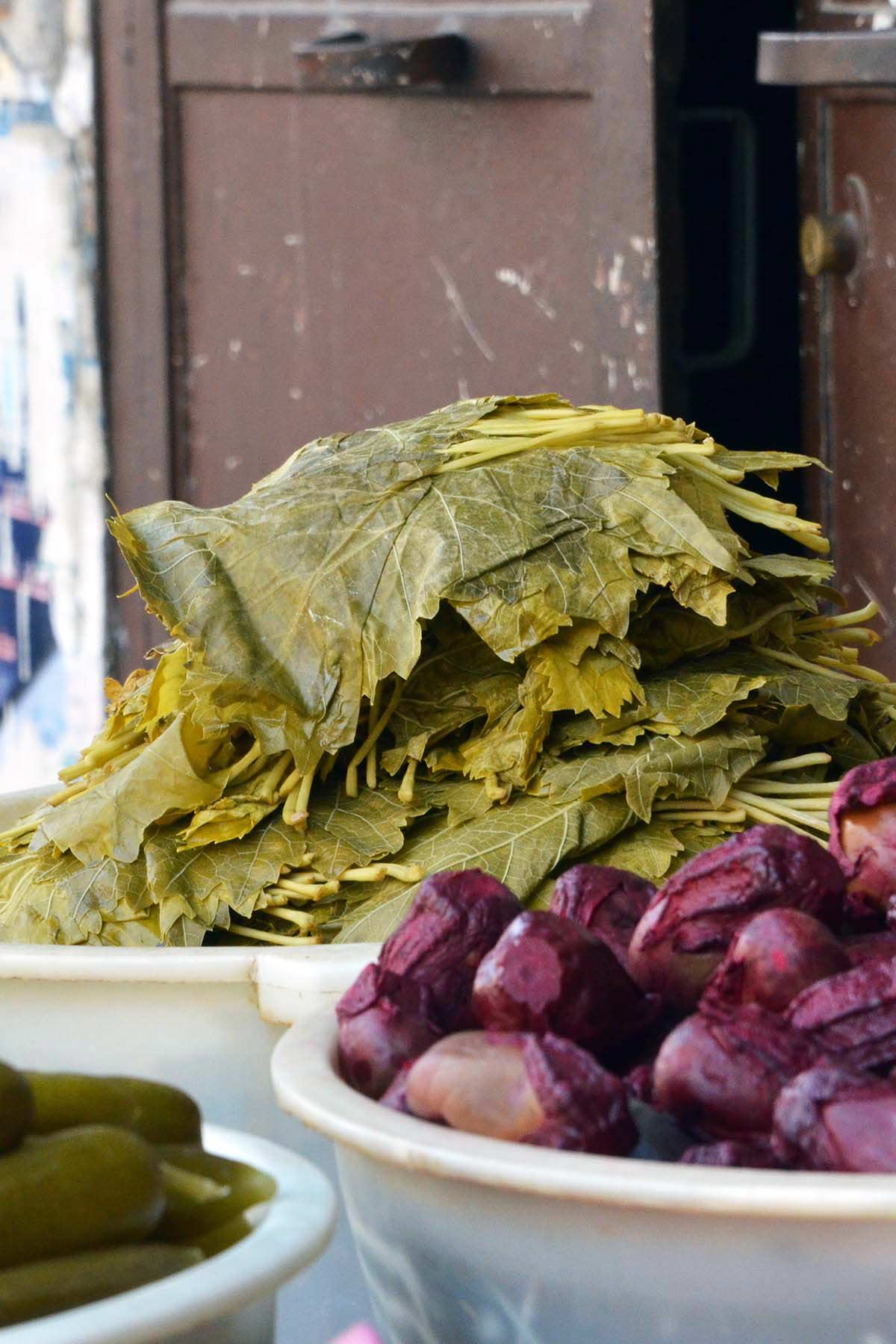
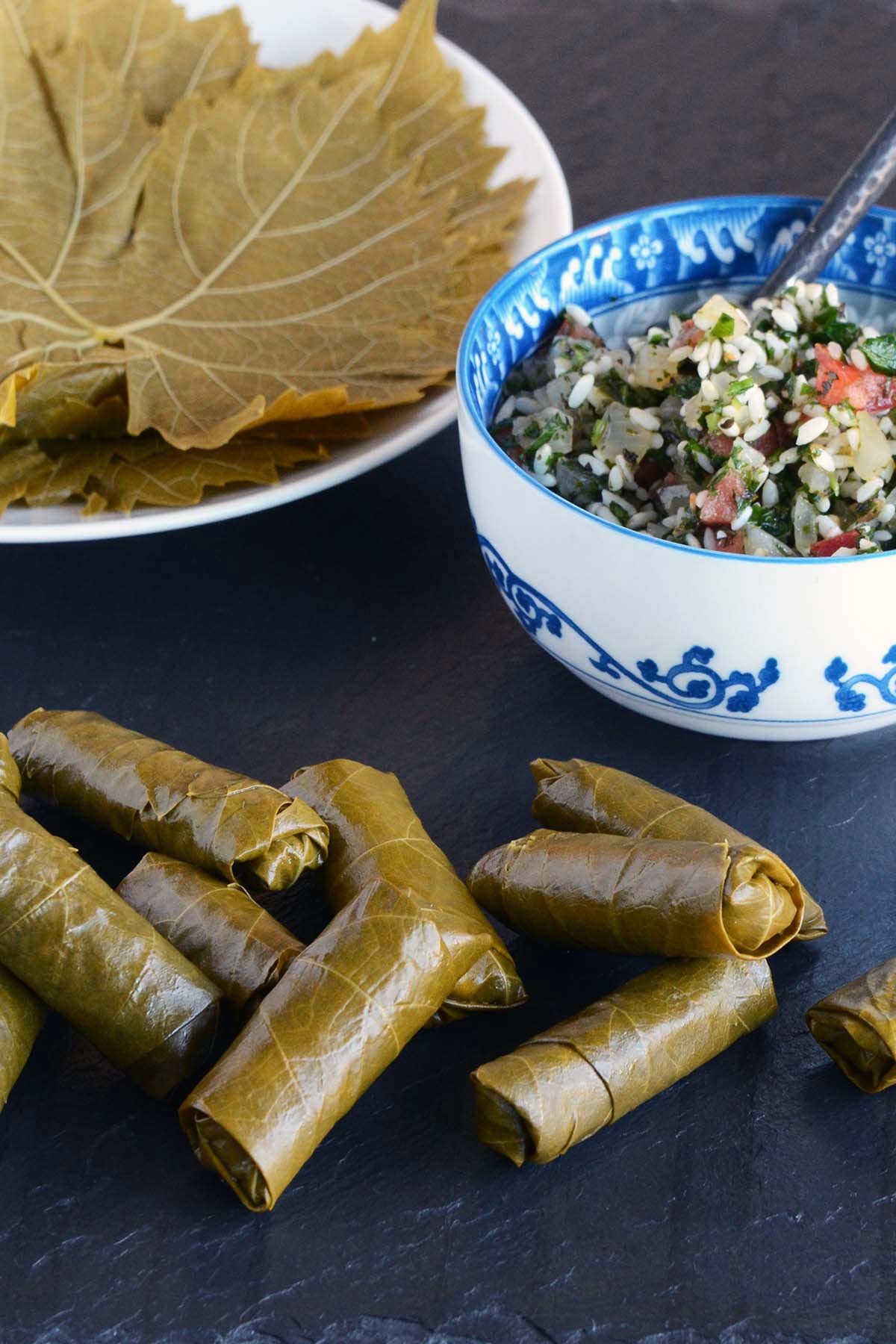
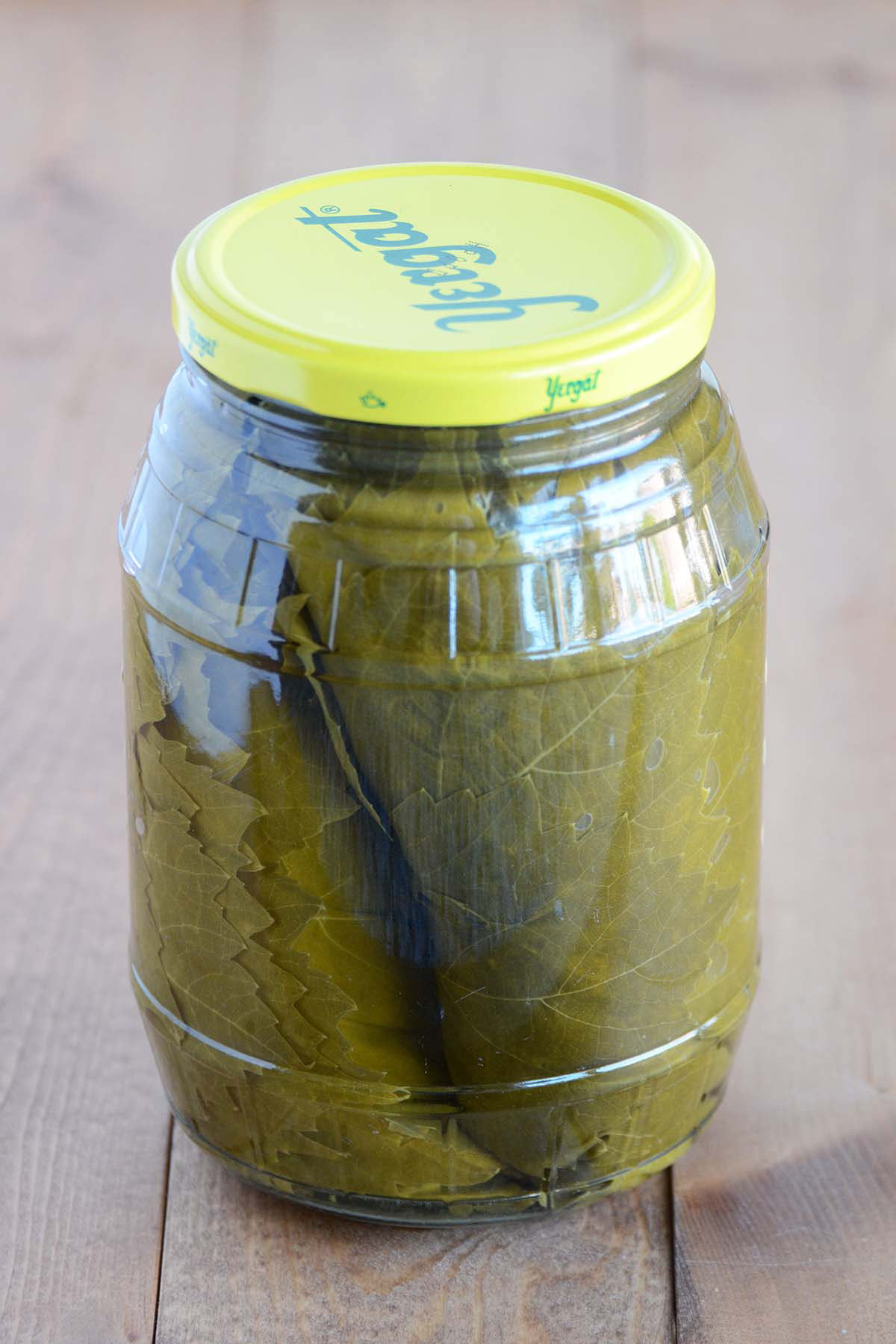
- Grape leaves – Depending where you live, it can be a challenge to find fresh vine leaves. Jarred grape leaves in brine are a lot more readily available! Before stuffing them, you’ll want to rinse the leaves, and then soak them in hot water for 10 minutes, changing the water twice.
- Potatoes – Any kind of potatoes you like will work here. Peel them and then cut them into thick slices to line the bottom of the pot to act as a barrier for the grape leaves.
- Unsalted vegetable broth – To cook the grape leaves; you can also use unsalted chicken stock or even just water.
Traditional Serving Suggestions
- Plain yogurt – A classic pairing in the Middle East, yogurt’s tart flavor and creamy texture is the perfect accompaniment for grape leaves.
- Fresh lemons – Cut into wedges for squeezing on top.
How to Make Vegetarian Stuffed Grape Leaves
The truth is that this recipe is a labor of love; it takes about 7 hours to make from start-to-finish! But it’s not difficult, and there are a lot of waiting periods (for example, the rice mixture needs to sit in the fridge for 3 hours before you can stuff the leaves), so you’ll get plenty of breaks.
My best advice is to read through the entire recipe before starting so you know what to expect and the process flows smoothly. And if possible, grab a friend or two to spend the day together and make a double batch with them!
Step 1: Make and Chill the Rice Filling
- Soak the rice. Soak the rice in tepid water for 10 minutes; drain.
- Sauté the onion. Heat the light olive oil in a large skillet over medium heat. Add the onion and 1 teaspoon salt, and sauté until the onion starts to soften, about 3 to 5 minutes. Cool completely.
- Mix. Combine the onion, 1 1/4 teaspoons salt, tomato, parsley, 3 tablespoons lemon juice, extra-virgin olive oil, mint, and rice in a large bowl.
- Chill. Cover the bowl and refrigerate 3 hours. (TIP: This partially rehydrates the rice and allows it to absorb the liquid that seeps out of the vegetables.)
Step 2: Stuff the Grape Leaves
- Prep the leaves. Soak the grape leaves in hot water for 10 minutes, changing the water twice; drain. If necessary, trim off the stems.
- Stuff. Lay 1 leaf flat on your work surface with the shiny side facing down. Place 2 to 3 teaspoons of filling (TIP: adjust the amount based on the size of your leaves) across the leaf above the point where the stem was cut off. Fold the bottom of the leaf up over the stuffing, and then fold over the sides of the leaf onto the stuffing. Roll up the leaf, tucking in the sides as you go. Continue until you run out of filling or leaves. (TIP: If you have any leaves that are very small, you can place 2 leaves overlapping and stuff them as 1.)
Step-By-Step Instructions For How to Stuff Grape Leaves
This process will get easier and go faster the more you practice.
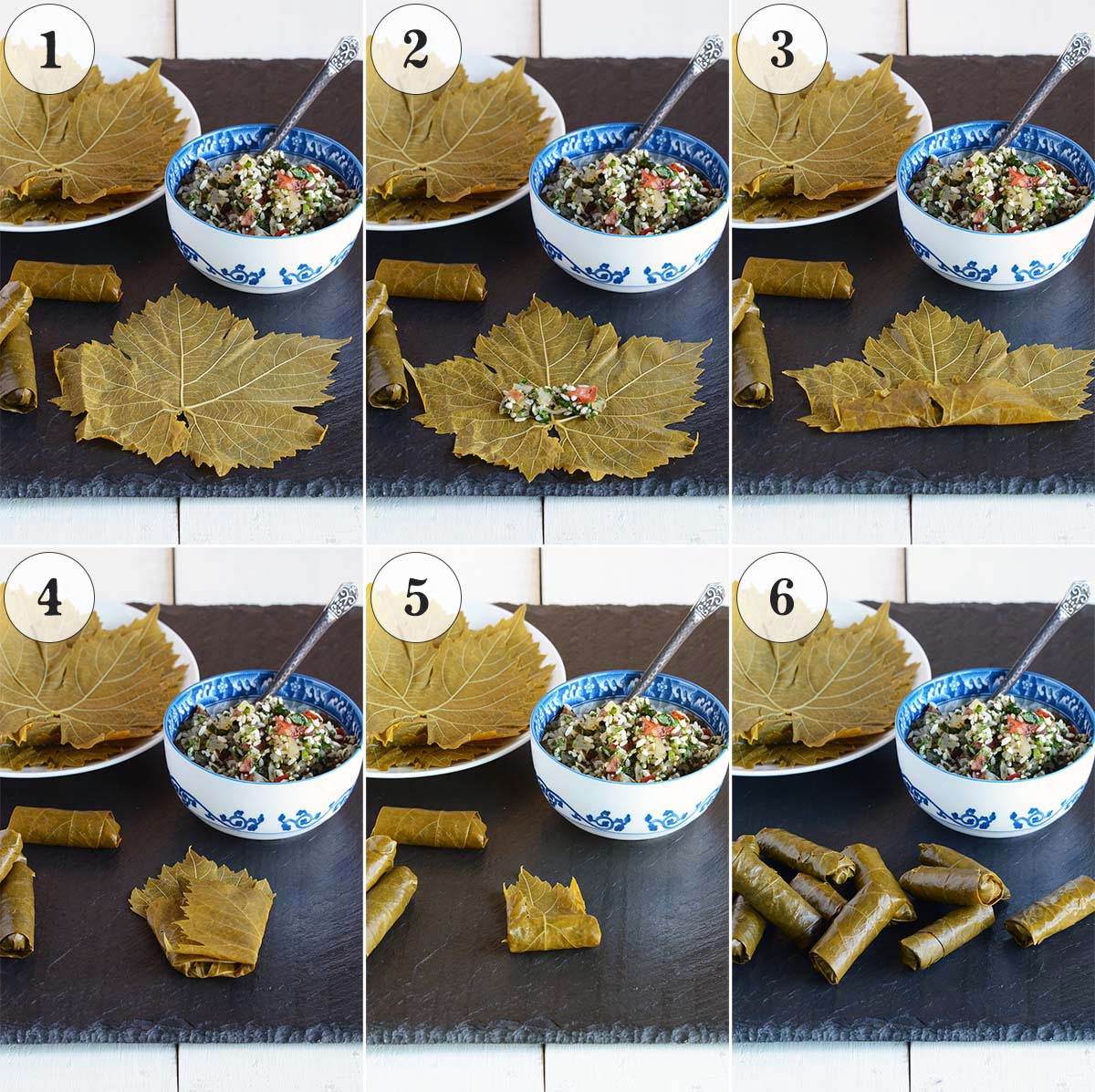
- Lay 1 leaf flat on your work surface with the shiny side facing down.
- Place 2 to 3 teaspoons of filling across the leaf above the point where the stem was cut off.
- Fold the bottom of the leaf up over the stuffing.
- Fold over the sides of the leaf onto the stuffing.
- Roll up the leaf, tucking in the sides as you go.
- Continue until you run out of filling or leaves.
Step 3: Pack the Stuffed Grape Leaves Into a Pot and Cook
- Arrange. Line the bottom of a medium-large, thick-bottomed, lidded pot (a 5 to 6-quart Dutch oven works well here) with the potato. Arrange the grape leaves (seam-side down) in compact rows on top of the potatoes, continuing with additional layers until all the grape leaves are in the pan. Sprinkle the remaining 3 tablespoons lemon juice and remaining 1/4 teaspoon salt on top of the leaves. Place a heavy, flat, disk-shaped object (such as a heat-safe lid or plate) into the pan on top of the leaves. Add enough broth to cover the leaves by about 2 inches (5 cm).
- Cook. Bring to a boil over high heat, then cover the pot, turn the heat down to low, and simmer until the rice is tender, about 1 hour, 15 minutes to 1 hour, 45 minutes; cool.
Step 4: Serve
- Strain. Drain the stuffed grape leaves in a large colander, reserving the liquid in a bowl under the colander (TIP: store the leftovers in the fridge in this cooking liquid so they don’t dry out). (TIP: Reserve the potato from the bottom of the pot and serve it along with the grape leaves.)
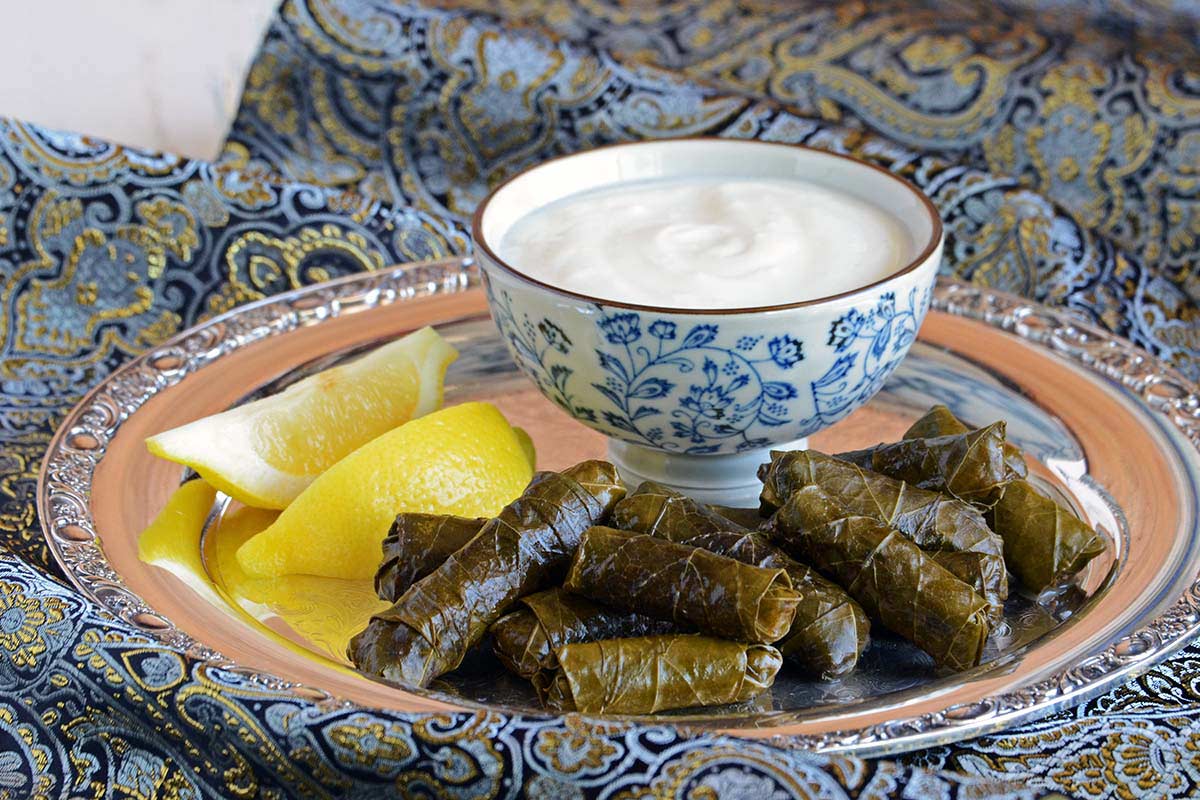
- Enjoy. Arrange the waraq enab on a platter and serve at room temperature or chilled, along with plain yogurt and lemon wedges, if using.
How to Serve Warak Enab
This dish is enjoyed as a main course or as part of a mezze (appetizer) spread.
As a Main Course
- Temperature – If they contain meat, stuffed grape leaves are usually served warm as a main dish. And if they’re vegetarian, they’re usually served at room temperature as a main course.
- Accompaniments – Plain yogurt and fresh lemon wedges are classic pairings. Arabic flatbread is also a traditional addition to this meal; you tear off a piece of bread, use it as a scoop to pick up a stuffed grape leaf, and eat it as a mini sandwich. A variety of salads (such as tabbouleh or salad shirazi) are also good side dish options here. Also, you can put out a bowl (or give each person their own small bowl) of the hot broth that the grape leaves cooked in, either for taking spoonfuls of, or for dipping your grape leaves and bread in. And don’t forget the potatoes that cooked on the bottom of the pot!
As an Appetizer (Or Part of a Mezze Platter)
- Temperature – Again, the serving temperature depends on whether or not this dish contains meat. With meat, it’s served warm or at room temperature as part of a mezze spread, while vegetarian stuffed grape leaves are served at room temperature or cold on an appetizer platter.
- Accompaniments – You can really have some fun putting together a beautiful spread of mezze dishes!
- Must haves – To start, don’t forget the fresh lemon wedges, plain yogurt, and flatbread.
- Delicious pairings – A variety of dips (like hummus, baba ganoush, muhammara, labneh, etc.), salads (such as fattoush, tabbouleh, salad shirazi, etc.), a plate of fresh herbs and vegetables (with things like mint, parsley, scallion, lettuce leaves, whole radishes, sliced cucumbers, and cherry tomatoes), pickles, olives, as well as a fried dish or two (think falafel, kibbeh, fried cauliflower, fried eggplant, etc.) round out the spread nicely.
Storage
When you strain the cooking liquid, reserve it and let it cool to room temperature. Once the stuffed grape leaves cool to room temperature, you can store them in an airtight container with the cooking liquid (so they don’t dry out) for up to 5 days.
Vegetarian grape leaves are typically served cold and not reheated. However, if you prefer them warm, you can reheat them on the stovetop in their cooking liquid.
Tips For the Best Warak Enab
- It can be hard to find fresh vine leaves. If you use jarred (brined) grape leaves like this recipe calls for, you’ll need to soak them in hot water for 10 minutes, changing the water twice. This removes the excess brine, making sure the leaves aren’t too salty and are pliable for rolling.
- You’ll need a heavy, flat, disk-shaped object when you’re making stuffed vine leaves. It gets put into the pot to weigh the stuffed leaves down, and keep them submerged beneath the liquid. I was told that in Arabic, this tool is called a teteelet fakhar, but any heavy, heat-safe lid or plate that fits nicely into your pot will work.
- The potato lining the bottom of the pot serves two purposes: 1) it prevents the bottom layer of grape leaves from burning or sticking to the pot, and 2) it’s another delicious component of this dish! As this recipe cooks, the potatoes absorb the flavors in the brothy liquid: rich olive oil, bright lemon juice, and savory flavor from the rice filling.
Frequently Asked Questions
That depends on the filling! Meat-stuffed grape leaves are typically eaten hot or at room temperature. On the other hand, vegetarian grape leaves are enjoyed at room temperature or cold.
In this recipe we use regular medium-grain white rice. It cooks up tender, moist, and just ever-so-slightly sticky, making it the perfect choice here.
Called dolma or sarma in Turkey, dolmades in Greece, and warak enab in the Middle East, the origin of this dish is debated. However, many agree that it has roots in Turkish cuisine from the time of the Ottoman Empire. Regional variations of this popular recipe are widespread because it traveled throughout Mediterranean countries and reached the Caucasus region, the Balkan region, the Middle East, and Northern Africa. (You can read more about the origins of this dish on Aladdin Houston and Wikipedia.)
More Classic Middle Eastern Recipes to Make
Let’s Connect

Did you make this recipe? Please rate it and leave a comment below. You can also tag @anediblemosaic on social media.
To stay up-to-date, follow me on Facebook, Instagram, Pinterest, and Twitter!
Warak Enab bi Zeit (Syrian Vegetarian Stuffed Grape Leaves Recipe)
Email This Recipe
Get this recipe link emailed straight to your inbox!
Equipment
- Heavy, flat, disk-shaped object to place into the pot on top of the stuffed grape leaves to keep them submerged
Ingredients
- 1 1/2 cups medium-grain white rice rinsed briefly in a sieve under tepid running water
- 3 tablespoons light olive oil
- 3/4 pound yellow onion finely diced
- 2 1/2 teaspoons salt divided
- 2 tomatoes finely diced (with juices)
- 1 bunch fresh parsley leaves minced
- 6 tablespoons fresh lemon juice divided
- 2 tablespoons extra-virgin olive oil
- 3 tablespoons dried crushed mint
- 500 grams jar brined grape leaves rinsed briefly in a colander under tepid running water
- 2 medium potatoes peeled and sliced
- Unsalted vegetable broth warmed (or unsalted chicken stock or water)
- Plain yogurt (optional but recommended; traditional for serving)
- 2 lemons wedged (optional but recommended; traditional for serving)
Instructions
Make and Chill the Rice Filling:
- Soak the rice. Soak the rice in tepid water for 10 minutes; drain.
- Sauté the onion. Heat the light olive oil in a large skillet over medium heat. Add the onion and 1 teaspoon salt, and sauté until the onion starts to soften, about 3 to 5 minutes. Cool completely.
- Mix. Combine the onion, 1 1/4 teaspoons salt, tomato, parsley, 3 tablespoons lemon juice, extra-virgin olive oil, mint, and rice in a large bowl.
- Chill. Cover the bowl and refrigerate 3 hours. (TIP: This partially rehydrates the rice and allows it to absorb the liquid that seeps out of the vegetables.)
Stuff the Grape Leaves:
- Prep the leaves. Soak the grape leaves in hot water for 10 minutes, changing the water twice; drain. If necessary, trim off the stems.
- Stuff. Lay 1 leaf flat on your work surface with the shiny side facing down. Place 2 to 3 teaspoons of filling (TIP: adjust the amount based on the size of your leaves) across the leaf above the point where the stem was cut off. Fold the bottom of the leaf up over the stuffing, and then fold over the sides of the leaf onto the stuffing. Roll up the leaf, tucking in the sides as you go. Continue until you run out of filling or leaves. (TIP: If you have any leaves that are very small, you can place 2 leaves overlapping and stuff them as 1.)
Pack the Stuffed Grape Leaves Into a Pot and Cook:
- Arrange. Line the bottom of a medium-large, thick-bottomed, lidded pot (a 5 to 6-quart Dutch oven works well here) with the potato. Arrange the grape leaves (seam-side down) in compact rows on top of the potatoes, continuing with additional layers until all the grape leaves are in the pan.Sprinkle the remaining 3 tablespoons lemon juice and remaining 1/4 teaspoon salt on top of the leaves. Place a heavy, flat, disk-shaped object (such as a heat-safe lid or plate) into the pan on top of the leaves. Add enough broth to cover the leaves by about 2 inches (5 cm).
- Cook. Bring to a boil over high heat, then cover the pot, turn the heat down to low, and simmer until the rice is tender, about 1 hour, 15 minutes to 1 hour, 45 minutes; cool.
Serve:
- Strain. Drain the stuffed grape leaves in a large colander, reserving the liquid in a bowl under the colander (TIP: store the leftovers in the fridge in this cooking liquid so they don't dry out). (TIP: Reserve the potato from the bottom of the pot and serve it along with the grape leaves.)
- Enjoy. Arrange the waraq enab on a platter and serve at room temperature or chilled, along with plain yogurt and lemon wedges, if using.
Notes
- Nutrition Information: The nutritional information for this recipe was calculated including the potatoes that cook on the bottom of the pot, but not including the optional yogurt for serving.
- Storage: When you strain the cooking liquid, reserve it and let it cool to room temperature. Once the stuffed grape leaves cool to room temperature, you can store them in an airtight container with the cooking liquid (so they don’t dry out) for up to 5 days. Vegetarian grape leaves aren’t usually reheated (they’re typically eaten cold), but if you prefer them warm, you can reheat them on the stovetop in their cooking liquid.
- Special-Diet Friendly: This recipe is naturally gluten free, vegetarian, and vegan if you skip the yogurt for serving or serve it with a vegan yogurt option.
- In Print: Recipe adapted slightly from my cookbook, An Edible Mosaic: Middle Eastern Fare with Extraordinary Flair.
Nutrition
Nutritional information is automatically calculated and should be used as an approximate.
Share it with me on Instagram and leave a comment to let me know your thoughts!


I’m the writer, recipe developer, photographer, and food stylist behind this blog. I love finding the human connection through something we all do every day: eat! Food is a common ground that we can all relate to, and our tables tell a story. It’s my goal to inspire you to get in the kitchen, try something new, and find a favorite you didn’t know you had.
Free Bonus