

This post may contain affiliate links, view our disclosure.
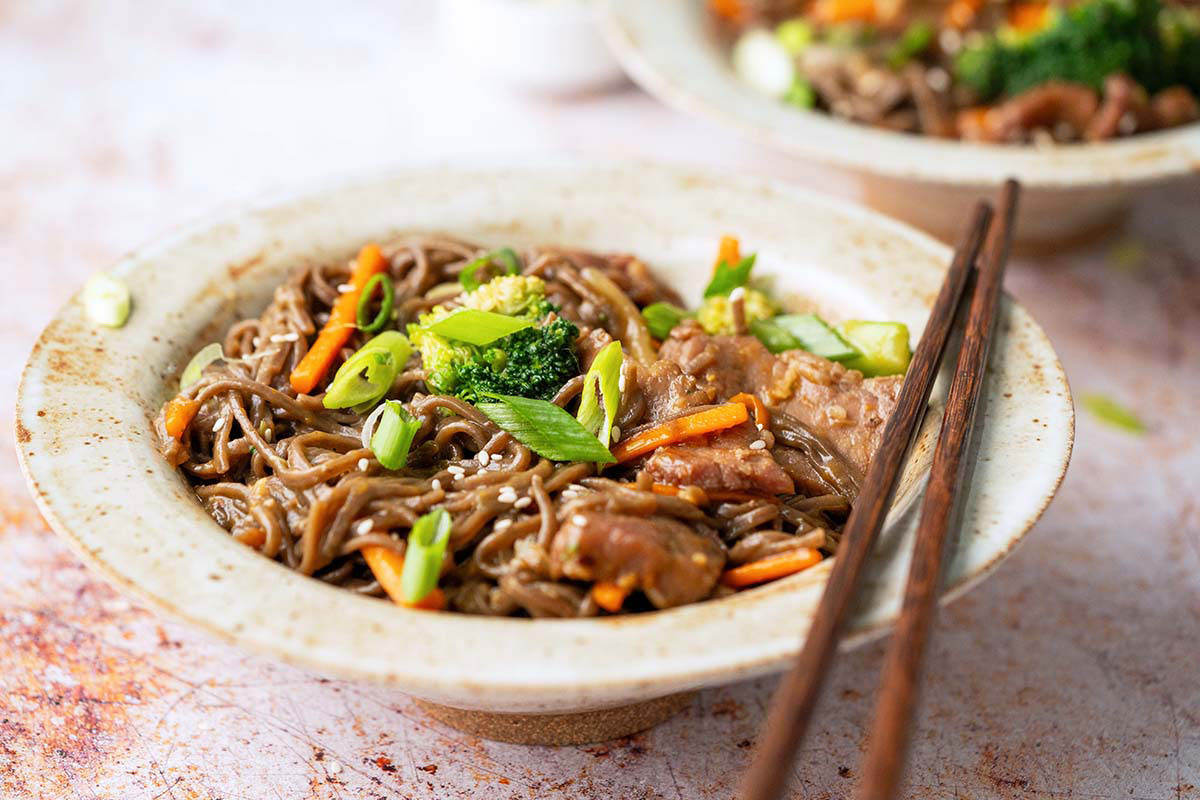
This easy beef stir fry recipe with noodles is packed with healthy vegetables and comes together in 30 minutes – even with a homemade sauce!

One of the beautiful things about stir fry is that it lets you get dinner on the table fast. Everyone’s been running around all day and the kiddos are hungry, but you’re just 30 minutes away from a nourishing meal. It’ll be ready before takeout would arrive! And bonus, you’ll save money by making it at home, and you can customize it how you (and the kids) like it.
What is Stir Fry?
Stir fry is a Chinese cooking technique in which ingredients are cooked quickly in a small amount of oil over high heat. Traditionally, in China a wok is used to make it, although other types of cookware will also work if you don’t have a wok.
Stir fry refers to the method of cooking, not the particular type of food you’re making. You can stir fry any number of things, including protein (for example, beef, chicken, and shrimp all lend themselves well to stir fries), vegetables (like broccoli, bell pepper, carrot, etc.), and noodles.
Ingredients
Breaking It Down
Ingredients Explained
In this section I explain the ingredients and give substitution ideas where applicable. For the full recipe (including the ingredient amounts), see the recipe card below.
Stir Fry Sauce Ingredients
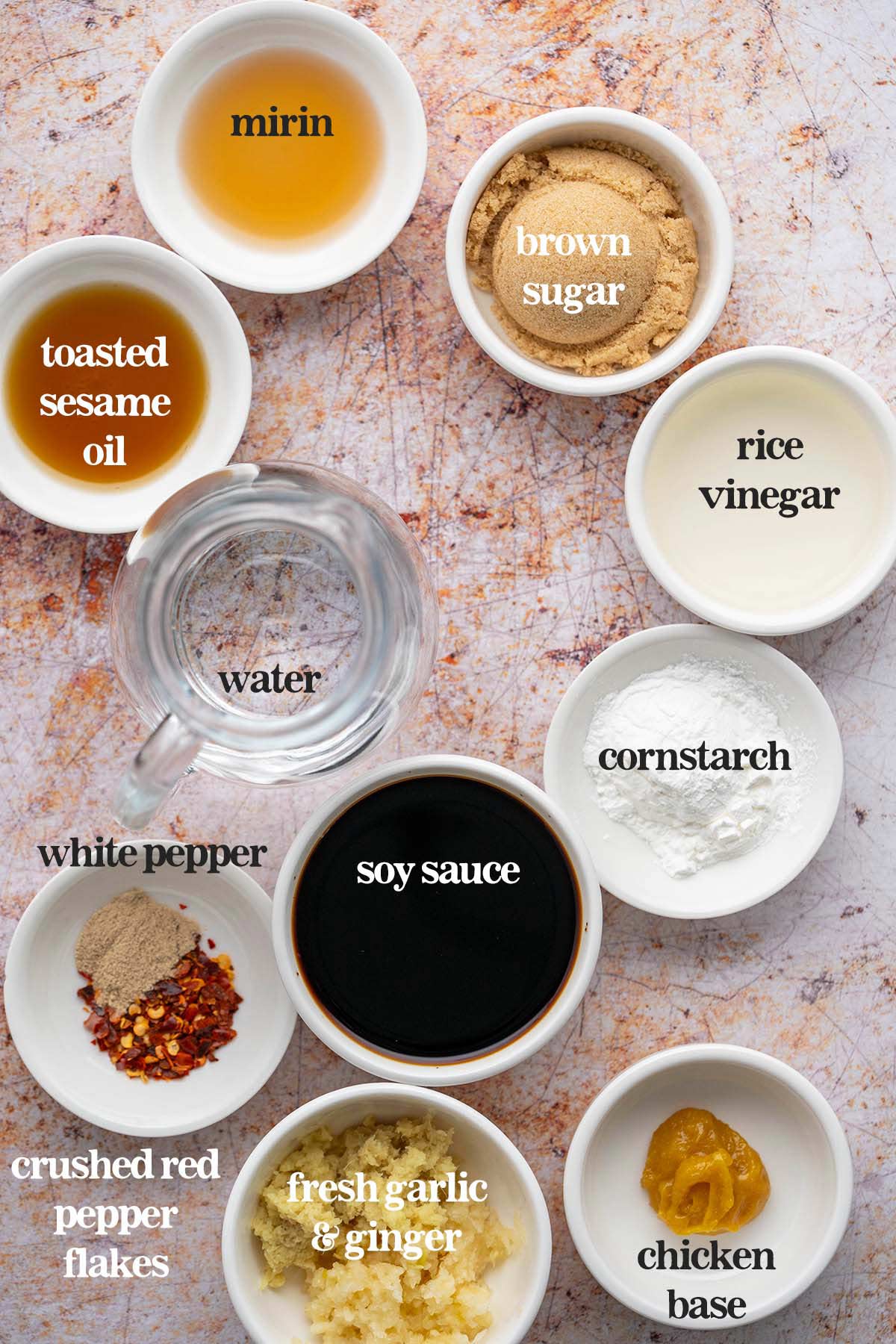
- Water – Instead of broth or stock, here we use water + chicken base (Better Than Bouillon is my go-to). If you prefer, feel free to omit the water and chicken base and use broth or stock instead. Any kind of broth or stock is fine, chicken, beef, or vegetable.
- Low-sodium soy sauce – This adds salty, umami flavor. You can also use regular soy sauce (instead of low sodium) if that’s what you have on hand, or use gluten free tamari sauce, coconut aminos, or liquid aminos.
- Light brown sugar – Brown sugar adds sweetness with a touch of rich molasses flavor. You can also use coconut sugar or honey.
- Rice wine vinegar – Also just called rice vinegar, this adds a bit of tanginess to help create a balanced flavor profile.
- Garlic and ginger – These are classic ingredients in many stir fry sauce recipes. For the most intense flavor and aroma, use fresh garlic and ginger here.
- Mirin – Mirin is a Japanese cooking wine made of rice. It has a golden color, low alcohol content, and sweet, tangy, umami flavor. If you don’t have this on hand, you can omit it.
- Toasted sesame oil – Another key ingredient in this sauce, toasted sesame oil adds rich, nutty complexity. A little goes a long way!
- Cornstarch – After heating, cornstarch thickens this sauce and gives it a glossy sheen.
- Better Than Bouillon Roasted Chicken Base – Instead of using broth or stock, I like to use water + chicken base because I always have this on hand. It adds rich savory flavor that gives great depth to this sauce. Instead of chicken, you can use any flavor of Better Than Bouillon or any kind of soup base you like (or omit the soup base and use broth or stock instead of water).
- Crushed red pepper flakes – This adds a little kick to the sauce. Feel free to adjust the amount, or omit it if you prefer.
- White pepper – White pepper is optional. It adds earthy depth that complements ginger’s pungency and brings out soy sauce’s umami flavor.
Beef Vegetable Stir Fry

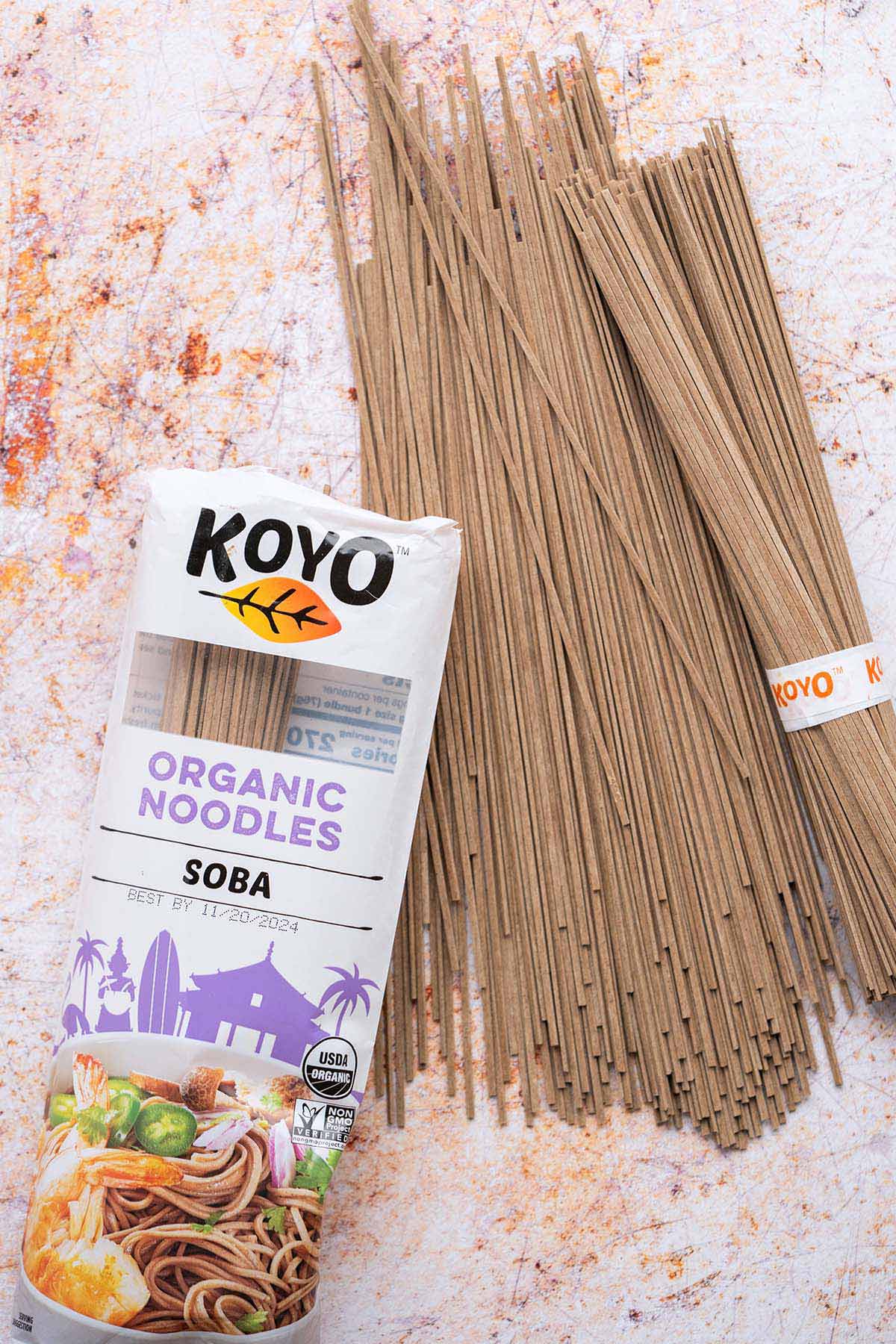
- Soba noodles – I used soba noodles here, but you can use any kind of noodles you like. Soba noodles are a type of thin Japanese noodle made from buckwheat flour that’s sometimes mixed with whole wheat flour. Buckwheat is gluten free (as well as a decent source of fiber and protein), so if you’re looking for a healthy gluten free noodle option, go for 100% buckwheat soba noodles.
- Oil – When you’re making stir fry, it’s important to use oil with a high smoke point so it doesn’t scorch. Some of the best healthy oil options are avocado oil or light olive oil (don’t use virgin olive oil here because if its lower smoke point), but vegetable oil, peanut oil, sunflower oil, or canola oil also work well because of their high smoke points.
- Beef – One of the nice things about stir fry is that it’s a budget friendly meal; you don’t need an expensive cut of beef for it to taste great! Affordable beef cuts like flank steak, skirt steak, and sirloin are all good options for stir fry. Just make sure to thinly slice the meat across the grain and don’t over-cook it.
- Onion – Adds savory flavor and aroma.
- Carrot – Bumps up the nutrition and lends a subtle sweet, earthy flavor and pretty pops of orange color.
- Broccoli – I used frozen broccoli florets in this recipe because that’s what I had. I like to keep frozen broccoli stashed in my freezer because it’s versatile and great for a go-to veggie when I haven’t grocery shopped in a while. And stir fry is a forgiving dish so it works well here! To use frozen broccoli florets, thaw, drain, and microwave them for 2 minutes before adding to the stir fry along with the cooked noodles. To use fresh broccoli, cut it into florets and add it along with the onion and carrot.
- Scallion – Adds a punch of fresh savory flavor and a pop of bright green color.
Optional Garnish Ideas
- Sesame seeds
- Crushed red pepper flakes
- Sliced scallion
Instructions: How to Make Beef Vegetable Stir Fry with Noodles
1: Make the Stir Fry Sauce
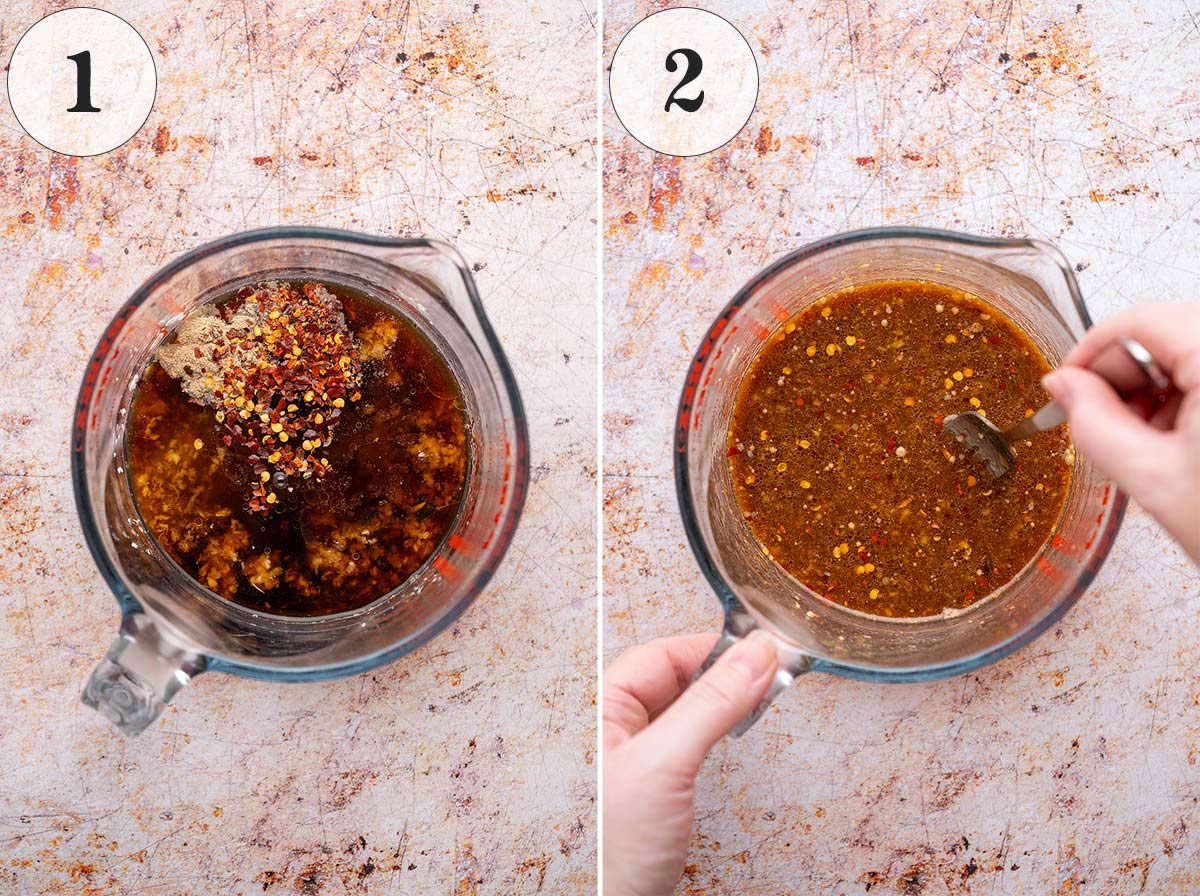
- Add all ingredients to a medium bowl.
- Whisk to combine.
2: Make the Stir Fry

- Cook the noodles according to the package directions, then rinse and drain well.
- Preheat a wok or large deep skillet over high heat until it’s scorching hot. Add the oil and once hot, add the beef in a single layer.
- Let the beef sear for 4 to 5 minutes, then stir in the onion and carrot and cook 3 minutes more.
- Add the stir fry sauce and cook until the sauce thickens, about 2 minutes, stirring constantly.
- Add the broccoli and noodles, and gently toss to coat with the sauce.
- Remove from the heat, sprinkle on the scallion, and serve with any garnishes you like.
Storage
- Sauce: Store this sauce covered in the fridge for up to 1 week or in the freezer for up to 3 months. Freeze it in an ice cube tray so you can easily thaw as much as you need.
- Stir Fry: Once cooled, store in the fridge for up to 4 days or in the freezer for up to 3 months.

Reheating Tips
You can reheat stir fry in the microwave. Put it in a microwave-safe dish, cover the top with a damp paper towel so it doesn’t dry out, and then microwave on high for 2 minutes. After that, stir it and microwave in 30-second intervals until warm throughout, stirring between each interval.
Another good reheating method for stir fry is in a skillet on the stovetop. Put a pan over medium-high heat. Once hot, add a little bit of oil, the stir fry, and a splash of water. Cover the skillet for a couple minutes so the steam can help warm it, and then remove the lid and cook until the liquid you added is evaporated and it’s warm throughout, about 1 to 2 minutes more, stirring constantly.
Customize Your Stir Fry How You Like It
- You can swap out the beef for other kinds of protein. One of the best things about stir fry is that it’s highly customizable! If beef isn’t your thing, use boneless, skinless chicken breast or a different protein source you like (shrimp also works really well here).
- And the vegetables are also customizable! You can use just about any kind of vegetables you like or have on hand in the fridge that you want to use up. As a rule of thumb, try to include 1 cup of raw vegetables per serving, so here we use a total of 6 cups of raw vegetables for 6 servings. Other vegetables that would be delicious here are mushrooms, zucchini, bell pepper, sugar snap peas, snow peas, cabbage, etc.
- Also – you guessed it – you can use any kind of noodles you want. Here I used soba for the nutritional benefits of buckwheat, but you can use any noodles you fancy. Even ramen would work well!

Frequently Asked Questions
Yes! It’s important to cook and drain noodles before adding them to stir fry. Stir fries cook quickly, and if you add uncooked noodles they wouldn’t soften in time. PRO TIP: Cook the noodles until they’re mostly but not fully softened because they’ll finish cooking when you add them to the stir fry. That way, you prevent mushy noodles and also give them the chance to absorb some of the flavorful sauce.
Use an economical beef cut like flank steak, skirt steak, or sirloin, and thinly slice it against the grain.
A really great stir fry is both an art and science. It’s an easy process, but there are a lot of factors that go into it:
1. Choose your oil wisely. Make sure it can withstand high heat so it doesn’t scorch.
2. Prep in advance (aka mis en place). Once you begin the process, stir frying goes very quickly and can be stressful if you’re not ready. I like to make the stir fry sauce, cook and drain the noodles, and have everything chopped before I start.
3. Use the right tool for the job. A wok is ideal, but you can also use a skillet. Make sure it’s large enough so the pan isn’t overcrowded, or cook the ingredients in batches.
4. Customize the ingredients to suit your preferences. The best stir fry is one where you love the flavors in it!
No. Traditionally, a wok contributes “wok hei” or “breath of the wok”, which is the signature smoky, charred flavor. However, don’t worry if you don’t have a wok!
You can still make a great stir fry with other types of skillets. Go for a large frying pan, especially one that can get really hot (and it’s a bonus if the pan has slanted sides similar to a wok!); a cast iron skillet, stainless steel pan, or nonstick ceramic skillet all work decently well.
More 30 Minute Beef Dinner Recipes
Let’s Connect

Did you make this recipe? Please rate it and leave a comment below. You can also tag @anediblemosaic on social media.
To stay up-to-date, follow me on Facebook, Instagram, Pinterest, and Twitter!
Beef Vegetable Stir Fry Recipe with Noodles
Email This Recipe
Get this recipe link emailed straight to your inbox!
Ingredients
Stir Fry Sauce:
- 1/2 cup water
- 1/4 cup low-sodium soy sauce
- 2 tablespoons light brown sugar lightly packed (or coconut sugar or honey)
- 1 1/2 tablespoons rice wine vinegar
- 1 tablespoon peeled freshly-crushed garlic see Notes
- 2 teaspoons peeled freshly-grated ginger see Notes
- 1/2 tablespoon mirin optional
- 1/2 tablespoon toasted sesame oil
- 1 tablespoon cornstarch
- 1 teaspoon Better Than Bouillon Chicken Base
- 1/2 teaspoon crushed red pepper flakes optional; more or less to taste
- 1/4 teaspoon white pepper optional
Beef Vegetable Stir Fry:
- 8 ounces soba noodles or any kind of noodles you like
- 2 tablespoons avocado oil or light olive oil, or vegetable oil
- 1 1/4 pounds beef thinly sliced across the grain (such as flank steak, skirt steak, sirloin, etc.)
- 1 1/4 cups thinly sliced yellow onion about 1 medium onion
- 2 cups julienned carrots
- 2 3/4 cups frozen broccoli florets thawed, drained, and microwaved for 2 minutes (see Notes for fresh broccoli)
- 2 scallions for garnish
Optional Garnish Ideas:
Instructions
For the Stir Fry Sauce:
- Add all ingredients to a medium bowl and whisk to combine. Use to make stir fry, or cover and store in the fridge for up to 1 week.
For the Beef Vegetable Stir Fry with Noodles:
- Cook the noodles according to the package directions, then rinse and drain well.
- Preheat a wok or large deep skillet over high heat until it’s scorching hot. Add the oil and once hot, add the beef in a single layer. Let it sear for 4 to 5 minutes, then stir in the onion and carrot and cook 3 minutes more.
- Add the stir fry sauce and cook until the sauce thickens, about 2 minutes, stirring constantly.
- Add the broccoli and noodles, and gently toss to coat with the sauce. Remove from the heat, sprinkle on the scallion, and serve with any garnishes you like.
Notes
- Fresh Broccoli Instead of Frozen: I like to keep frozen broccoli on hand because it’s versatile and great for a go-to veggie when you don’t have fresh vegetables on hand. If you prefer to use fresh broccoli instead of frozen, cut it into florets and add it along with the onion and carrot.
- The Vegetables: One of the best things about stir fry is that it’s highly customizable! You can use just about any vegetables you like. As a rule of thumb, try to include 1 cup of raw vegetables per serving, so here we use a total of 6 cups of raw vegetables for 6 servings. Other vegetables that would be delicious here are mushrooms, zucchini, bell pepper, sugar snap peas, snow peas, cabbage, etc.
- Storage (Sauce): Store this sauce covered in the fridge for up to 1 week or in the freezer for up to 3 months. Freeze it in an ice cube tray so you can easily thaw as much as you need.
- Storage (Stir Fry): Once cooled, store in the fridge for up to 4 days or in the freezer for up to 3 months.
- Reheating (Microwave): Put it in a microwave-safe dish, cover the top with a damp paper towel so it doesn’t dry out, and then microwave on high for 2 minutes. After that, stir it and microwave in 30-second intervals until warm throughout, stirring between each interval.
- Reheating (Stovetop): Put a pan over medium-high heat. Once hot, add a little bit of oil, the stir fry, and a splash of water. Cover the skillet for a couple minutes so the steam can help warm it, and then remove the lid and cook until the liquid you added is evaporated and it’s warm throughout, about 1 to 2 minutes more, stirring constantly.
Nutritional information is automatically calculated and should be used as an approximate.
Share it with me on Instagram and leave a comment to let me know your thoughts!



I’m the writer, recipe developer, photographer, and food stylist behind this blog. I love finding the human connection through something we all do every day: eat! Food is a common ground that we can all relate to, and our tables tell a story. It’s my goal to inspire you to get in the kitchen, try something new, and find a favorite you didn’t know you had.
Free Bonus