

This post may contain affiliate links, view our disclosure.
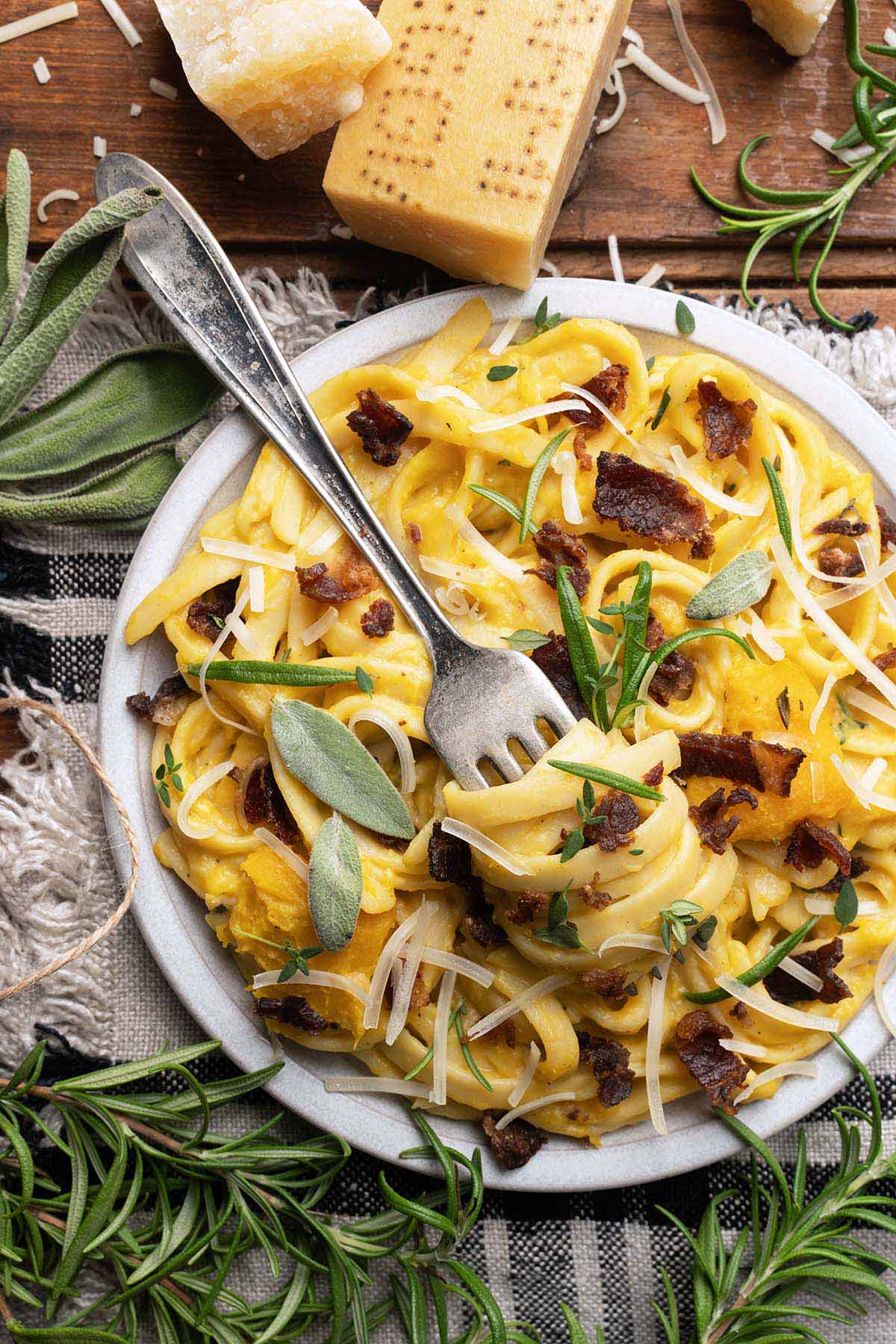
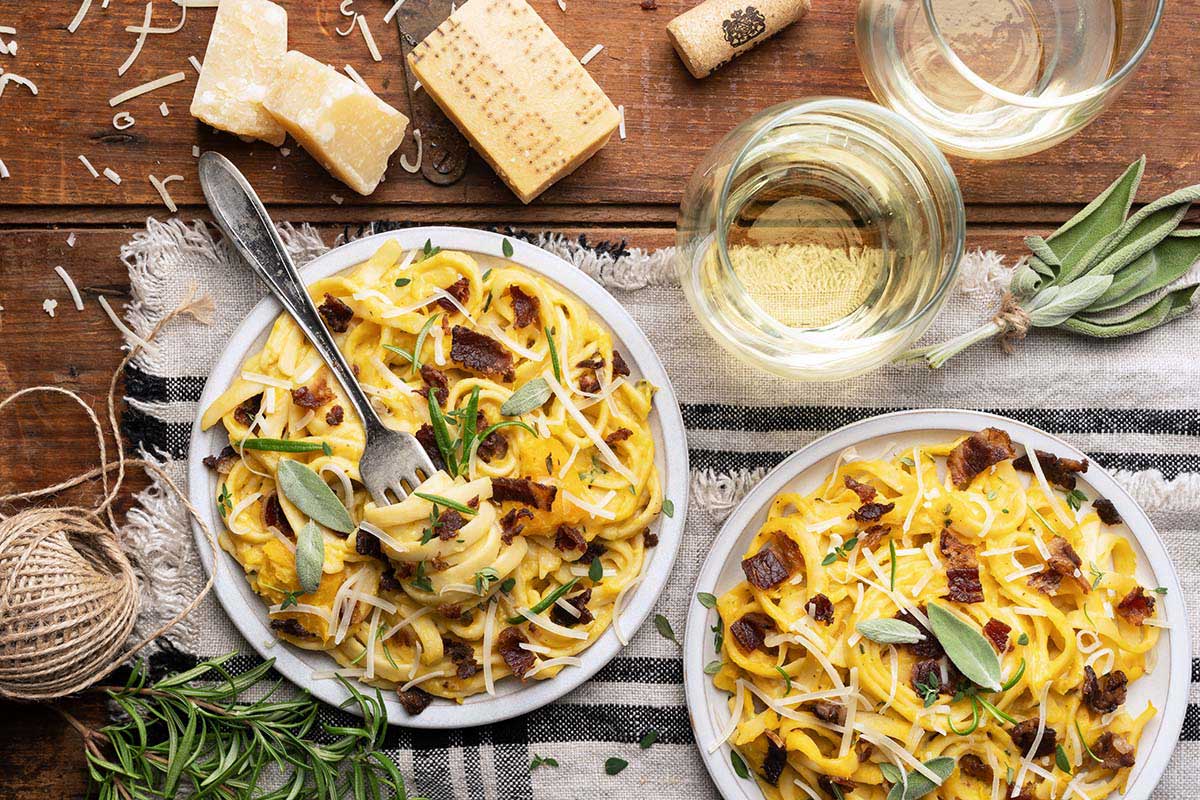
In this easy pasta recipe, we use roasted butternut squash as the base for a luscious, creamy pasta sauce. With crispy bacon, nutty Parmesan cheese, and fresh herbs, this hearty, budget-friendly pasta dinner is restaurant quality and perfect healthy comfort food for fall and winter.

Winter squashes like butternut are the perfect base for cozy, nourishing comfort food meals. Butternut has a deliciously sweet, nutty flavor that’s like a cross between pumpkin and sweet potato. When roasted, its flavor intensifies and its texture becomes smooth and buttery. That’s why roasted butternut squash works so well as a pasta sauce! It’s velvety-smooth, creamy, and perfectly coats the noodles.
Here we pair sweet, earthy butternut with rich beef bacon, salty Parmesan, onions just starting to caramelize, garlic, and fresh herbs for an unforgettable pasta dish that’s special enough to entertain with, but straightforward enough for weeknight dinner. Or use this dish for meal prep! If you find yourself with a bounty of butternut, this recipe is a great way to use it because the sauce freezes well for up to 6 months.
Butternut Squash Pasta Ingredients
Breaking It Down
Ingredients Explained
In this section I explain the ingredients and give substitution ideas where applicable. For the full recipe (including the ingredient amounts), see the recipe card below.
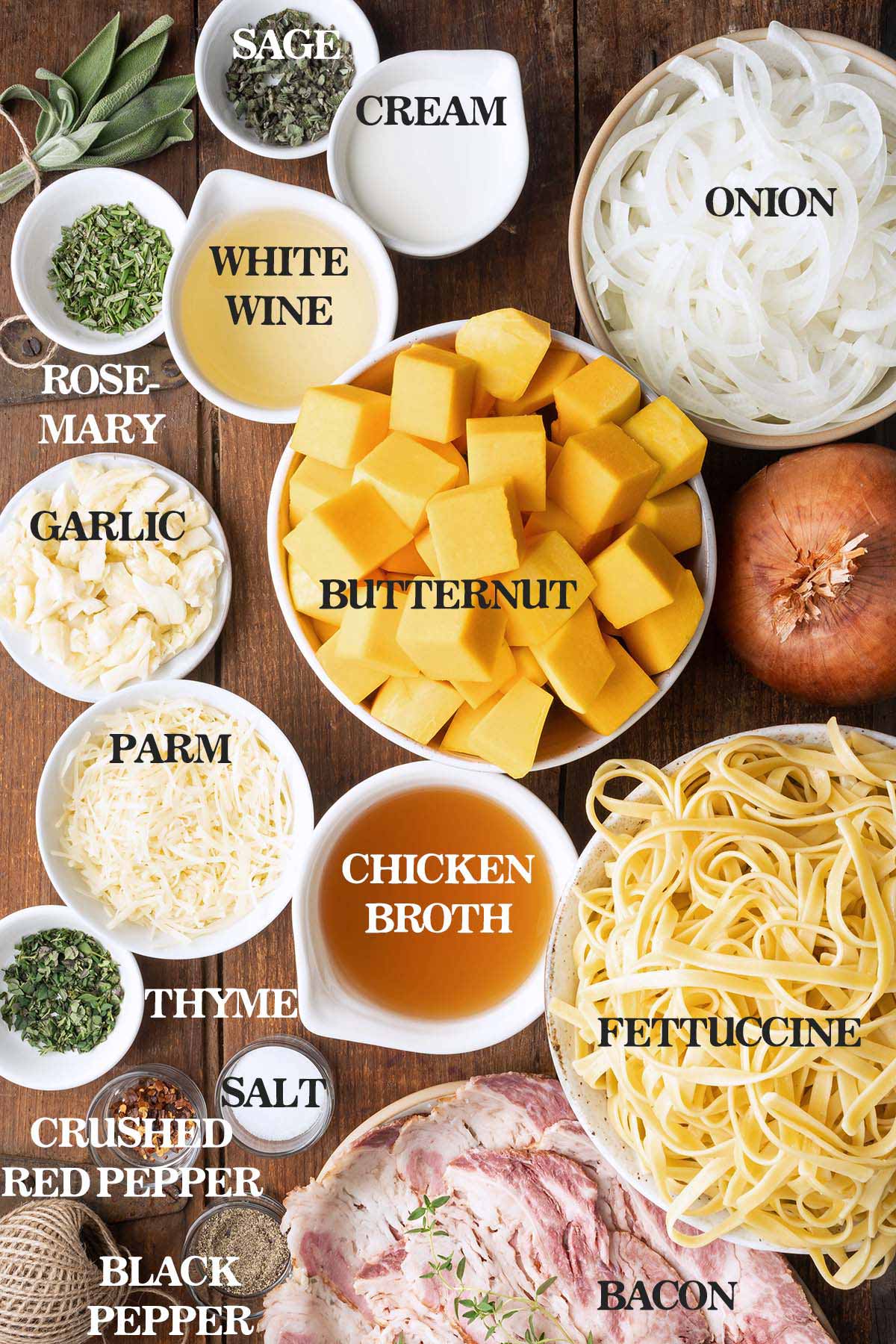
- Beef bacon – Bacon serves triple duty here: 1) it increases the protein content, 2) it lends an underlying rich, smoky flavor and crisp texture, and 3) we use the fat rendered to cook the onions and roast the squash. You aren’t limited to beef bacon; pork bacon, turkey bacon, or plant-based bacon are all fine. If you’re using turkey bacon or vegan bacon, crisp it in 2 tablespoons of oil (such as olive oil or avocado oil), add 2 more tablespoons of oil to the pan when you cook down the onions, and toss the cubed squash with 3 tablespoons of oil before roasting.
- Butternut squash – You’ll need 6 cups of peeled, de-seeded, cubed butternut squash (cut it into 3/4 to 1-inch pieces). One 2-pound butternut squash typically works well.
- Salt and black pepper – These pantry-staple seasonings make sure this dish isn’t bland.
- Crushed red pepper flakes – The amount of red pepper flakes we use doesn’t make this dish spicy-hot, it just helps create a balanced flavor profile. You can omit this, or increase to taste.
- Yellow onion – Here you’ll need a very large yellow onion, which is about 3 cups of thinly sliced onion. We cook the onion down in bacon drippings until it’s starting to caramelize and sweeten, so we don’t need to add sweeteners like maple syrup or brown sugar to create a balanced flavor.
- Garlic – Pairs beautifully with butternut squash and adds complexity.
- Dry white wine – We use a little wine to deglaze the pan after cooking the onions. Go for a dry white wine, such as Sauvignon Blanc or Pinot Grigio. Or if you prefer not to use alcohol, use 2 tablespoons of fresh lemon juice or 1 1/2 tablespoons of apple cider vinegar dissolved in 1/2 cup water.
- Chicken broth – To make the pasta sauce, we puree roasted butternut squash with liquid and a few seasonings. I love the rich depth of flavor chicken broth adds here, but vegetable broth will work just as well.
- Heavy whipping cream – Bumps up the rich flavor and creamy texture. To lighten it up, you can use half and half instead.
- Fettuccine pasta – Cooked to al dente according to the package directions. Or use any pasta shape you like.
- Parmesan cheese – In this recipe, we toss the pasta and sauce with Parmesan and also add more on top when serving. It adds salty, nutty notes that beautifully enhance the flavor of butternut.
- Fresh rosemary, thyme, and sage – These fresh herbs elevate the dish and add a ton of flavor and aroma.
Instructions
1: Cook the Bacon Until Crispy

Cook the bacon in a large, deep skillet (or Dutch oven) over medium heat until crispy on both sides. Once it’s crispy, transfer the bacon to a paper towel-lined plate to drain off any excess fat. Let it cool and then crumble the bacon. (Don’t get rid of the bacon drippings in the pan, we’re using it in this recipe instead of oil or butter.)
2: Roast the Butternut Squash

Preheat the oven to 425F. Toss together the cubed squash, 3 tablespoons of bacon drippings, 3/4 teaspoon salt, and 1/4 teaspoon black pepper on a baking sheet, and then spread the squash out in a single layer. Roast the squash until tender and golden in places, about 20 to 35 minutes, tossing the squash once halfway through.
3: Cook the Onion in the Bacon Drippings and Then Deglaze the Pan

While the squash is roasting, add the sliced onion to the skillet that you cooked the bacon in with the remaining bacon drippings. Cook over medium heat until the onion is softened and starting to caramelize in spots, about 5 to 7 minutes, stirring occasionally. Add the garlic and cook 1 minute, stirring constantly. Add the wine, turn the heat up slightly, and cook until the wine is almost completely evaporated off, using a wooden spoon to scrape up any brown bits from the bottom of the skillet. Remove from the heat.
4: Puree the Roasted Butternut Squash to Make Pasta Sauce

- To a blender, add 1 cup roasted butternut squash, half of the sautéed onion mixture, the chicken broth, heavy cream, remaining 3/4 teaspoon salt, remaining 1/4 teaspoon black pepper, and crushed red pepper flakes.
- Puree (carefully, it’s hot!) until the mixture is smooth and creamy.
PRO TIP FOR SAFETY: When you’re pureeing hot things, be careful not to overfill your blender. Additionally, make sure to vent the lid so the steam can escape. To do this, remove the cap on the lid and hold a kitchen towel over it while pureeing. Another option is to use an immersion blender.
5: Combine

Pour the butternut squash pasta sauce into the skillet with the remaining half of the sautéed onions. Add the cooked and drained pasta, remaining roasted squash cubes, 3/4 cup shredded Parmesan, rosemary, thyme, and sage. Toss everything around gently to coat with the sauce.
6: Add the Finishing Touches and Serve

Transfer to a serving platter and top with the crumbled bacon, remaining 1/4 cup Parmesan, and additional fresh rosemary, thyme, and sage leaves. Serve.
Variations
- Vegan Version – Instead of beef bacon, use your favorite plant-based bacon cooked until crispy in 2 tablespoons of oil; add 2 tablespoons more oil to the pan when you cook the onion; toss the squash cubes with 3 tablespoons of oil before roasting. Use vegetable broth in place of chicken broth. Go for canned unsweetened full-fat coconut milk instead of heavy whipping cream. Skip the regular Parmesan and use vegan parm.
- Protein Version – When you’re combining everything, add 4 cups of cooked shredded or cubed chicken (rotisserie chicken, leftover roast chicken, or leftover turkey after Thanksgiving work well here). Or for a vegan protein source, add 1 to 2 cans of rinsed, drained white beans (such as cannellini).
- Swap Out the Butternut – Instead of butternut squash, you can use kabocha and prepare it the same way. Another delicious option is to use peeled, cubed sweet potatoes instead. Or to save time, you could use canned pumpkin puree (you’ll need about 1/2 to 2/3 cup).
Storage and Reheating Tips
You can store butternut squash sauce (before tossing with pasta) in an airtight container in the fridge for up to 5 days or in the freezer for up to 6 months. After tossing the sauce with the pasta, you can store it in the fridge for up to 4 days or in the freezer for up to 3 months.
To reheat, thaw to room temperature and then reheat on the stovetop or in the microwave, adding a splash of water or broth as necessary.
My Best Tips For Butternut Squash Pasta Sauce
- Use this recipe to reinvent leftovers. If you have leftover roasted or pureed butternut squash on hand, this recipe is a great way to use it!
- If you’re using leftover squash, you’ll need 1 cup of cubed roasted squash or about 1/2 to 2/3 cup of butternut squash puree. And if you prefer, you can use canned pumpkin puree instead.
- To really bump up the autumn vibes, you can omit the crushed red pepper flakes and add a little warm spice instead. Try 1/4 teaspoon of ground cinnamon, nutmeg, or pumpkin pie spice, adding more to taste if desired.

Frequently Asked Questions
One of the best things about butternut squash is how versatile it is in terms of flavor pairings. On its own, roasted butternut squash is sweet and slightly nutty with a buttery texture.
You can play up its sweet flavor by adding sweeteners like brown sugar or maple syrup, and accenting it with warm spices like cinnamon.
Another option is to add contrasting flavors, such as smoky bacon or salty Parmesan.
Additionally, butternut squash goes well with a variety of aromatic fresh herbs, such as sage, thyme, and rosemary.
That depends on how you’re going to be serving the squash. For this recipe, yes, peel the butternut and remove the seeds before cutting it into 3/4 to 1-inch cubes and roasting.
For starters, if you’re a fan of sweet potatoes, know that using butternut squash here instead of sweet potatoes is a great way to lower the carbs. Butternut has about half the amount of carbs as sweet potato.
To reduce the carbs even more, swap out regular fettuccine for your favorite keto pasta. Or skip the pasta and enjoy this dish as a stew instead!
More Butternut Squash Recipes to Try
- Butternut Butterscotch Latte
- Easy Instant Pot Butternut Squash Soup
- Butternut Squash Quinoa Salad with Cranberries and Toasted Almonds
Let’s Connect

Did you make this recipe? Please rate it and leave a comment below. You can also tag @anediblemosaic on social media.
To stay up-to-date, follow me on Facebook, Instagram, Pinterest, and Twitter!

Butternut Squash Pasta Recipe
Email This Recipe
Get this recipe link emailed straight to your inbox!
Ingredients
- 8 ounces beef bacon
- 6 cups butternut squash peeled, de-seeded, and cubed into 3/4 to 1-inch pieces (you’ll need about a 2-pound squash)
- 1 1/2 teaspoons salt divided into 3/4 teaspoon + 3/4 teaspoon
- 1/2 teaspoon black pepper divided into 1/4 teaspoon + 1/4 teaspoon
- 1/4 teaspoon crushed red pepper flakes optional
- 1 very large yellow onion peeled and thinly sliced (about 3 cups of thinly sliced onion)
- 6 large cloves garlic peeled and crushed
- 1/2 cup dry white wine such as Sauvignon Blanc or Pinot Grigio
- 3/4 cup chicken broth or vegetable broth
- 1/4 cup heavy whipping cream
- 1 pound fettuccine pasta cooked to al dente according to the package directions
- 2 ounces Parmesan cheese finely shredded (about 1 cup shredded, divided into 3/4 cup + 1/4 cup)
- 2 teaspoons minced fresh rosemary plus more for garnish
- 2 teaspoons minced fresh thyme plus more for garnish
- 2 teaspoons minced fresh sage plus more for garnish
Instructions
- Cook the bacon. Cook the bacon in a large, deep skillet (or Dutch oven) over medium heat until crispy on both sides. Once it’s crispy, transfer the bacon to a paper towel-lined plate to drain off any excess fat. Let it cool and then crumble the bacon. (Don’t get rid of the bacon drippings in the pan, we’re using it in this recipe instead of oil or butter.)
- Roast the butternut. Preheat the oven to 425F. Toss together the cubed squash, 3 tablespoons of bacon drippings, 3/4 teaspoon salt, and 1/4 teaspoon black pepper on a baking sheet, and then spread the squash out in a single layer. Roast the squash until tender and golden in places, about 20 to 35 minutes, tossing the squash once halfway through.
- Cook the onion in the bacon drippings and then deglaze the pan. While the squash is roasting, add the sliced onion to the skillet that you cooked the bacon in with the remaining bacon drippings. Cook over medium heat until the onion is softened and starting to caramelize in spots, about 5 to 7 minutes, stirring occasionally. Add the garlic and cook 1 minute, stirring constantly. Add the wine, turn the heat up slightly, and cook until the wine is almost completely evaporated off, using a wooden spoon to scrape up any brown bits from the bottom of the skillet. Remove from the heat.
- Puree the roasted butternut squash to make pasta sauce. To a blender, add 1 cup roasted butternut squash, half of the sautéed onion mixture, the chicken broth, heavy cream, remaining 3/4 teaspoon salt, remaining 1/4 teaspoon black pepper, and crushed red pepper flakes. Puree (carefully, it’s hot!) until the mixture is smooth and creamy. (See Notes.)
- Combine. Pour the butternut squash pasta sauce into the skillet with the remaining half of the sautéed onions. Add the cooked and drained pasta, remaining roasted squash cubes, 3/4 cup shredded Parmesan, rosemary, thyme, and sage. Toss everything around gently to coat with the sauce.
- Add the finishing touches and serve. Transfer to a serving platter and top with the crumbled bacon, remaining 1/4 cup Parmesan, and additional fresh rosemary, thyme, and sage leaves. Serve.
Notes
- BLENDER SAFETY: When you’re pureeing hot things, be careful not to overfill your blender. Additionally, make sure to vent the lid so the steam can escape. To do this, remove the cap on the lid and hold a kitchen towel over it while pureeing. Another option is to use an immersion blender.
- Storage: You can store butternut squash sauce (before tossing with pasta) in an airtight container in the fridge for up to 5 days or in the freezer for up to 6 months. After tossing the sauce with the pasta, you can store it in the fridge for up to 4 days or in the freezer for up to 3 months.
- Reheating: To reheat, thaw to room temperature and then reheat on the stovetop or in the microwave, adding a splash of water or broth as necessary.
Nutrition
Nutritional information is automatically calculated and should be used as an approximate.
Share it with me on Instagram and leave a comment to let me know your thoughts!



I’m the writer, recipe developer, photographer, and food stylist behind this blog. I love finding the human connection through something we all do every day: eat! Food is a common ground that we can all relate to, and our tables tell a story. It’s my goal to inspire you to get in the kitchen, try something new, and find a favorite you didn’t know you had.
Free Bonus