
This post may contain affiliate links, view our disclosure.
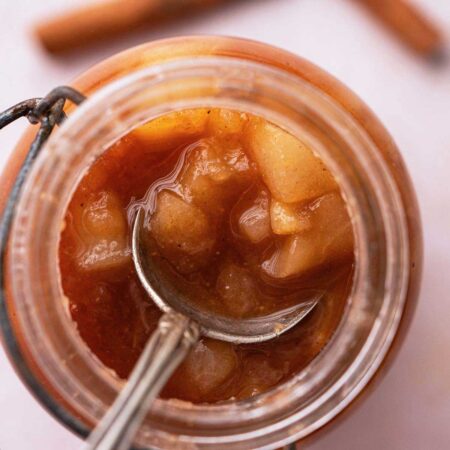
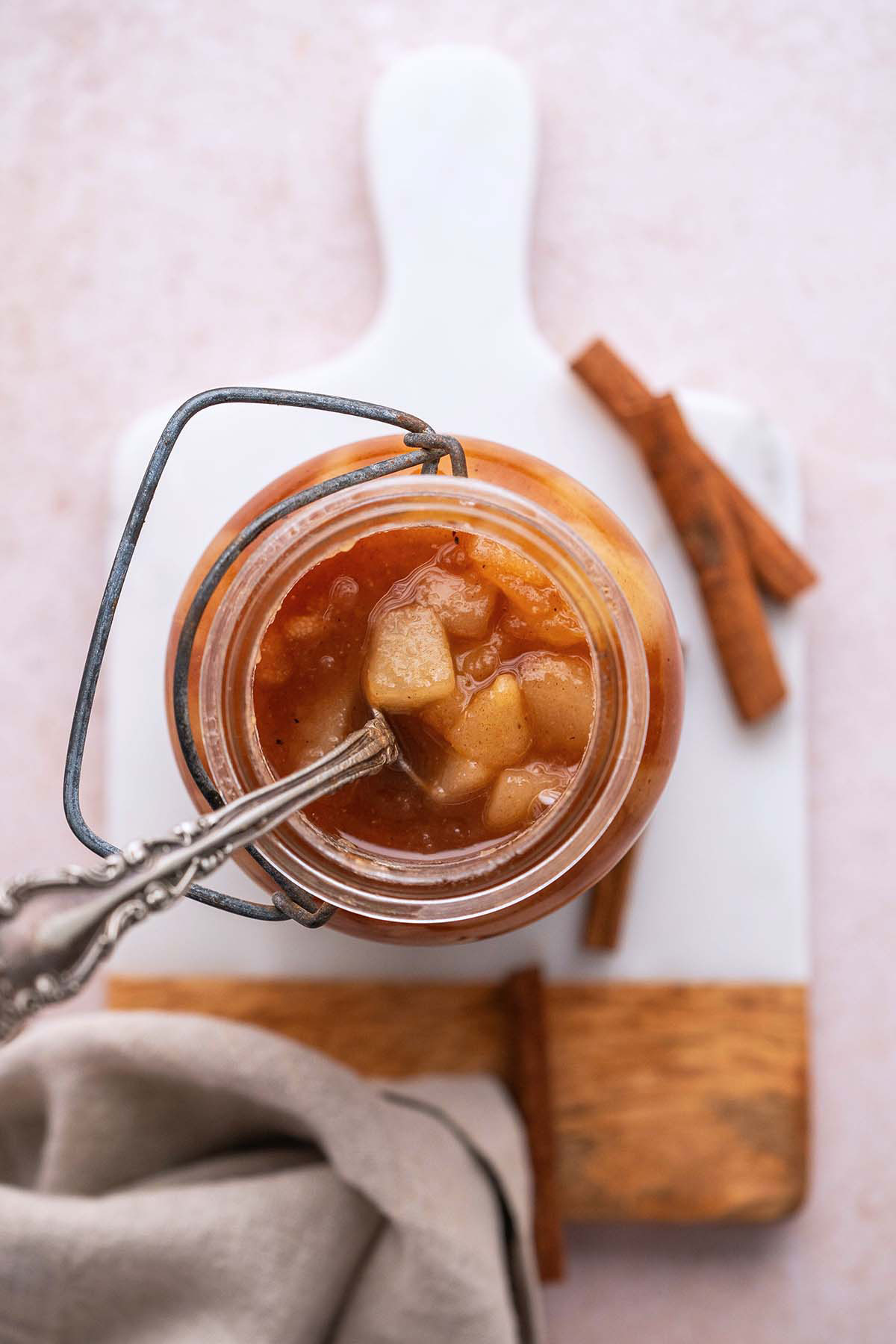
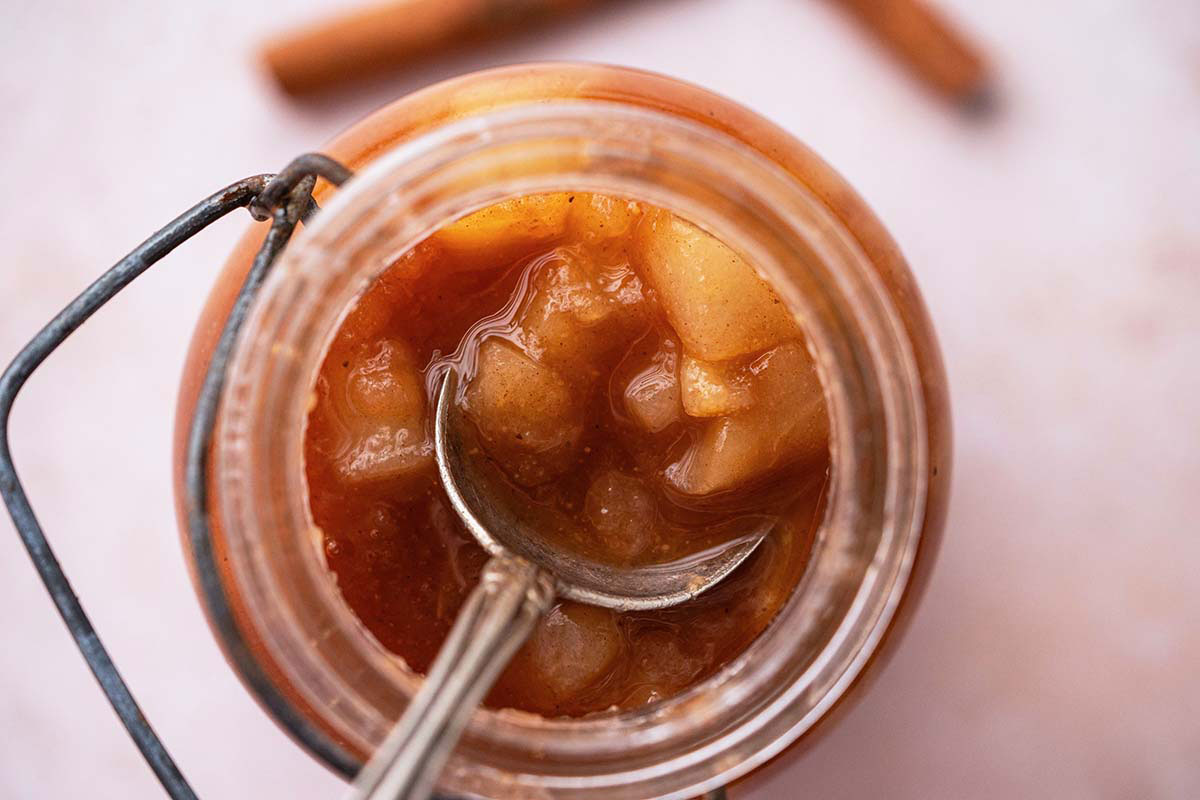
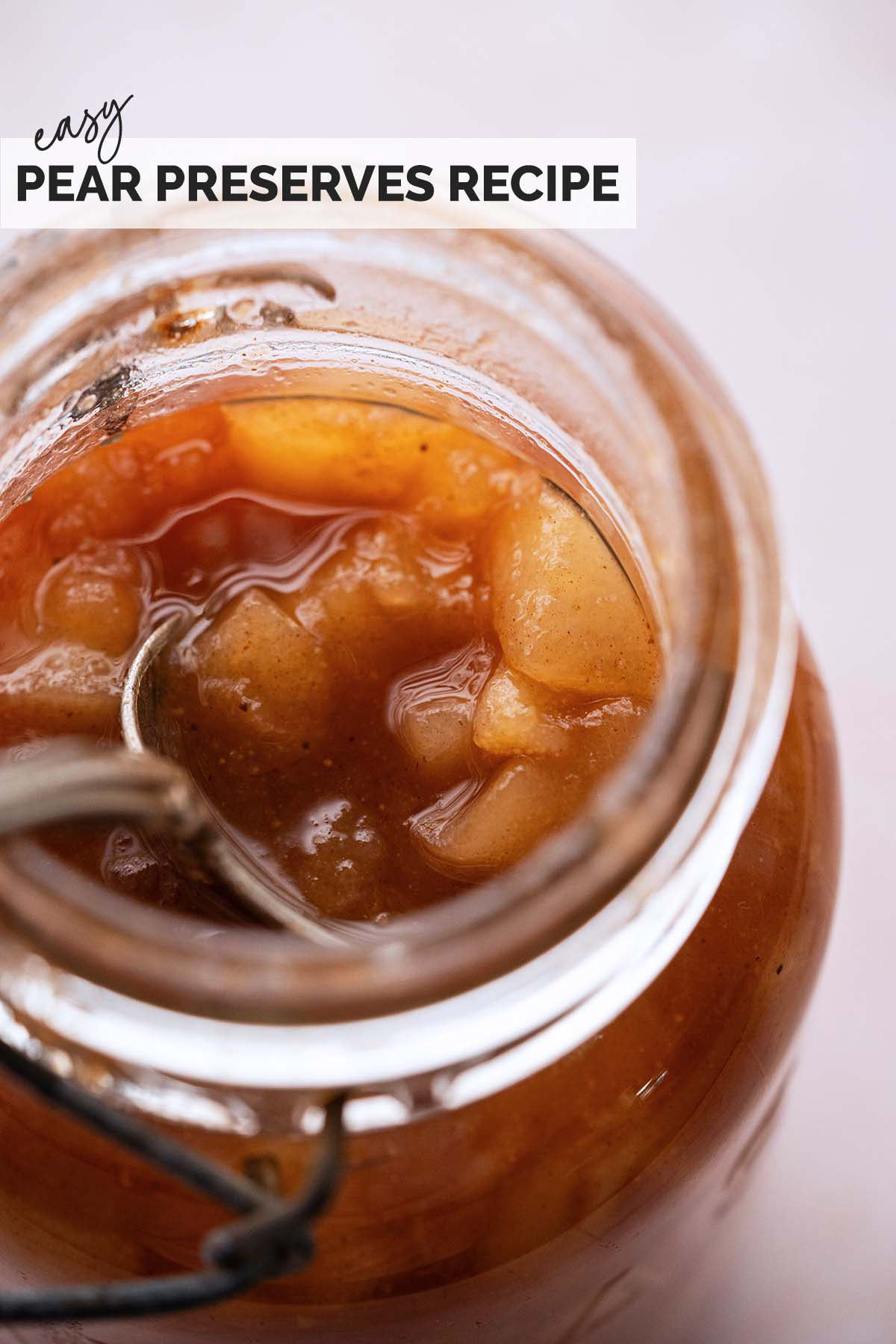
Pear preserves is an old-fashioned recipe that’s syrupy sweet and warmly spiced.
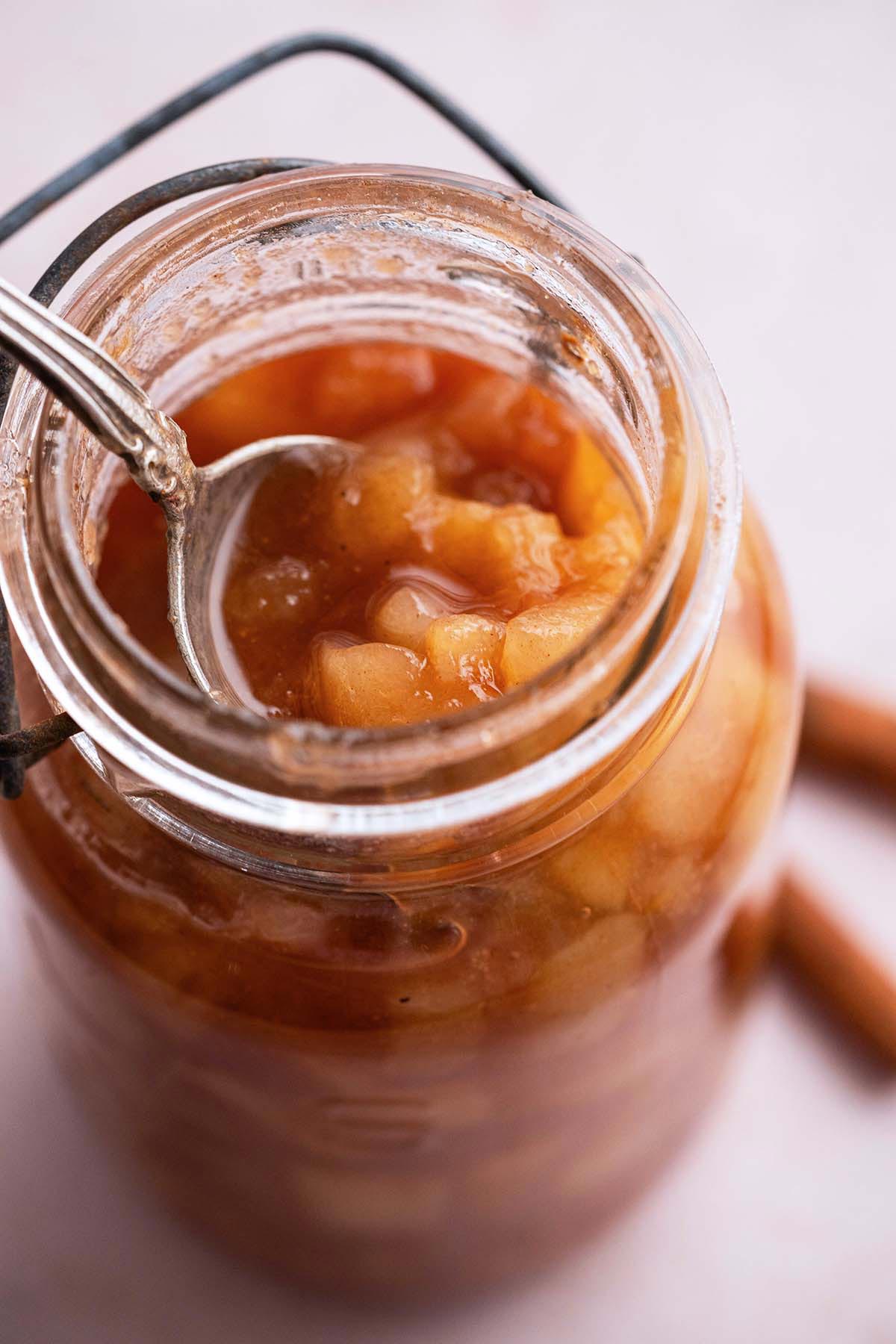
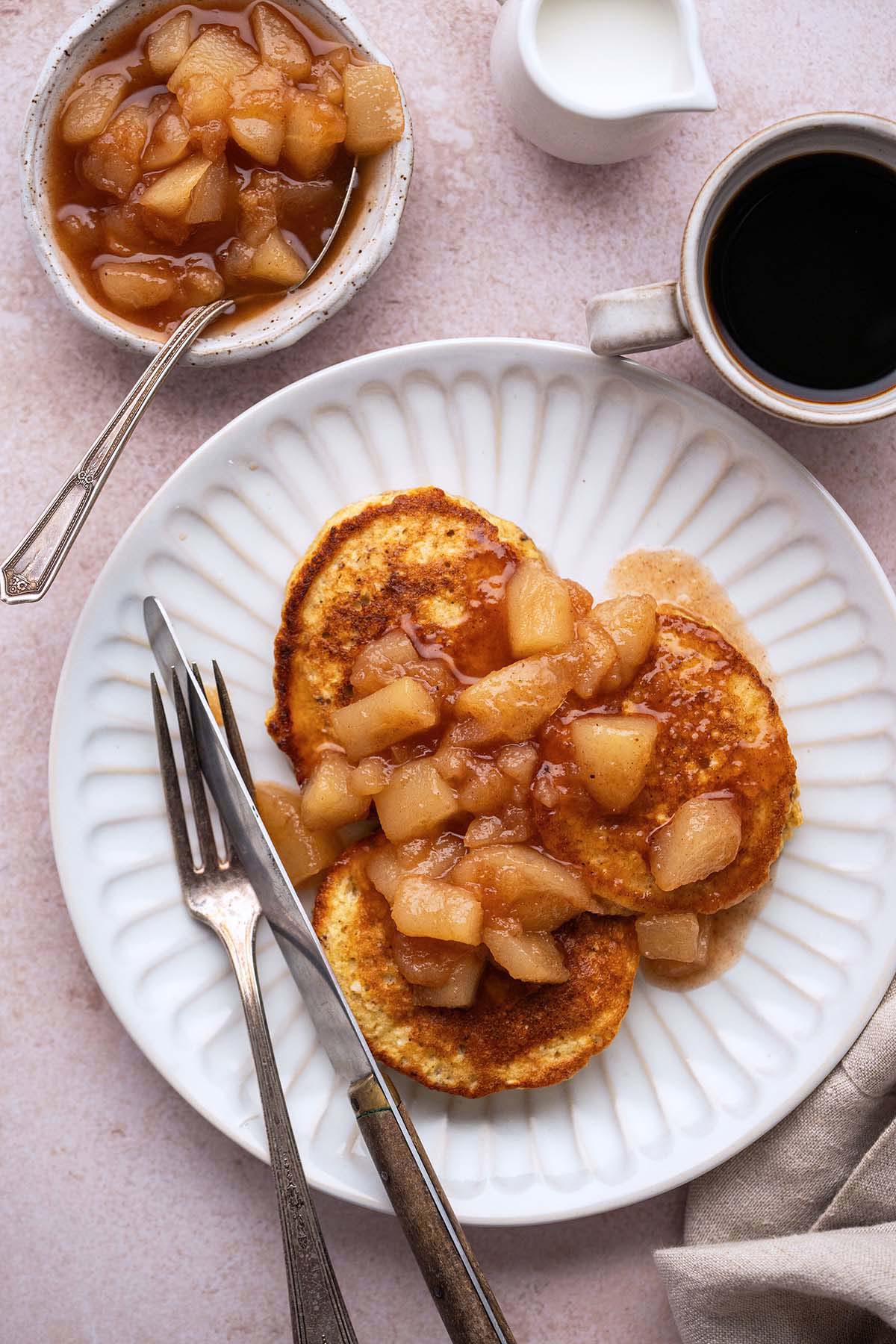
Since starting my sourdough journey a couple years ago, I’ve been experimenting with different toppings for it. Savory, like smashed avocado and sunny-side-up egg, cottage cheese with fresh chives, a drizzle of peppery extra-virgin olive oil, and a sprinkle of fruity sweet/spicy/smoky Aleppo pepper, or sardines with hot honey and pickled onion are some of my favorites. But sometimes you just want something sweet, and it’s hard to beat pear preserves on sourdough toast.
Pear is such a lovely fruit, it deserves more time in the spotlight. There are so many different ways you can go with pear preserves, but here’s how I like mine: chopped pieces of fruit (not quartered or halved), sweet but balanced with a hint of caramel-y molasses, and richly spiced with cinnamon and ginger, as well as a hint of nutmeg and cloves. It’s a fabulous topping for sourdough toast (TIP: add sharp English cheddar or creamy blue cheese to really take it over the top), and just about any breakfast item.
The Difference Between Pear Preserves and Pear Jam
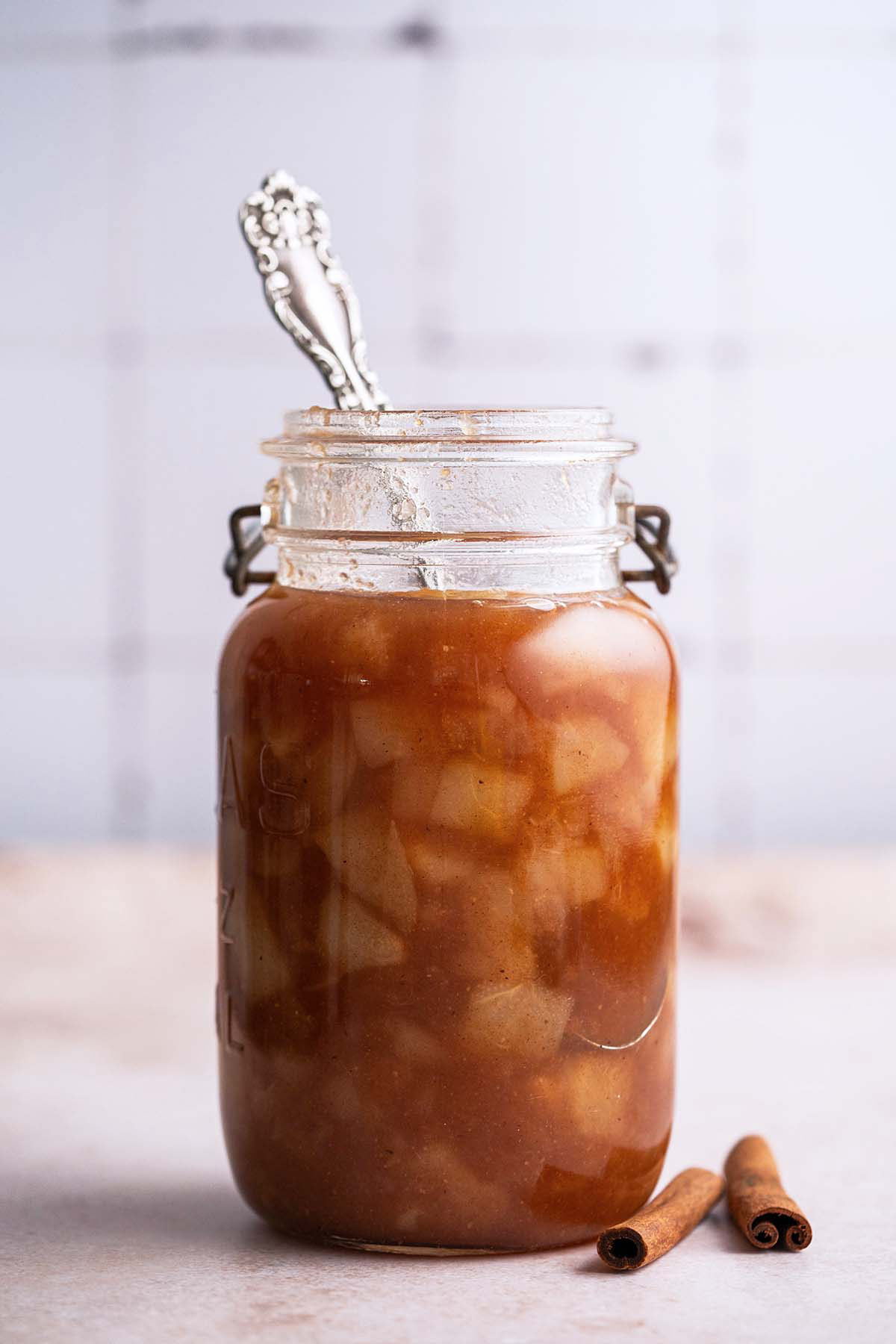
The main difference between pear preserves and jam is the texture of the fruit and the consistency of the syrup. Preserves contains larger pieces of fruit in a thick, pourable syrup. On the other hand, jam uses diced, crushed, or mashed fruit cooked down into a more uniform paste that gels (aka “sets”) with smaller chunks of fruit. Additionally, jam frequently calls for pectin, while preserves typically do not contain pectin. Lastly, their uses differ; preserves work well as a topping for yogurt, pancakes, waffles, French toast, crepes, oatmeal, etc., and jam is great for spreading on toast.
I like my preserves with a texture of jammy syrup, so I coarsely mash some of the fruit chunks in the pot towards the end of the cooking process. This is just personal preference though; if you like, you can keep your pears in larger pieces.
Ingredients
Breaking It Down
Ingredients Explained
In this section I explain the ingredients and give substitution ideas where applicable. For the full recipe (including the ingredient amounts), see the recipe card below.
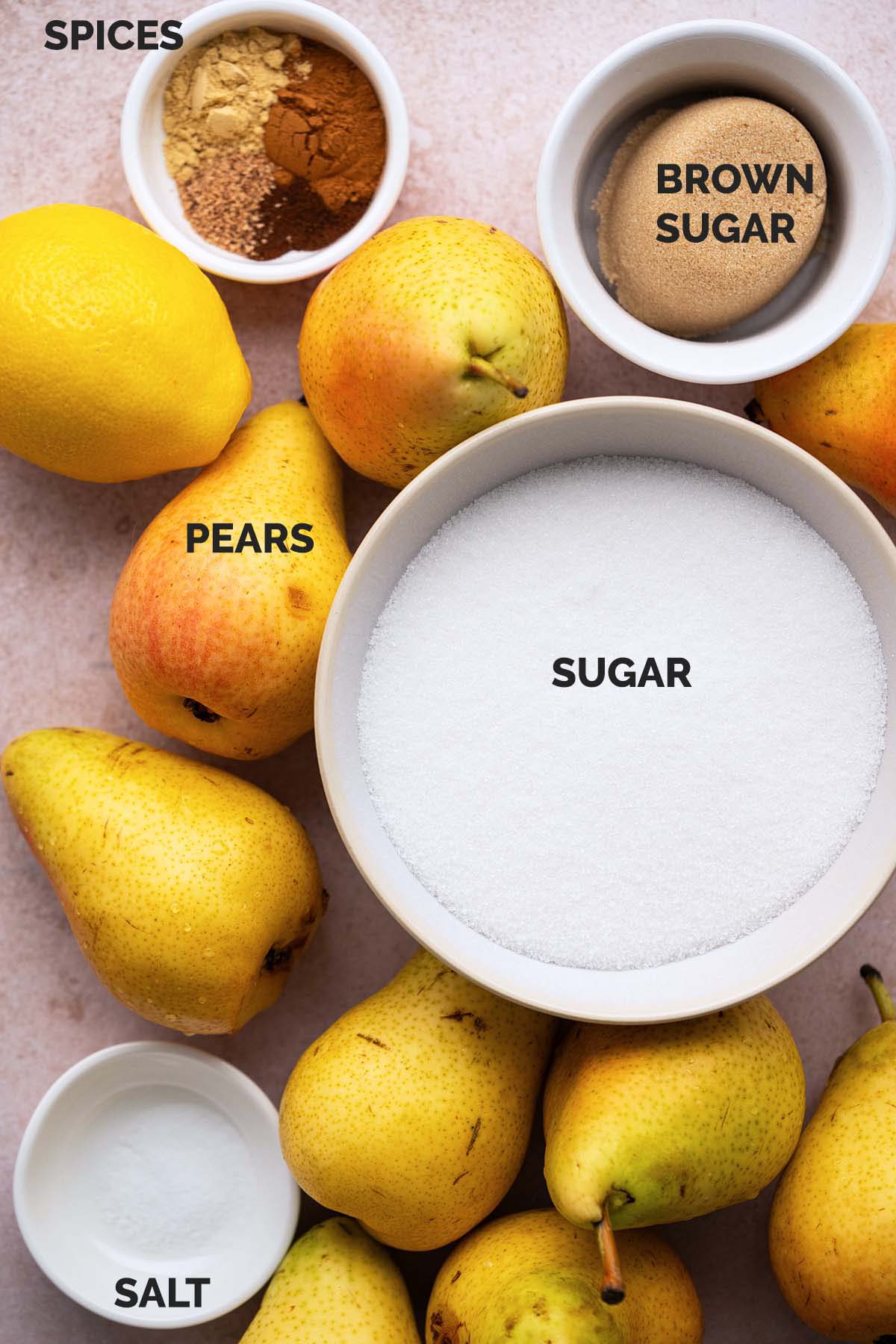
- Pears – You’ll need 3 pounds of fresh, ripe pears, which is about 6 to 7 cups chopped.
- Fresh lemon juice – Adds tart flavor for balance. Because we aren’t adding pectin and pears are a low-acid fruit, we need to add an acidic ingredient to help get the right texture (acid helps preserves and jams “set”), and fresh lemon juice works perfectly here.
- Granulated white sugar – Here we use mostly granulated white sugar with a little bit of brown sugar added for rich notes of caramel-y molasses. The sugar in this recipe not only adds sweetness, but also helps us achieve the right syrupy texture or “set”.
- Salt – To enhance the natural flavor and sweetness of the pears.
- Cinnamon, dried ginger, nutmeg, and cloves – This warm spice blend beautifully enhances the musky, floral, honey sweet-vanilla flavor of pears.
How to Make Pear Preserves
Step 1: Prep and Macerate the Pears
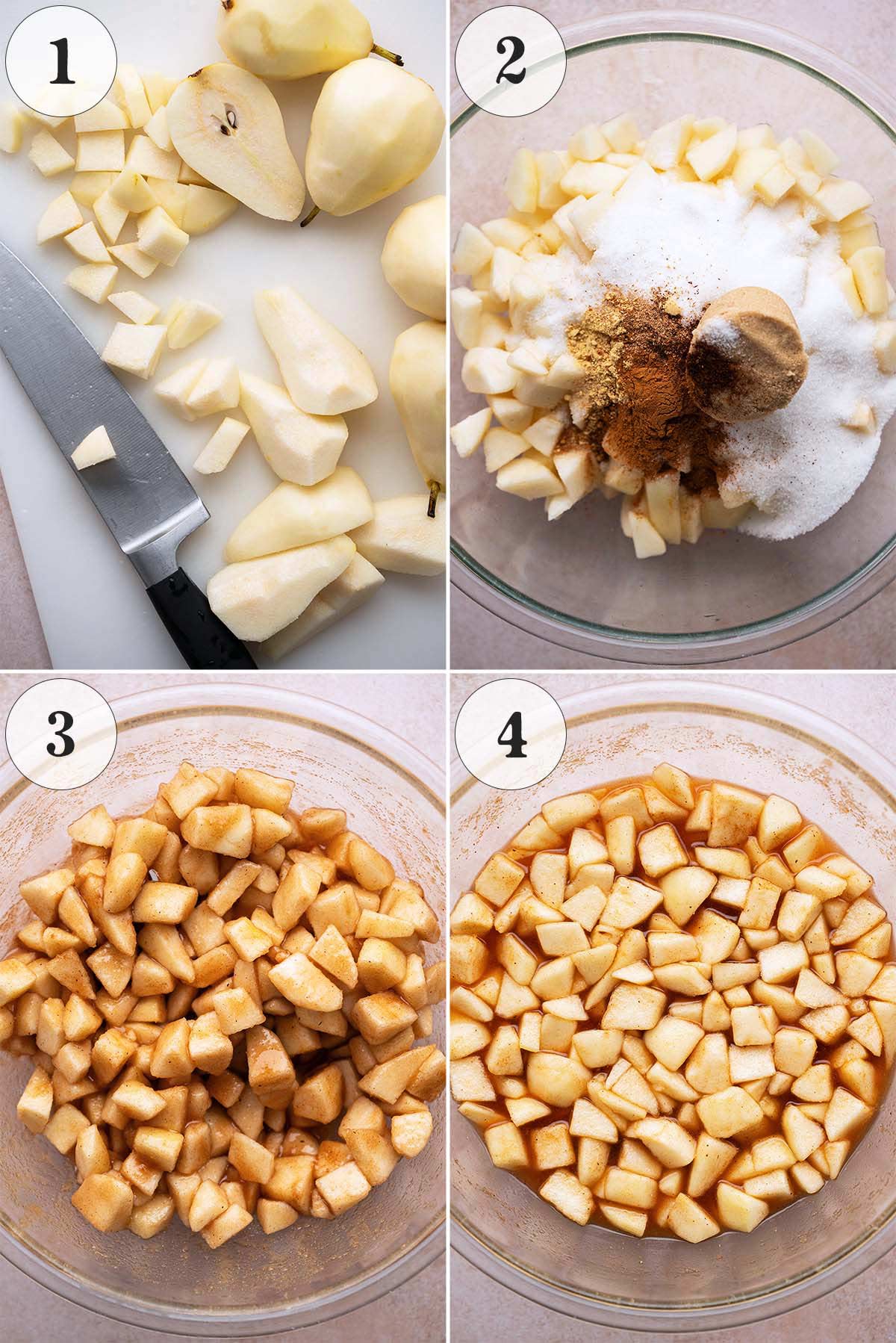
- Peel, core, and chop the pears.
- Add all ingredients to a large bowl.
- Toss to coat the pears.
- Cover the bowl, and let it set at room temperature for 1 hour so the pears start releasing their liquid.
Step 2: Cook the Pears
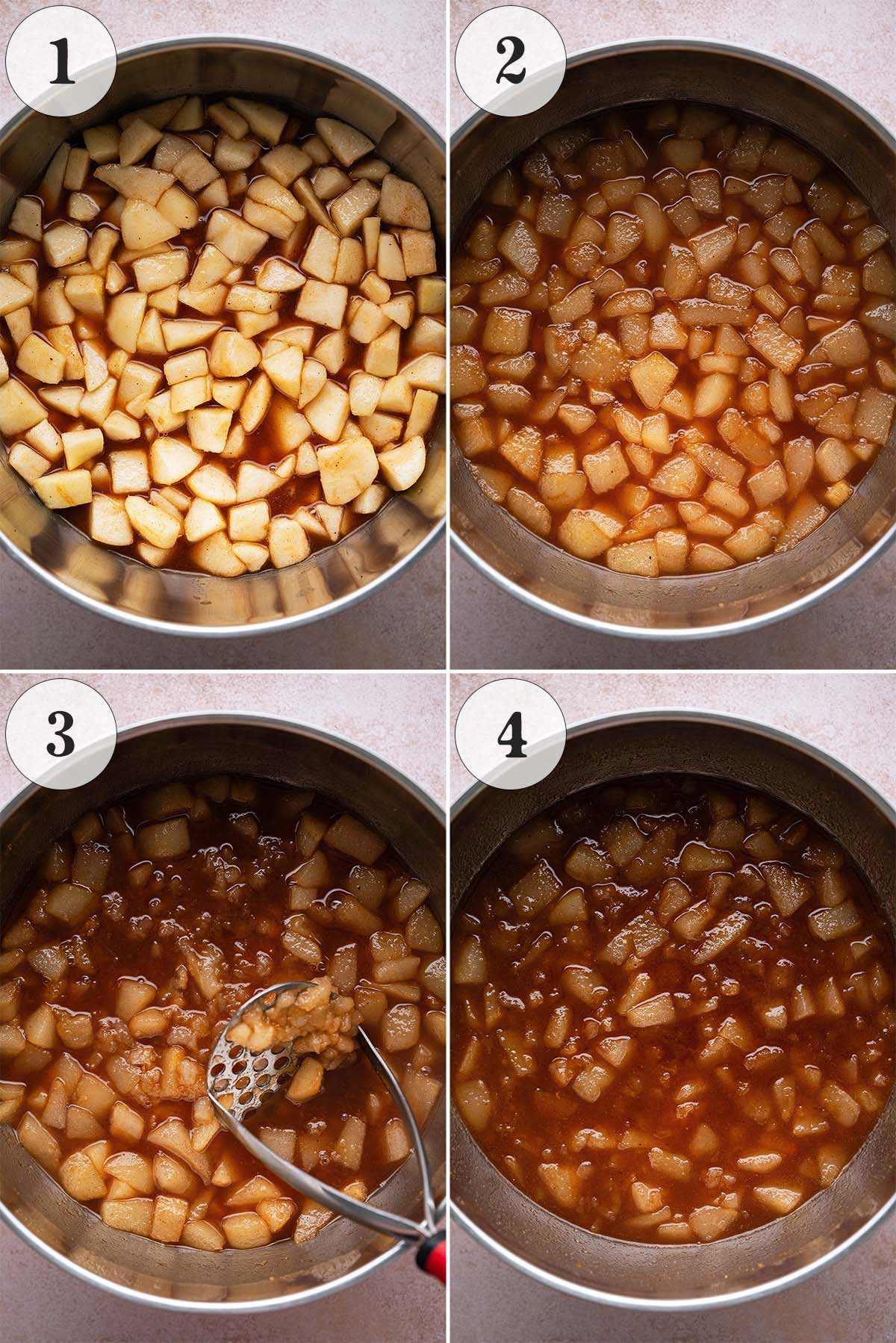
- Add the pears (along with their juices) to a medium saucepan.
- Bring to a boil, cover, reduce the heat slightly so it doesn’t boil over, and cook 15 minutes.
- Cook uncovered for 5 minutes, stirring frequently. If desired, use a potato masher to coarsely mash some of the pears.
- This is how it looks when it’s done. (TIP: If you want it thicker, cook for another 10 to 15 minutes, but remember it will thicken more as it cools.)
Storage
Without canning, you can store this in a covered container in the fridge for up to 3 weeks or in the freezer for up to 1 year.
Canning
You can process pint-sized jars in a water bath canner for 10 minutes and store it in a cool, dark place for up to 2 years. After opening, store refrigerated for up to 3 months.
Tips For the Best Pear Preserves Recipe
- Chopping – I like my preserves on the jammy side, so I chop the fruit, and then coarsely mash some of it towards the end of the cooking process. If you want your preserves with larger fruit pieces (such as quartered or halved), I recommend using slightly under-ripe Bartlett pears, or going with a different type of pear that holds its shape better, such as Bosc, Concorde, or Kieffer.
- Macerating – Don’t skip macerating the pears (i.e., tossing with sugar and letting them sit) before cooking. This step is crucial for extracting the natural juices (so we don’t need to add liquid), and for helping the fruit chunks stay intact during the cooking process (so it doesn’t turn to a mushy paste).
Frequently Asked Questions
Nope. Remember, preserves are not solid gel; they’re more like fruit pieces in heavy syrup. In this recipe for preserves, the pectin naturally found in the fruit along with added sugar, acid from lemon juice, and heat create the perfect syrupy consistency.
Avoid the temptation to add thickener like cornstarch or flour. We’re making preserves, not pie filling, friends!
The best way to thicken pear preserves is simply to let it simmer longer to evaporate excess liquid and achieve a syrupy consistency. To do so, uncover the pot, make sure the heat is on low, and stir frequently. (And remember, preserves thicken more as they cool.)
I used ripe Bartlett pears here. Because they’re ripe, they’re soft and sweet, which means this recipe cooks relatively fast and doesn’t need as much added sugar. You can use other pear varieties, but each variety has a different texture and sweetness level. (Remember that the fruit’s ripeness level also plays a big role in texture – and therefore cook time – as well as sweetness and flavor.) If you want a good substitute for Bartlett pears in this recipe, you can use Forelle, Seckel, or Anjou (or a mix).
If You Love Pears, You Don’t Want to Miss These Recipes
- Pear and Rocket (Arugula) Salad
- Vanilla-Cardamom Pear Hand Pies
- Cardamom-Spiced Cranberry Pear Sauce
- Vanilla Bean Caramelized Pear Scones With Dark Chocolate Chunks
Let’s Connect

Did you make this recipe? Please rate it and leave a comment below. You can also tag @anediblemosaic on social media.
To stay up-to-date, follow me on Facebook, Instagram, Pinterest, and Twitter!
Spiced Pear Preserves Recipe
Email This Recipe
Get this recipe link emailed straight to your inbox!
Ingredients
- 3 pounds ripe pears (peeled, cored, and chopped; about 6 to 7 cups chopped; see Notes for what kind of pears to use)
- 2 1/2 tablespoons fresh lemon juice
- 1 cup granulated white sugar
- 1/4 cup light brown sugar
- 1/4 teaspoon salt (I use a slightly heaping 1/4 teaspoon salt)
- 1 1/2 teaspoons ground cinnamon
- 3/4 teaspoon ground ginger
- 1/4 teaspoon ground nutmeg
- 1/8 teaspoon ground cloves
Instructions
- Macerate. Add all ingredients to a large bowl and toss to coat the pears. Cover the bowl, and let it set at room temperature for 1 hour so the pears start releasing their liquid.
- Cook. Add the pears (along with their juices) to a medium saucepan. Bring to a boil, cover, reduce the heat slightly so it doesn’t boil over, and cook 15 minutes.
- Mash and thicken. Cook uncovered for 5 minutes, stirring frequently. If desired, use a potato masher to coarsely mash some of the pears. (TIP: If you want it thicker, cook for another 10 to 15 minutes, but remember it will thicken more as it cools.)
Notes
- Pear Type: I use ripe Bartlett pears here. Because they’re ripe, they’re soft and sweet, which means this recipe cooks relatively fast and doesn’t need as much added sugar. You can use other pear varieties, but each variety has a different texture and sweetness level. (Remember that the fruit’s ripeness level also plays a big role in texture – and therefore cook time – as well as sweetness and flavor.) If you want a good substitute for Bartlett pears in this recipe, you can use Forelle, Seckel, or Anjou (or a mix).
- Chopping the Pears: I like my preserves on the jammy side, so I chop the fruit, and then coarsely mash some of it towards the end of the cooking process. If you want your preserves with larger fruit pieces (such as quartered or halved), I recommend using slightly under-ripe Bartlett pears, or going with a different type of pear that holds its shape better, such as Bosc, Concorde, or Kieffer.
- Recipe Yield and Serving Size: This recipe makes about 3 1/2 cups of preserves, or 14 (1/4-cup) servings.
- Storage: Without canning, you can store this in a covered container in the fridge for up to 3 weeks or in the freezer for up to 1 year.
- Canning: You can process pint-sized jars in a water bath canner for 10 minutes and store it in a cool, dark place for up to 2 years. After opening, store refrigerated for up to 3 months.
- Low(er) Sugar Tip: Sometimes I replace half of the granulated white sugar and half of the light brown sugar with keto granulated sweetener and keto brown sugar. This greatly cuts down on the carbs and sugar content, and we can’t taste any difference.
Nutrition
Nutritional information is automatically calculated and should be used as an approximate.
Share it with me on Instagram and leave a comment to let me know your thoughts!


I’m the writer, recipe developer, photographer, and food stylist behind this blog. I love finding the human connection through something we all do every day: eat! Food is a common ground that we can all relate to, and our tables tell a story. It’s my goal to inspire you to get in the kitchen, try something new, and find a favorite you didn’t know you had.
Free Bonus