

This post may contain affiliate links, view our disclosure.
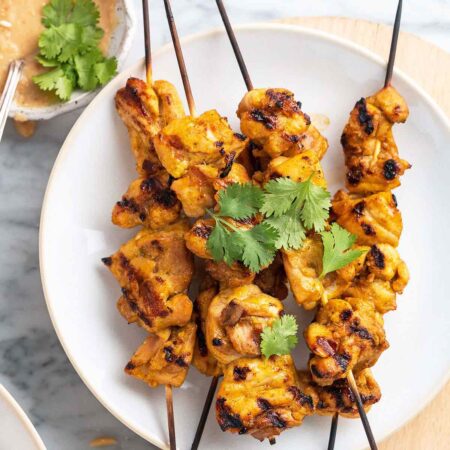
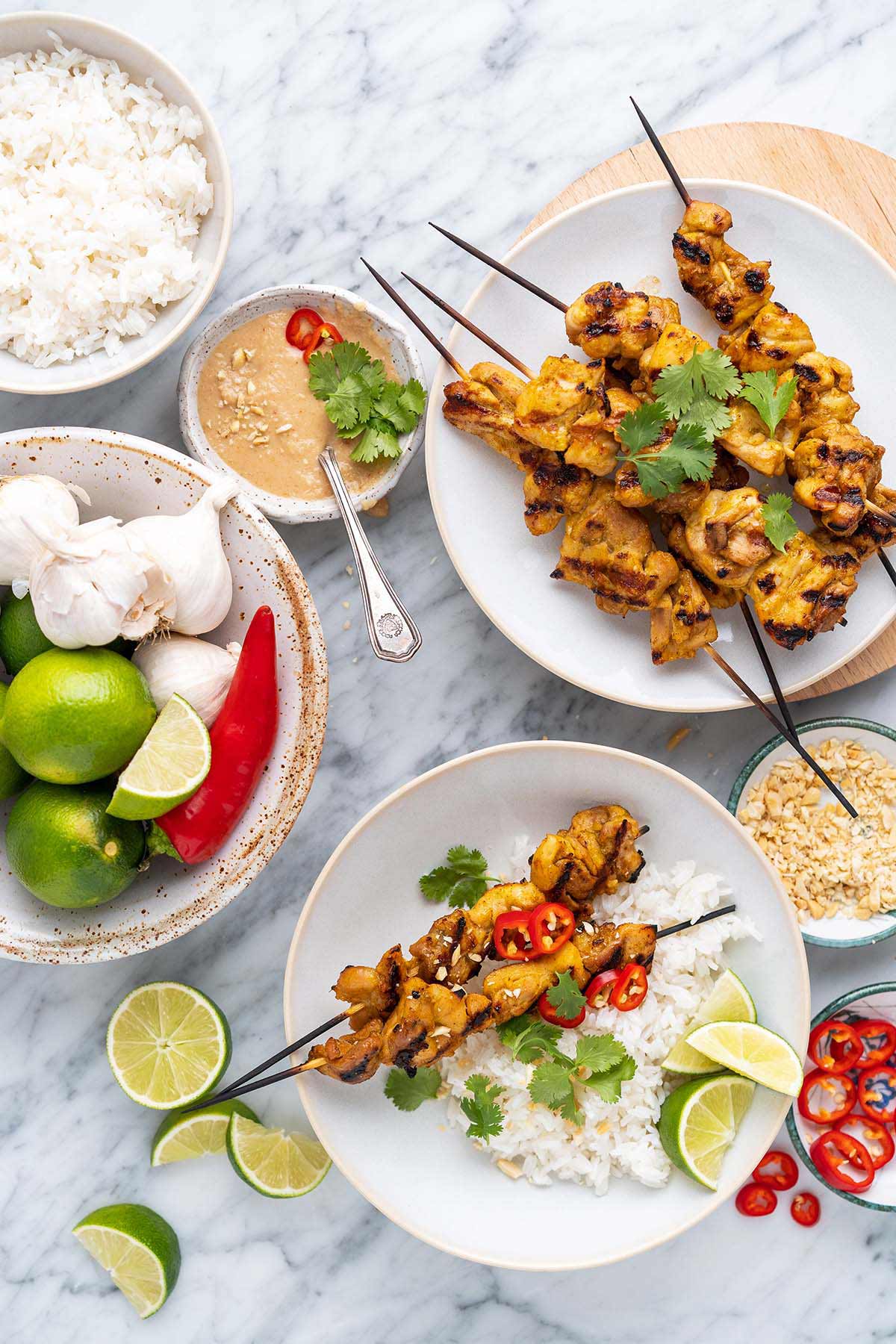
This easy Thai chicken satay recipe features tender, juicy, and flavorful marinated meat skewers paired with a sweet and spicy peanut sauce. No worries if you don’t have a grill or grill pan; you can also cook the chicken in the oven or air fryer!
One of the things I love most about traveling is exploring a city on foot. I could walk around a place for hours enjoying the architecture, street performers, and local food. The sights, sounds, and smells as you’re walking through give you a much fuller sense of a place.
Satay is street food from Southeast Asia. It’s seasoned meat that’s skewered and grilled. Because of the seasonings and marinade, it’s incredibly tender, juicy, and flavorful.
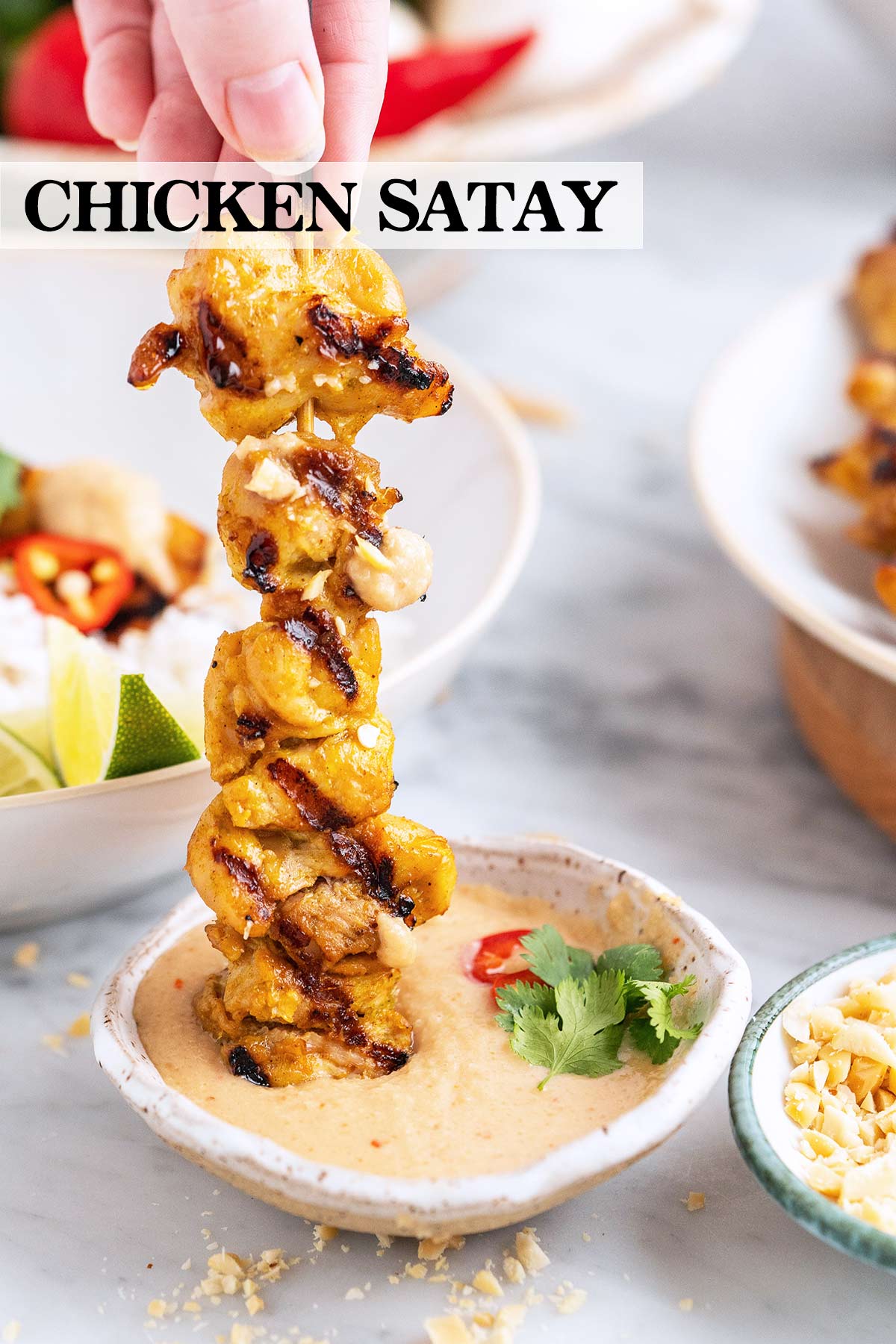
Chicken is my favorite, but you can also find satay made with other meats, such as beef, goat, pork, and shrimp, as well as tofu. It’s typically served with a balanced sweet, salty, and spicy peanut sauce for dipping.
It’s traditional to cook satay on a fire; the aroma is completely enticing as you’re walking around working up an appetite. But this dish is just as alluring when you make it at home. And bonus, you can cook it on a grill, in the oven, or in an air fryer and it’s delicious no matter which method you use!
Why You’ll Love This Recipe
- Enjoy global flavors at home. It’ll transport your taste buds to Southeast Asia, right in your kitchen.
- The peanut sauce is good enough to eat on its own. Use it as a dressing for salads, rice bowls, or cold noodle salads, or as a dip for meat, veggies, spring rolls, etc. Make a double batch!
- The cooking method is versatile. You can cook this chicken on a grill outside, on a grill pan inside, in the oven, or in an air fryer (see the recipe below for instructions for each method).
Ingredients
Breaking It Down
Ingredients Explained
In this section I explain the ingredients and give substitution ideas where applicable. For the full recipe (including the ingredient amounts), see the recipe card below.
Peanut Sauce Ingredients
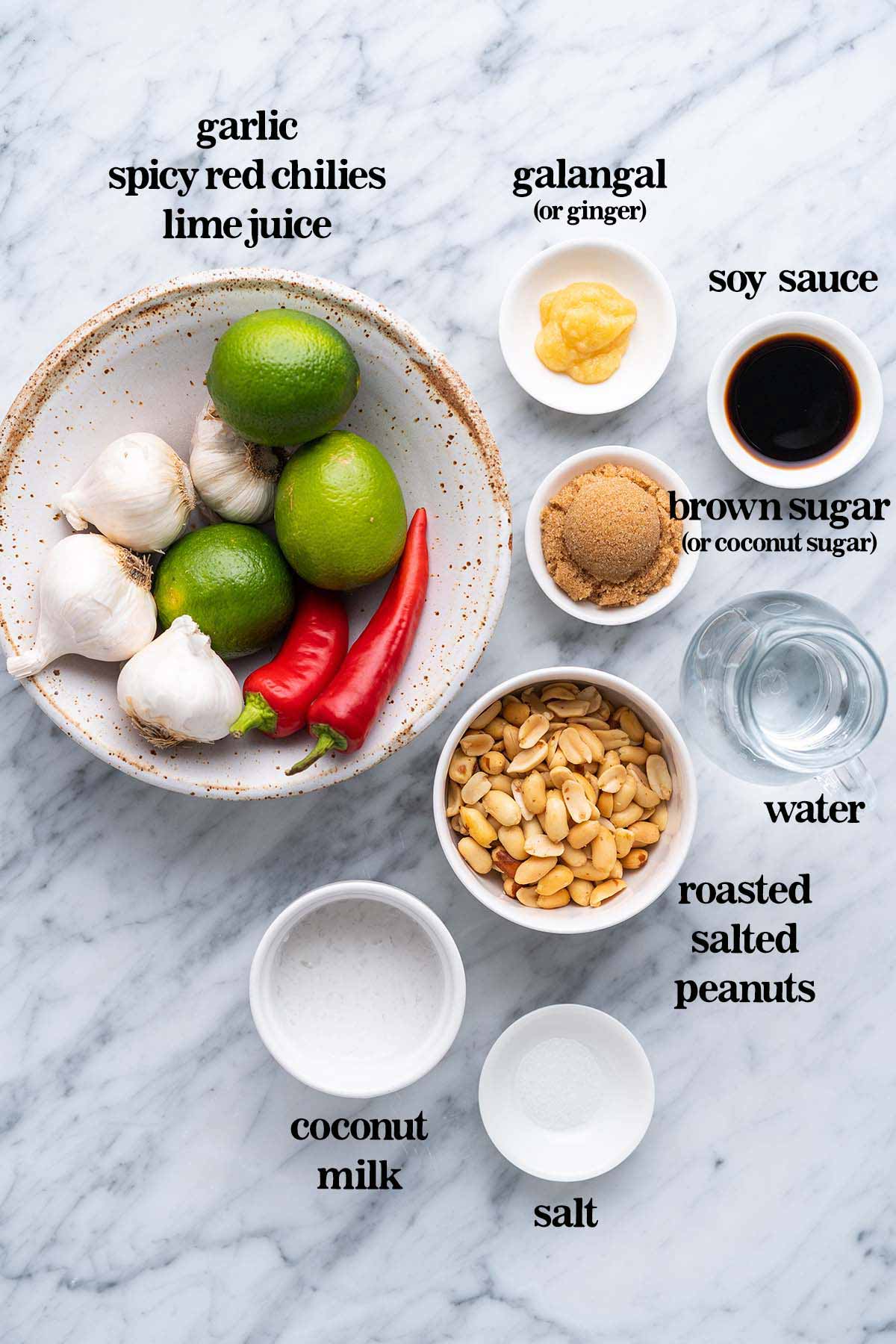
- Roasted salted peanuts – For deep, toasted peanutty flavor. If you only have peanut butter on hand, you can use that instead and only thin it out with water if needed. Your sauce will be richer, sweeter, and creamier.
- Coconut milk – For rich flavor and creamy texture, I like to use canned unsweetened full-fat coconut milk.
- Light brown sugar – Or coconut sugar.
- Fresh lime juice – Adds a tart, bright, citrusy component that wakes up the other flavors.
- Soy sauce – For rich, salty, umami flavor. For the gluten free version, use tamari sauce or coconut aminos.
- Garlic – Contributes pungent, savory flavor and aroma.
- Spicy red chili pepper – Adds spicy heat and helps create a balanced flavor profile. Depending on what kind of chili pepper is available to you, you can add more or less depending on how fiery hot you want the peanut sauce. Thai Bird’s Eye Chili peppers (aka Prik Kee Noo) are one of the hottest chilies, so start with less and add more to taste. Another popular chili in Thai cuisine is the Thai Spur Chili (aka Prik Chee Fah), which are larger and a bit milder than Bird’s Eye Chili peppers, but still quite hot. Or you can substitute with up to 1 teaspoon of crushed red pepper flakes.
- Galangal – Features an earthy, citrusy, subtly peppery, slightly piney flavor. Look for galangal at Asian grocery stores in your area. If you can’t find it, you can use fresh ginger instead.
- Salt – Or use fish sauce instead of salt for a salty, briny flavor that also packs an umami punch.
- Water – To thin out the sauce to the perfect consistency.
Chicken Satay Marinade Ingredients

- Fresh lime juice – For fresh, bright, tart flavor. This also helps tenderize the chicken.
- Avocado oil – Or you can use another light-colored, mild or neutral-flavored oil, such as light olive oil, vegetable oil, or canola oil.
- Light brown sugar – Or coconut sugar.
- Soy sauce – Provides deep salty, savory flavor. You can use tamari sauce or coconut aminos to keep it gluten free.
- Fresh lime zest – Adds intense citrusy lime flavor and aroma without the acidity that the juice brings.
- Fish sauce – Contributes deep umami flavor.
- Red onion, garlic, spicy red chili pepper, and galangal (or ginger) – Fresh aromatics like onion, shallot, garlic, lemongrass, chilies, galangal, and/or ginger are a big part of Thai cuisine. They help create beautifully deep, complex flavor profiles.
- Coriander and cumin – These spices are traditional ingredients. Coriander adds bright, citrusy notes that play well off cumin’s warm, earthy notes.
- Turmeric – Gives the chicken a vibrant yellow color. You can omit the turmeric if you like.
- Salt – Or skip the salt and use more fish sauce to taste.
- Boneless, skinless chicken thighs – Chicken thighs yield tender, juicy meat skewers. However, you can also use boneless, skinless chicken breasts if you prefer. If you do so, marinate the chicken for at least 4 hours and reduce the cooking time accordingly so it doesn’t dry out.
Tip: Fit This Into Your Way of Eating (It’s Special-Diet Friendly!)
- Gluten Free Version: Use tamari sauce or coconut aminos instead of soy sauce.
- Low Carb/Keto Version: Use almonds instead of peanuts. Use keto brown sugar instead of regular brown sugar. Serve with cauliflower rice.
- Paleo Version: Use almonds instead of peanuts. Use coconut sugar instead of brown sugar. Serve with cauliflower rice.
Step-by-Step Instructions
1: Make the Peanut Sauce For Dipping

- Add all ingredients for the peanut sauce (except the water) to a food processor.
- Pulse a few times, and then process until it forms a sauce, stopping to scrape down the sides as necessary.
- If need be, add a little water through the feed tube with the motor running to thin it out until it reaches your desired consistency.
- Store covered in the fridge until using.
2: Marinade the Chicken Satay and Then Thread it Onto Skewers

- Add all ingredients for the chicken satay (except the chicken) to a large bowl, and stir to combine.
- Add the chicken, and stir until well-coated.
- Cover the bowl with plastic wrap and refrigerate at least 2 hours, or up to 24 hours. Meanwhile, soak wooden skewers in water for 20 minutes.
- Thread the chicken onto the skewers.
PRO TIP: If you use 6 skewers, you can easily portion this dish once it’s cooked because it makes 6 servings.
3: Grill the Chicken Satay Skewers
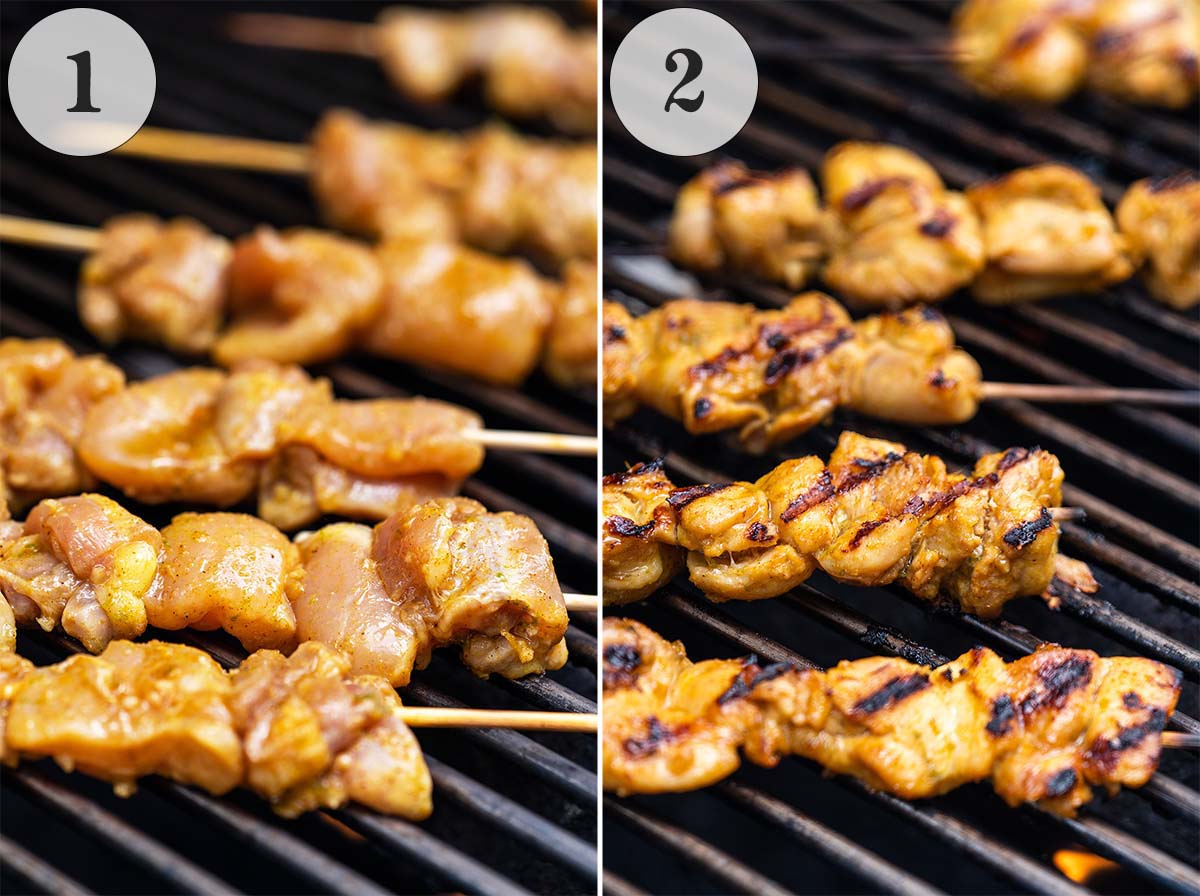
- Preheat a grill to medium-high; once the grill is hot, add the chicken skewers.
- Cook the chicken until it’s charred and fully cooked in the center, about 6 to 8 minutes per side.
PRO TIP: Don’t forget, you can also cook this in the oven or in an air fryer! The recipe card below gives instructions for each cooking method.

Storage
Once the chicken is cooked, you can store the leftovers covered in the fridge for up to 4 days.
Store the sauce in an airtight container in the fridge for up to 1 week.
Tips For the Best Chicken Peanut Satay Skewers
- Soaking wooden skewers in water for 20 minutes before grilling helps prevent them from catching on fire.
- You can easily customize the flavor of the peanut sauce to suit your preference! Feel free to add more or less sugar, lime juice, chili pepper, and salt to taste.
- The chicken thighs are fully cooked when there is no pink in the center. Additionally, the thickest part of the meat should register an internal temperature of 165F on an instant-read meat thermometer.

What to Eat with Chicken Satay
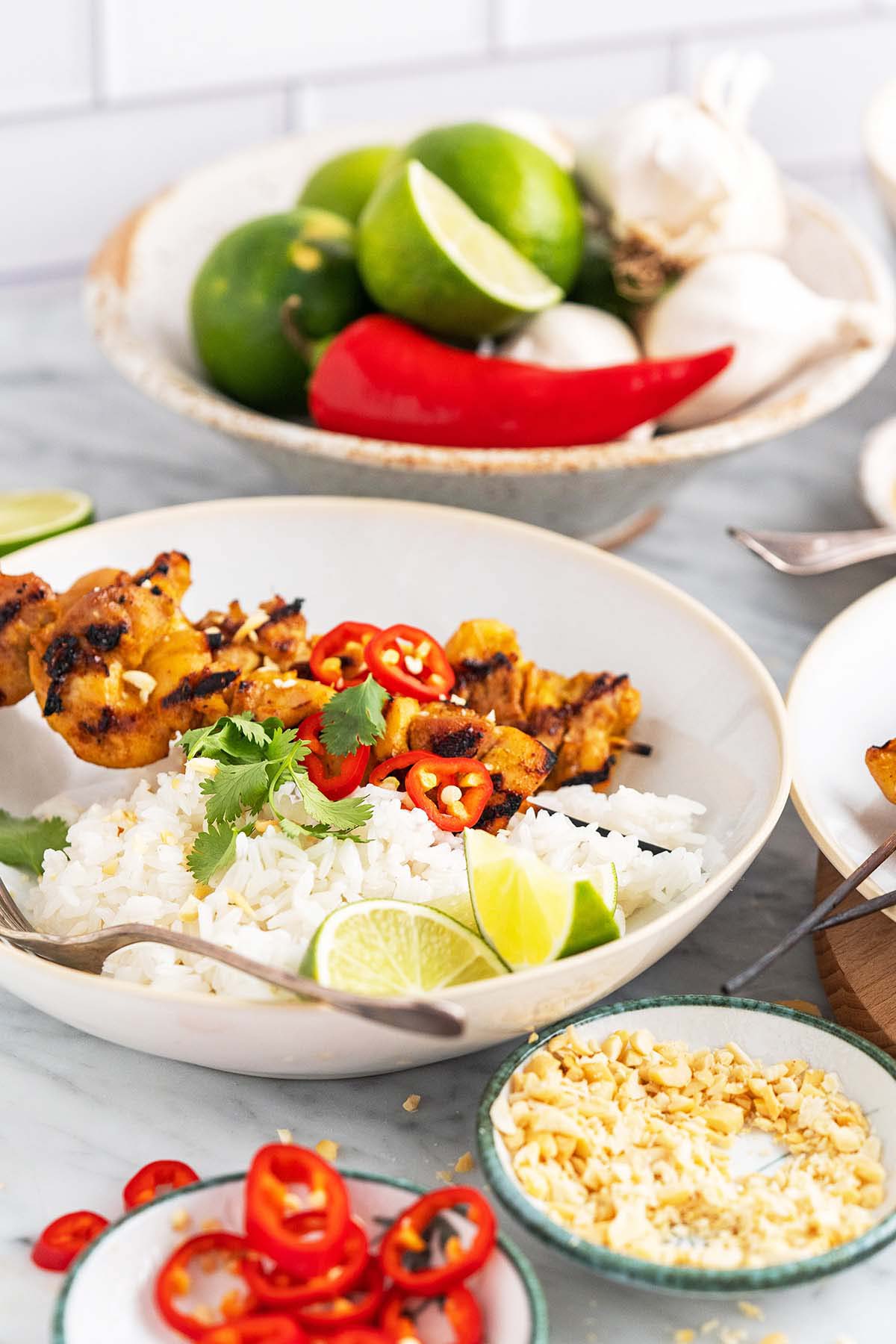
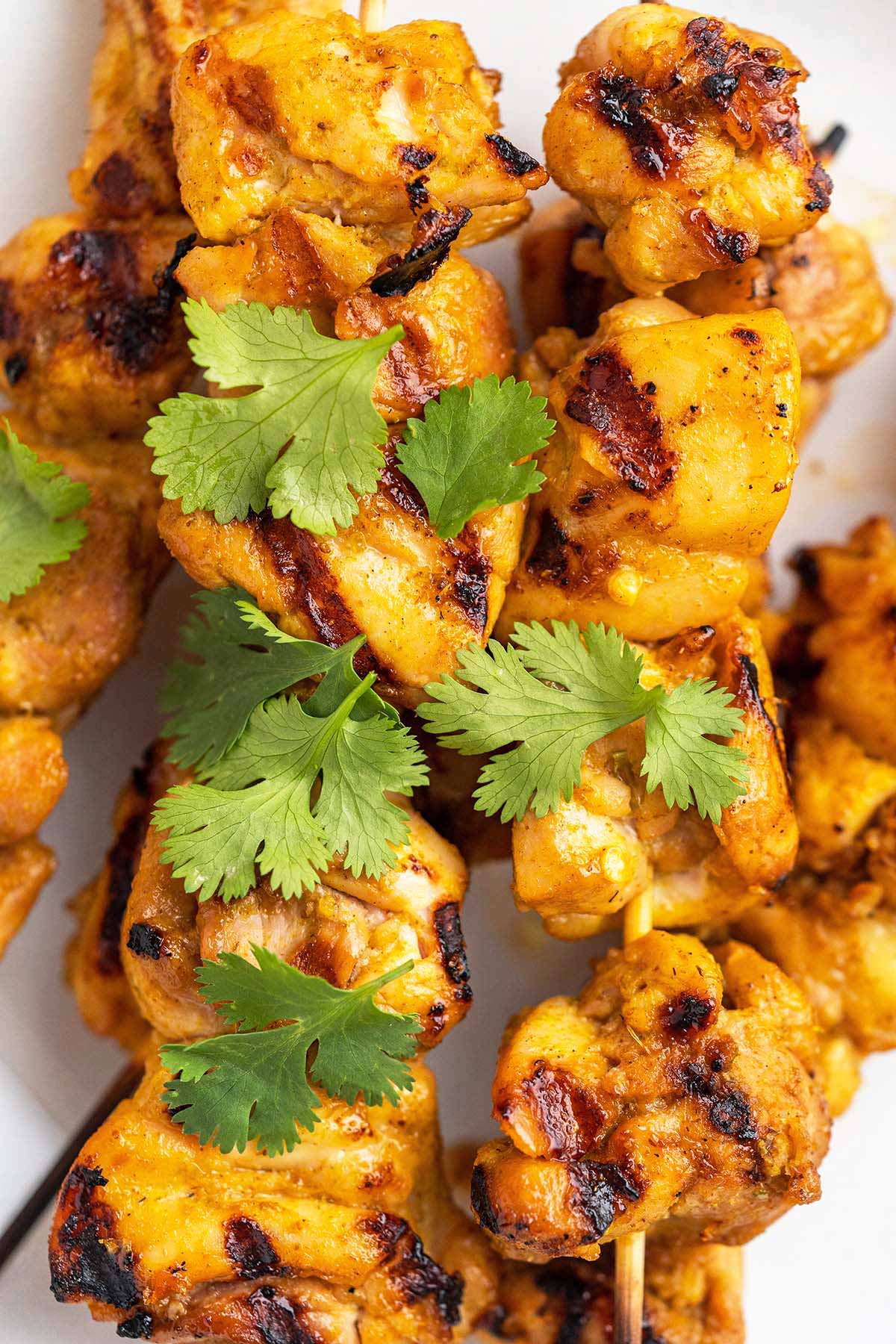
This dish is commonly enjoyed with peanut satay sauce (bumbu kacang) as street food in Southeast Asia. It’s one of those things that you can buy from a street vendor or food cart on just about every corner and eat as you walk around.
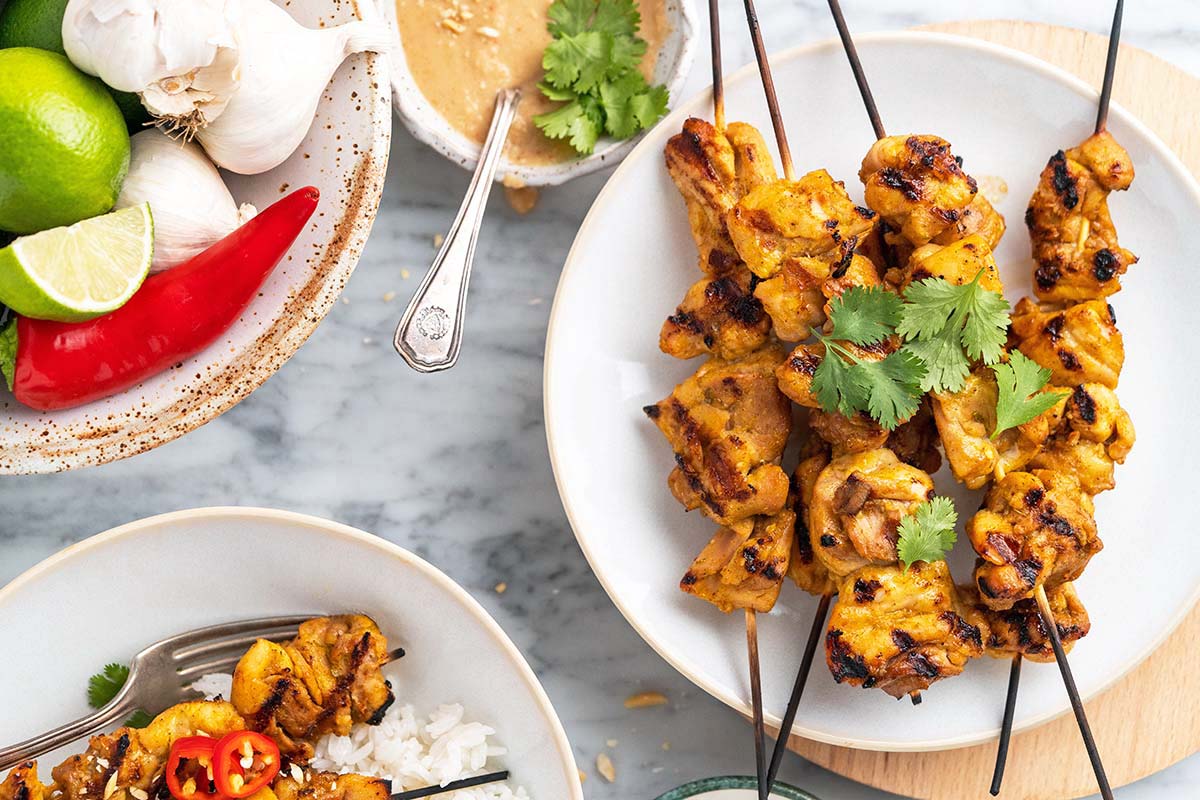
When you’re making this chicken dish at home, it pairs well with a lot of things; you can easily make it into a full meal. Here are a few ideas:
- Peanut sauce – it’s perfect for dipping and drizzling!
- Prepared rice or cauliflower rice to keep the carbs down
- Thai Noodles with Chicken and Vegetables
- Cucumber Salad with Basil, Peanuts, and Ginger Miso Dressing
Chicken Peanut Satay FAQs
Chicken satay is a Southeast Asian dish from Java, Indonesia that’s also popular in Thailand, Malaysia, and Singapore. You can commonly find it as street food from local venders.
It’s believed that ancient Mesopotamia (which is modern day Iraq) was the origin of this type of skewered grilled meat. The Afghans brought the dish to India, and later the Mongols brought the dish to China. It’s thought that Indian and Arab traders and possibly Chinese immigrants brought this dish to Indonesia.
You can read more about the history of satay on Wikipedia.
When I had chicken satay skewers in Thailand, yes, they were spicy.
However, as written, this recipe isn’t spicy; it’s about a mild-medium level of spicy heat. You can make it spicier by increasing the amount of red chili pepper.
Must-Try Thai Recipes
- Thai Green Curry
- Thai Green Curry Paste
- Panang Curry with Chicken
- Easy 30-Minute Tom Kha Gai (Thai Coconut Chicken Soup)
Let’s Connect

Did you make this recipe? Please rate it and leave a comment below. You can also tag @anediblemosaic on social media.
To stay up-to-date, follow me on Facebook, Instagram, Pinterest, and Twitter!

Chicken Satay Recipe with Peanut Sauce
Email This Recipe
Get this recipe link emailed straight to your inbox!
Equipment
Ingredients
Peanut Sauce:
- 3/4 cup roasted salted peanuts
- 1/2 cup canned unsweetened full-fat coconut milk
- 3 tablespoons light brown sugar lightly packed (or coconut sugar)
- 2 tablespoons fresh lime juice
- 1 tablespoon soy sauce (or tamari sauce or coconut aminos)
- 2 cloves garlic crushed
- 1/2 spicy red chili pepper or more to taste (or up to 1 teaspoon crushed red pepper flakes)
- 1 tablespoon freshly-grated galangal (or fresh ginger)
- 1/4 teaspoon salt
- Water if needed to thin it out (I used about 2 tablespoons)
Chicken Satay:
- 3 tablespoons fresh lime juice
- 2 tablespoons avocado oil (or vegetable oil)
- 3 tablespoons light brown sugar lightly packed (or coconut sugar)
- 1 1/2 tablespoons soy sauce (or tamari sauce or coconut aminos)
- 1 tablespoon fresh lime zest
- 1/2 tablespoons fish sauce
- 1/2 small red onion thinly sliced
- 4 cloves garlic crushed
- 1 spicy red chili pepper (or up to 1 teaspoon crushed red pepper flakes)
- 1 tablespoon freshly-grated galangal (or fresh ginger)
- 1 teaspoon ground coriander
- 1 teaspoon ground cumin
- 1/2 teaspoon ground turmeric
- 1/2 teaspoon salt
- 1 1/4 pounds boneless skinless chicken thighs cut into bite-sized pieces
Garnishes (Optional):
- Cilantro leaves
- Lime wedges
- Crushed peanuts
Instructions
Make the Peanut Sauce:
- Add all ingredients for the peanut sauce (except the water) to a food processor. Pulse a few times, and then process until it forms a sauce, stopping to scrape down the sides as necessary. If need be, add a little water through the feed tube with the motor running to thin it out until it reaches your desired consistency.
- Store covered in the fridge until using.
Make the Chicken Satay:
- Add all ingredients for the chicken satay (except the chicken) to a large bowl and stir to combine. Stir in the chicken until well-coated.
- Cover the bowl with plastic wrap and refrigerate at least 2 hours, or up to 24 hours.
Cook the Chicken Satay:
- Let the chicken sit at room temperature for 15 minutes before you want to cook it.
- To Grill: Soak wooden skewers in water for 20 minutes, and then thread the chicken onto the skewers. Preheat a grill to medium-high; cook the chicken until it’s charred and fully cooked in the center, about 6 to 8 minutes per side. (It's the same method if you're using a grill pan.)
- To Roast in the Oven: Soak wooden skewers in water for 20 minutes, and then thread the chicken onto the skewers. Preheat the oven to 400F; place the chicken skewers on a baking tray and roast until it’s fully cooked, about 15 to 20 minutes, flipping the skewers once halfway through. Once it’s cooked, you can broil the chicken briefly to brown it a little.
- To Air Fry: No need for skewers in the air fryer! Preheat the air fryer to 400F. Brush a little avocado or vegetable oil in the air fryer basket, and arrange the chicken pieces in a single layer. Air fry until fully cooked, about 15 to 20 minutes, flipping the chicken once halfway through.
Notes
- Nutritional Information: The nutrition information for this recipe was calculated without the optional garnishes.
- Storage: Once the chicken is cooked, you can store the leftovers covered in the fridge for up to 4 days. Store the sauce in an airtight container in the fridge for up to 1 week.
- Peanut Sauce Yield: This recipe makes about 1 cup of peanut sauce. There are 6 servings, each serving is 2 tablespoons + 2 teaspoons of sauce.
- Peanut Sauce: You can completely puree the sauce until smooth, but I like it with a little texture. For a much smoother sauce, you can use creamy peanut butter instead of whole peanuts (or use a high-speed blender to process it).
- How to Tell When Chicken Thighs Are Fully Cooked: There should be no pink in the center. Additionally, the thickest part of the meat should register an internal temperature of 165F on an instant-read meat thermometer.
- Gluten Free Version: Tamari sauce or coconut aminos instead of soy sauce.
- Low Carb/Keto Version: Use almonds instead of peanuts. Use keto brown sugar instead of regular brown sugar. Serve with cauliflower rice.
- Paleo Version: Use almonds instead of peanuts. Use coconut sugar instead of brown sugar. Serve with cauliflower rice.
Nutrition
Nutritional information is automatically calculated and should be used as an approximate.
Share it with me on Instagram and leave a comment to let me know your thoughts!
This post was first published on An Edible Mosaic on August 29, 2022 and updated on June 24, 2026.


I’m the writer, recipe developer, photographer, and food stylist behind this blog. I love finding the human connection through something we all do every day: eat! Food is a common ground that we can all relate to, and our tables tell a story. It’s my goal to inspire you to get in the kitchen, try something new, and find a favorite you didn’t know you had.
Free Bonus



















Tender chicken, and hands down the BEST peanut sauce!!